

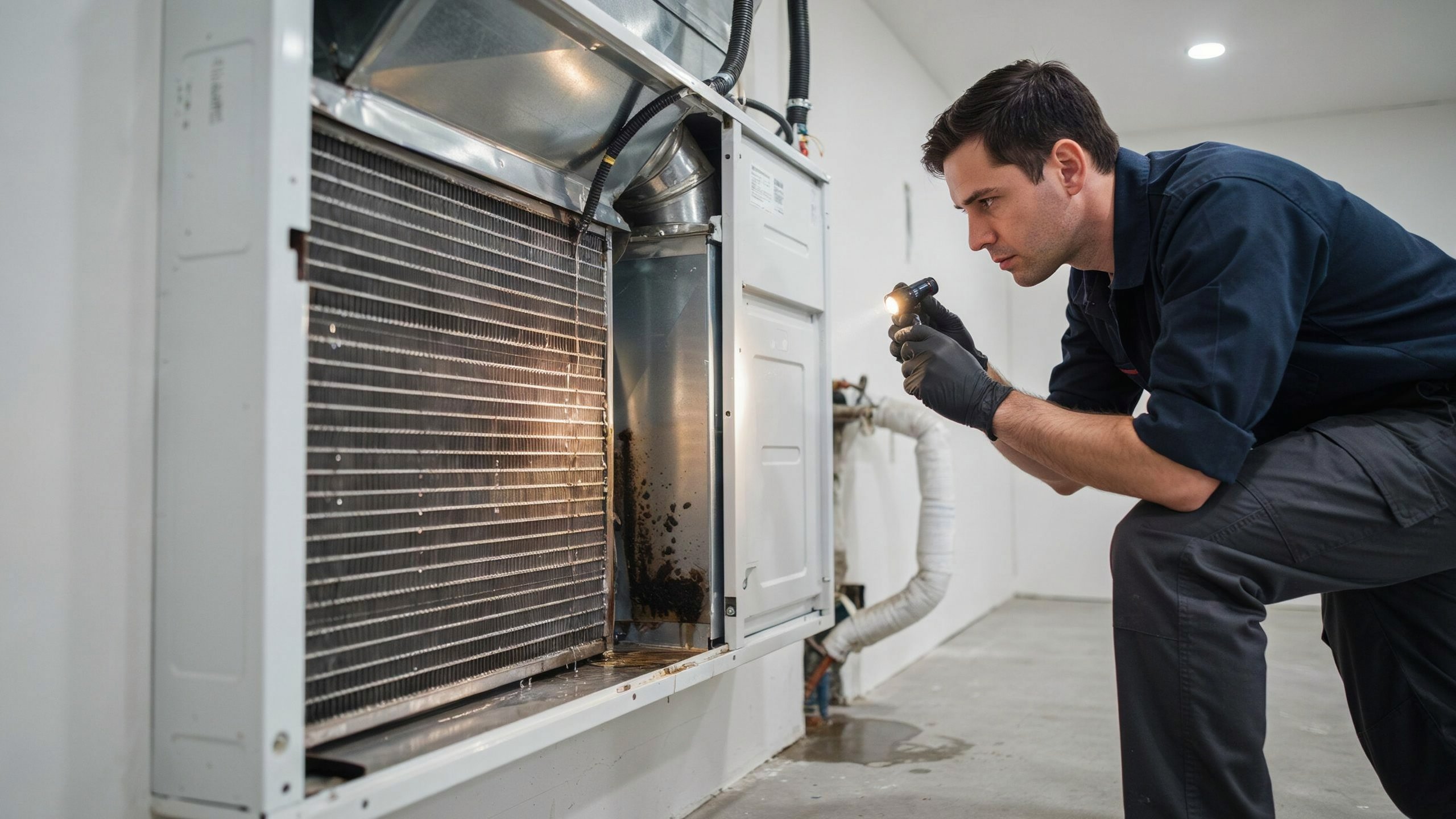
Most homeowners don’t think about mold until they spot it on a wall or ceiling. But mold inside an HVAC system works differently. It hides in ducts, drain pans, and evaporator coils, pushing spores into every room long before you notice a single dark patch. Catching the warning signs your HVAC system has a mold problem early can keep remediation costs manageable and protect everyone living under that roof.
Some of these signs aren’t obvious at all; a few look like completely unrelated issues at first glance. Here are seven red flags that point directly to mold living inside your system.
A Musty or Earthy Odor Comes from the Vents
When mold colonizes your ductwork or coils, it releases microbial volatile organic compounds, gases that produce a distinctive musty, almost damp-earth smell. You’ll notice it most when the system first kicks on, because the airflow carries those compounds straight into your living space. The professionals who specialize in HVAC mold removal in Houston typically find the colony far from where the odor seems to originate, because air movement spreads the smell well beyond the growth site itself.
Don’t open a window and move on. The odor won’t disappear on its own; the colony producing it keeps growing with every humid day. If the smell turns up in only one room, trace it back to the nearest vent. Localized growth caught early is far cheaper to treat than a problem that’s already crept through the full duct network.
Visible Dark Spots Around Vent Covers or Registers
Dark streaking or spotting around supply and return registers is one of the clearest visual signals something’s wrong. Mold near vents usually means there’s active growth somewhere upstream – on the vent itself, inside the duct lining, or on the coil – and particles are landing on surrounding surfaces as air blows through.
Black, green, or gray discoloration that keeps coming back after you clean the cover is a strong tell. Regular dust is gray and sits loosely; mold shows up as defined spots with irregular edges, and it reappears within days because the source keeps feeding it. Pull the register off and look inside with a flashlight. If you see dark fuzz on the duct walls, don’t run the system until a technician can assess the extent of the growth.
Allergy Symptoms That Get Worse Indoors
If anyone in the house notices that sneezing, itchy eyes, or a stuffy nose gets worse inside but clears up outdoors or away from home, the air distribution system is a likely suspect. Mold spores circulated by the HVAC unit can trigger allergic reactions that look identical to seasonal allergies, which is why many people spend months treating the wrong problem entirely.
Pay attention to timing. Symptoms that spike shortly after the system turns on and ease off when the unit is off strongly suggest an airborne contaminant the HVAC is spreading. Children, elderly residents, and anyone with asthma are especially sensitive to this; what feels like a mild irritant to one person can trigger serious respiratory distress in another. A pattern like this warrants a professional inspection, not just a filter swap.
Excess Moisture or Water Pooling Near the Unit
HVAC systems pull humidity from the air, so some condensation on an evaporator coil is normal. Standing water around the air handler isn’t. Neither is a wet cabinet exterior or moisture along the duct runs; these are exactly the conditions mold needs to get established, and they often point to a clogged condensate drain line or a refrigerant leak causing the coil to ice up and thaw repeatedly.
So if you see puddles or persistent dampness near the indoor unit, fix the moisture source first. Treating mold without correcting the underlying water problem means the growth will come right back. An HVAC technician can clear the drain line and inspect the coil; a separate remediation specialist handles the mold itself. The trick is addressing both in the same service window if you can.
Black or Slimy Residue in the Drip Pan
The condensate drip pan sits directly below the evaporator coil and collects moisture the coil removes from indoor air. Because it’s dark, damp, and rarely inspected, it’s one of the most common places mold gets its start. Pull the access panel on your air handler and check the pan, it should be clean and dry between drain cycles.
A slimy black or green film coating the pan is mold, full stop. And because the pan sits directly in the airstream, any spores it releases get picked up immediately and distributed through the house. Cleaning the pan with a diluted bleach solution buys you time, but it’s a temporary fix. The more pressing step is figuring out why water is sitting in that pan long enough for mold to establish, which points back to a slow or blocked drain line.
Respiratory Issues That Don’t Improve with Treatment
Persistent coughing, chest tightness, or shortness of breath that doesn’t respond to standard treatment can have environmental causes. Mold exposure – especially prolonged exposure to species like Aspergillus or Cladosporium circulated by a central air system – can produce symptoms that mirror bronchitis or chronic sinusitis. According to the Environmental Protection Agency, indoor mold exposure is linked to upper respiratory symptoms, asthma exacerbation, and hypersensitivity pneumonitis in susceptible individuals.
Honestly, if your doctor has ruled out infection and symptoms still persist, bring up the possibility of indoor mold and have your HVAC system inspected at the same time. Medical investigation and environmental investigation shouldn’t happen one after the other; running them simultaneously means you’re not spending months on treatment while the source keeps operating overhead.
Your HVAC System Runs Constantly Without Improving Comfort
A system struggling to hold the set temperature – especially in a high-humidity climate – may be fighting a moisture load it simply can’t handle. Heavy mold buildup on the evaporator coil reduces its heat-transfer capacity, so the unit runs longer cycles but delivers noticeably weaker cooling. The result is a house that still feels muggy no matter how long the system runs.
But this sign is easy to misread. People often assume the issue is a failing compressor or an undersized unit when the real headache is a fouled coil. A coil cleaning by a certified HVAC technician costs far less than a system replacement; it often restores performance immediately. And if the cleaning reveals mold, you’re catching the problem before it spreads further into the duct system.
Conclusion
The warning signs your HVAC system has a mold problem range from something as simple as an odd smell to something as stubborn as unexplained health symptoms. None of them should be dismissed as seasonal or temporary. Mold inside a forced-air system has direct access to every room in the house, and the longer it runs undisturbed, the more surface area it colonizes. If two or more of these signs apply to your home, schedule a professional inspection. The earlier the problem gets identified, the less disruptive – and less expensive – the fix will be.
