

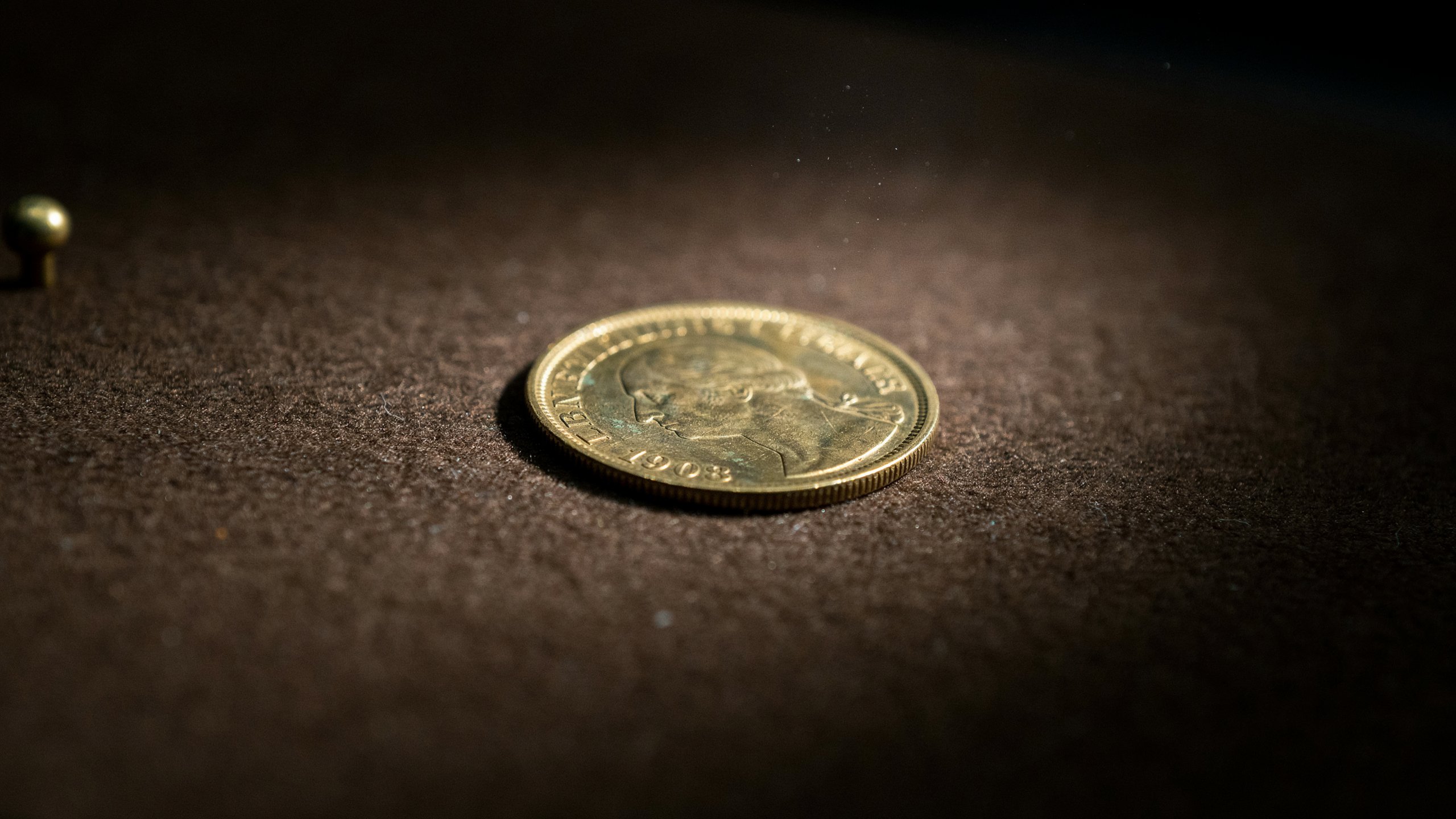
Most people never read the fine print on their money. In late 1907, though, plenty of Americans noticed something missing from a stunning new $20 gold coin, and they weren’t shy about saying so. A familiar phrase had quietly vanished from the design.
That phrase was “In God We Trust,” and its absence set off a surprisingly loud national argument. Newspapers, preachers, and politicians all weighed in. What started as an artistic choice turned into a debate over faith, government, and what belongs on a nation’s currency.
The coins struck before the motto returned have become a fascinating slice of American history. They’re beautiful, a little rebellious, and tied to one of the most colorful presidents the country ever had. Their story shows how much a small detail can matter.
The President Who Wanted to Reinvent American Coinage
Theodore Roosevelt thought American coins were downright dull. He admired the bold, sculptural coins of ancient Greece and wanted the United States to produce something worthy of standing beside them. In true Roosevelt fashion, he didn’t just complain, he went looking for an artist.
He found Augustus Saint-Gaudens, the most celebrated American sculptor of his day. Together they shaped a striking design of Liberty striding forward with a torch and olive branch, paired with an eagle in flight. Saint-Gaudens died in 1907, before the coin reached circulation.
The result was the$20 Saint Gaudens double eagle, a coin many collectors still call the most beautiful in American history. It looked nothing like the stiff, crowded designs that came before it, which was exactly what Roosevelt had wanted.
Why Roosevelt Didn’t Want the Motto on the Coin
The twist is that Roosevelt wasn’t trying to push religion out of public life. He was a churchgoing man, and his objection came from the opposite direction. He believed stamping a sacred phrase on everyday money cheapened it rather than honoring it.
In his view, coins passed through all kinds of hands and deals, some of them far from holy. Tying God’s name to gambling, bribes, or petty purchases struck him as close to irreverent. Putting the motto on currency, he argued, did more harm than good.
Leaving it off also suited the uncluttered, classical look the new design was going for. Since the law of the day permitted the motto on gold coins without requiring it, Roosevelt felt free to drop it. It seemed like a simple call, at first.
How Congress Brought the Missing Words Back
It didn’t stay simple for long. Once the new coins reached the public, critics accused the administration of godlessness, and religious groups flooded lawmakers with complaints. The president’s careful reasoning about reverence got lost in the noise, as nuanced arguments often do.
Congress responded in 1908 with a bill requiring the motto to return to the coins where it had appeared before. Roosevelt had already signaled that he wouldn’t stand in the way if lawmakers chose to act, and the measure became law that May.
The Mint adjusted the design quickly, adding the motto to the reverse just above the rising sun. By the middle of 1908, double eagles with the motto were rolling out, turning the earlier no-motto coins into a short-lived chapter almost overnight.
Why the 1908 No Motto Version Still Fascinates Collectors
Collectors love a coin with a story, and this one has a great one. The 1908 No Motto double eagle captures the brief moment when a president’s personal convictions shaped the nation’s money. Holding one feels like holding a piece of that argument.
Survival is another part of the appeal. Many examples sat untouched for decades, tucked away in overseas bank vaults and at least one famous hoard, before resurfacing for collectors. That’s a big reason attractive pieces remain obtainable today, especially in mid-range grades.
Grade matters too. On the 70-point scale used by services like PCGS and NGC, MS63 describes an uncirculated coin with good luster and a few minor marks. Strike quality, eye appeal, and the price of gold all influence what a particular coin is worth.
Conclusion
The 1908 No Motto double eagle proves that a few words can carry enormous weight. What looked like a design tweak touched on faith, art, presidential power, and public opinion all at once, and the country cared enough to change the law.
Roosevelt got the gorgeous coin he wanted, Saint-Gaudens left behind a masterpiece, and Congress restored the motto within months. Each side walked away with something, which might explain why the story still feels so lively more than a century later.
For collectors, that history is the real treasure. The gold carries its own value, but the missing motto turns this coin into a conversation piece about what Americans believe belongs on their money, a question that never quite goes away.