

If you have ever stood outside a house you first saw on screen, you know the feeling. The scene suddenly looks smaller, closer and a lot more real. Kids who tag along on filming-location trips often feel it too, and then they ask the next question: how do people actually make this?
Los Angeles is the obvious place to find out. The city is full of summer film camps, and their brochures all sound alike: cameras, crews and a premiere at the end of the week. The detail that sets them apart is quieter, and it is the same kind of behind-the-scenes question I like to ask about any set: who actually edits the final cut? Some camps let campers finish their own films. Others have staff polish the edit after the kids go home.
This guide compares eight programs in and around Los Angeles, seven day camps and one overnight camp in the mountains, using only what each camp publishes on its own website. Where a camp does not say who finishes the edit, the guide says so, so you know exactly what to ask before you enroll.
How We Compared
Who edits the final cut came first. For each program, the question was whether the camp says campers edit their own footage, and whether it says staff finish the film. After that came the details parents ask about most: age range, schedule, day or overnight format, how the films are shown at the end of the session, and what the camp publishes about staff and safety.
Nothing here comes from a site visit, an interview or a phone call. Every fact is taken from the camp’s own website, so confirm current dates, ages and details directly with the camp before you book.
Location matters to film-loving families too. Plenty of LA neighborhoods double as sets, as this look at where Modern Family was filmed shows, but in this comparison a camp’s address never outranked what campers get to do in the edit.
8 Los Angeles Film Camps Compared
Seven of these programs are day camps spread across the LA area. One is an overnight camp about 90 minutes east of the city. Each entry covers the format, the ages, what the camp says about editing and how the finished films are shown.
1. Pali Adventures: Best Overnight Option for Young Filmmakers
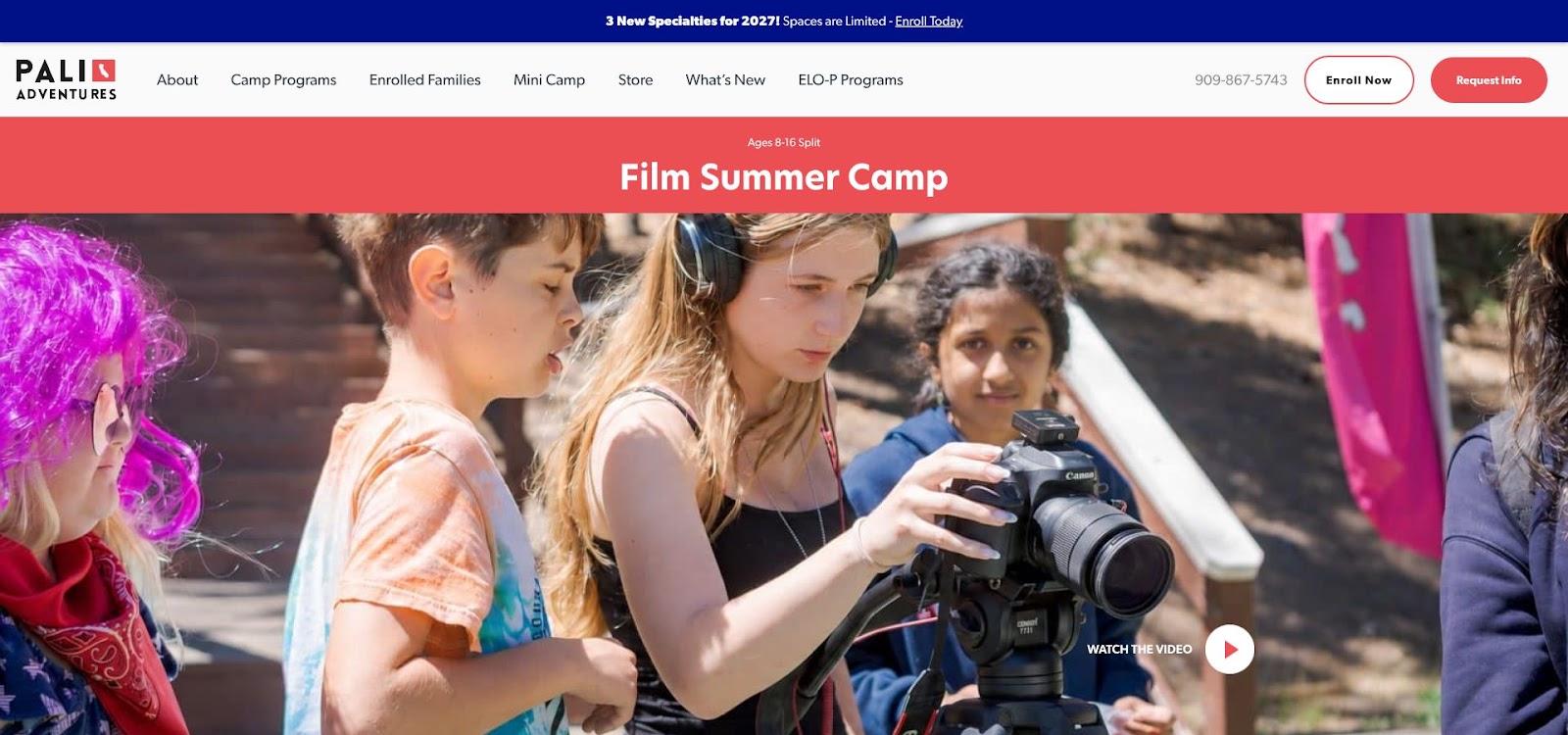
Pali Adventures is a residential summer camp in Running Springs, in the San Bernardino Mountains, about 90 minutes east of Los Angeles. It is the only overnight program on this list. Each camper chooses one specialty for the week, and Film is one of 27 options across Adventure, Creative and Performance tracks. The Film specialty is open to ages 8 to 16, and campers spend three hours each morning on it.
On the editing question, the film page is specific about what campers do. They take an idea from script to screen: write and direct a short film, cast actors from the camp’s acting specialty, and learn camera operation, sound and lighting. They also learn post-production editing, work with stock footage and add special effects. At the end of the week, each film premieres on the big screen at the Pali Showcase. The page does not say whether staff touch the final export, so ask if that matters to your child.
Pali Adventures is accredited by the American Camp Association and is a member of the Western Association of Independent Camps. Staff pass LiveScan and U.S. Department of Justice background checks and hold first aid, CPR and AED certifications. Meals, lodging and activities are included, with no extra charge for specialties. It suits a young filmmaker who is ready for a full week away from home.
2. Film Camp: Best for Trying Every Crew Role
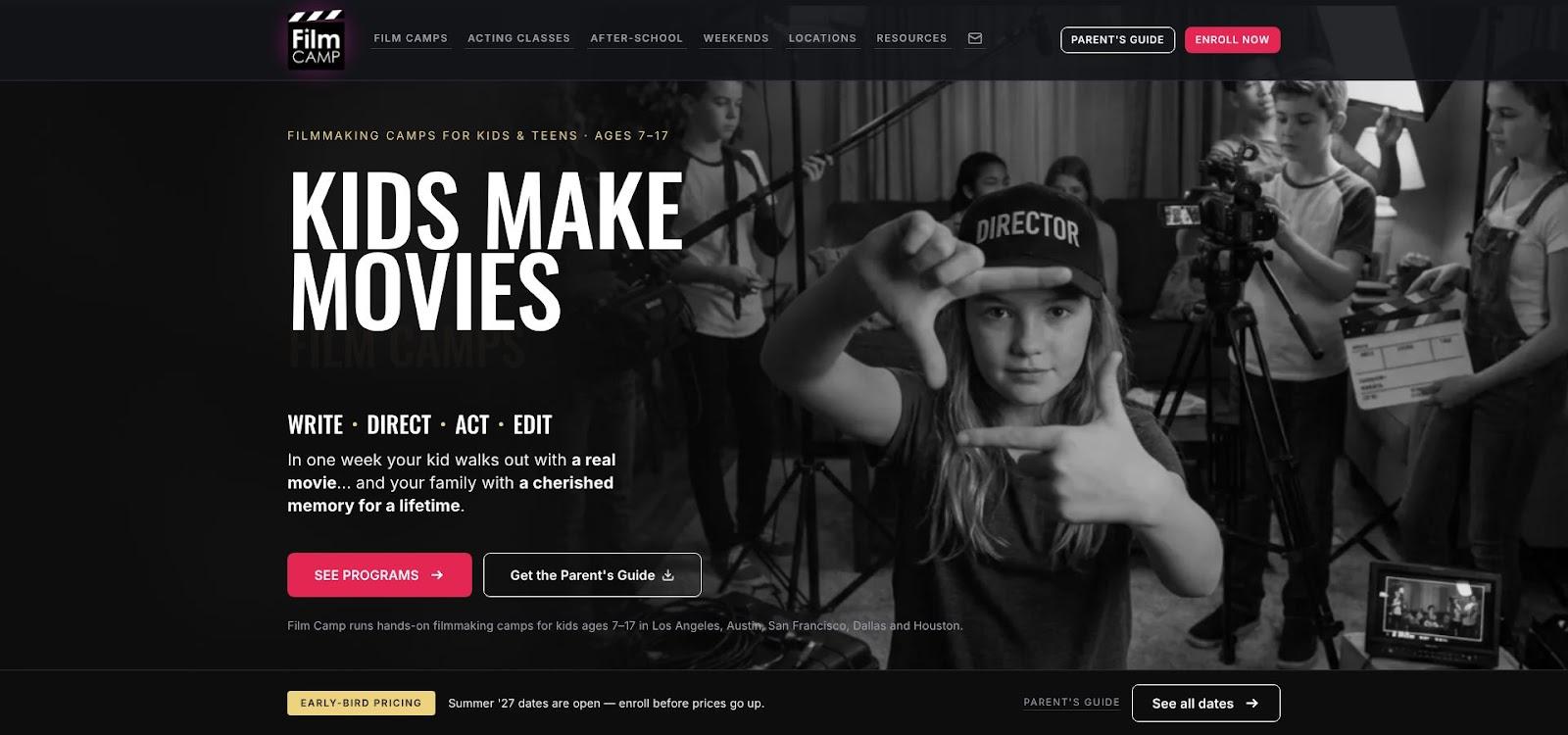
Film Camp runs Monday to Friday camps at Solar Studios on San Fernando Road in Glendale. Campers are split into two age groups, 7 to 12 and 13 to 17, and every camper rotates through all six jobs: writing, directing, shooting, acting, editing and screening. The camp lists a 12:1 student-to-instructor ratio, says its instructors are background-checked and states that every instructor is first-aid certified.
The FAQ is clear on the final cut: “Our staff finish the edit after camp.” Campers learn to edit, but staff complete the finished film. Films are then shown at the annual Film Camp Film Festival in each city and posted to the camp’s YouTube channel after camp. Choose Film Camp if your child wants to try every role on a set and you are happy for professionals to polish the result.
3. Summer Film Camp: Best for Daily Editing Practice
Summer Film Camp meets on the campus of La Cañada High School in La Cañada Flintridge, between Glendale and Pasadena. It serves ages 9 to 15, runs Monday through Friday from 8:00 am to 3:30 pm and lists a 6:1 student-to-staff ratio. Campers work in small production teams and take daily classes in screenwriting, directing, cinematography and editing, with editing taught in Adobe Premiere Pro.
Because editing is a daily class rather than a single session, campers get repeated time on the timeline across the week. The camp holds a Saturday festival to show the films, and each camper receives a copy of the finished work. The site does not say whether staff finish any edits, so ask about final-cut control when you call. It suits kids who like structure and want steady practice in every stage of production.
4. Rock n’ Roll Camp for Girls LA: Best for Music Video Storytelling
Rock n’ Roll Camp for Girls LA runs a Music Video Program for girls and gender-expansive youth ages 12 to 17. Campers direct a music video for a local musician, working with professional cameras and editing software. Weekday sessions take place at Westwood United Methodist Church on Wilshire Boulevard, and the week ends with a showcase at the Troubadour in West Hollywood.
Each crew has its own camera mentor and editing mentor, so the edit is guided rather than solo. The program states that its mentors complete Live Scan fingerprinting. The dates currently on the site are for summer 2026, so check for the next session. Choose this camp if your filmmaker thinks in songs and wants a real artist and a real stage at the end of the week.
5. New York Film Academy: Best for Film School Basics
NYFA’s 1 Week Kids Film Camp runs at its Los Angeles campus for ages 10 to 13, with sessions listed for July and August. Campers learn to compose, direct and edit, and each one creates a short silent film, a format that puts the focus on pictures rather than dialogue.
The camp does not say who controls the final edit. At the end of the week there is a presentation for students and instructors only, and families receive a digital copy of all deliverables through a Google Drive link. It is a good fit for middle schoolers who want a short, structured taste of film school.
6. Michelle Danner Acting Studio: Best for Acting-Minded Filmmakers
Michelle Danner Acting Studio in Culver City runs a Filmmaking Summer Camp alongside its acting and musical theater camps. It runs Monday to Friday from 10:00 am to 2:00 pm, with groups for kids ages 8 to 12 and teens ages 13 to 17. Campers create a short film, commercial or PSA, moving from writing scripts and planning production to camera work, editing and special effects.
The studio describes the work as collaborative, with teamwork and constructive feedback built into the process, and each week follows a different lesson plan. It does not say who finishes the edit or how the films are shown, so ask about both. It suits a child who loves performing and wants to learn what happens behind the camera.
7. Creator Camp: Best Short Introduction
Creator Camp’s Hollywood Filmmakers program is a three-day camp, Monday to Wednesday, for ages 8 to 13. Campers storyboard, shoot and edit their own short films of two to five minutes. A compatible iPad is required, and a rental option is offered at enrollment.
Staff give hands-on help with editing on day two, and on day three campers finish their films, color correct them and add intros and end credits. The camp ends with the Creator Camp Oscars, where campers show their best project. Hollywood Filmmakers is the program name rather than the location, so check the camp’s locations page for the nearest LA-area site. It is a low-commitment way to test interest before a full week.
8. Providence Film Camp: Best for High School Storytellers
Providence Film Camp is held at Providence High School in Burbank and is presented with the All American High School Film Festival. The week-long camp runs from 9 am to 2 pm and is aimed at aspiring high school storytellers. Campers use the school’s cinema arts facilities and shoot at locations around campus, and the curriculum includes editing and post-production.
The festival also hosts a Best of Student Filmmaking screening at the IMAX headquarters in Playa Vista, but the camp page does not say whether camp films are part of it, or who finishes the edit. It suits teens who want a school-based program with ties to a national student film festival.
Film Camp Comparison Table
The table below sets the eight programs side by side. The editing column reflects only what each camp states on its own website.
|
Program |
Format and Location |
Ages |
Who Edits the Final Cut |
How Films Are Shown |
|
Pali Adventures |
Overnight, Running Springs |
8-16 |
Campers learn editing; staff role not stated |
Big-screen premiere at the Pali Showcase |
|
Film Camp |
Day, Glendale |
7-17 |
Campers edit; staff finish the edit |
Annual festival and YouTube |
|
Summer Film Camp |
Day, La Cañada Flintridge |
9-15 |
Campers edit daily; staff role not stated |
Saturday festival; copy for each camper |
|
Rock n’ Roll Camp for Girls LA |
Day, Westwood |
12-17 |
Crews edit with an editing mentor |
Showcase at the Troubadour |
|
New York Film Academy |
Day, Los Angeles campus |
10-13 |
Campers edit; final control not stated |
Class presentation; Google Drive copy |
|
Michelle Danner Acting Studio |
Day, Culver City |
8-17 |
Campers edit; final control not stated |
Not stated |
|
Creator Camp |
Day (3 days), LA-area sites |
8-13 |
Campers edit with staff help |
Creator Camp Oscars |
|
Providence Film Camp |
Day, Burbank |
High school |
Campers edit; final control not stated |
Not stated |
Frequently Asked Questions
Do Campers Edit Their Own Movies?
Most camps on this list say campers learn to edit, but fewer say who finishes the film. Film Camp states plainly that staff finish the edit after camp, while the others leave the question open. If it matters to your child, ask who chooses the final takes, who sets the music and who exports the finished file.
What Age Is Best for a Film Camp?
Most programs here start between ages 7 and 10, and several run to 16 or 17. Younger campers usually do well with shorter sessions and group projects, while teens tend to want more time in each role. Check how each camp groups its campers by age before you choose.
Is an Overnight Film Camp Better Than a Day Camp?
Neither format is better by default. Day camps keep evenings at home and suit families who can manage daily drop-off and pickup. An overnight program such as Pali Adventures adds a full week away, with meals, cabins and evening activities, which suits kids who are ready for sleepaway camp.
What Should Parents Ask Before Booking?
Ask who finishes the edit and whether your child goes home with a copy of the film. Ask about staff ratios and background checks, how the films are shown at the end and what the price includes. Then confirm current dates and ages directly with the camp, since programs change from year to year.
Closing Thoughts
A scene never looks the same once you have stood where it was shot, and a week behind the camera can do the same thing for how a kid watches movies. Los Angeles gives young filmmakers more choice than almost any city, from studio-style day camps in Glendale to a music video shoot that ends on the Troubadour stage. The camps differ less in the cameras they use than in how much of the finished film belongs to the kids. Start with the question in the title, who edits the final cut, and then weigh format, ages and schedule. And if your family plans a filming-location day in LA this summer, ask your young fan one thing on the drive home: would they rather find the next famous set, or build one?
