

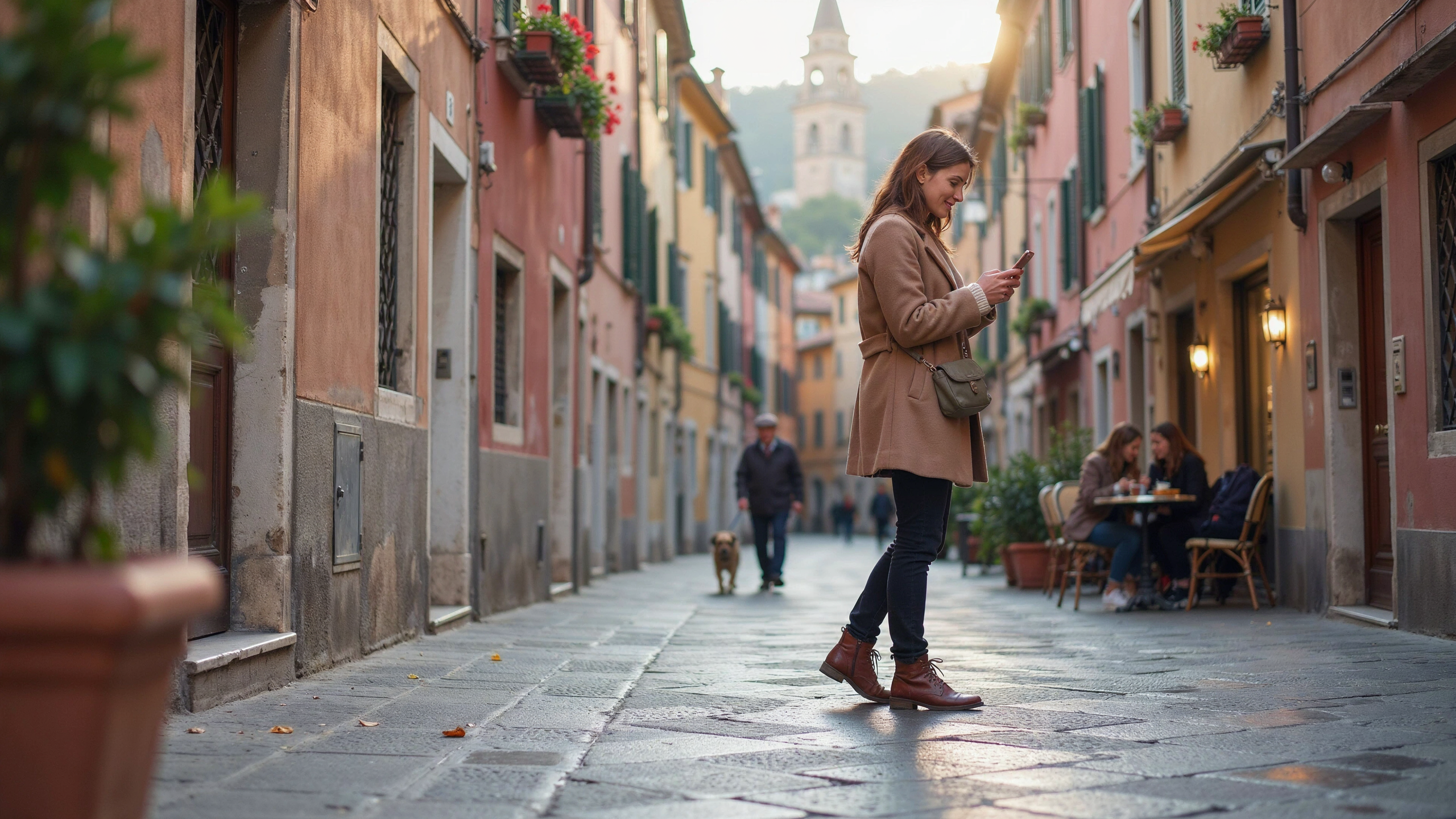
Watching a familiar scene come to life on screen can make an ordinary street, building or landscape feel unforgettable. For many travelers, visiting that place offers a new way to connect with a favorite film or television series. A castle becomes more than an old structure, a city square gains a fictional history and a quiet beach suddenly feels like part of a much larger story.
Film tourism is not a new idea, but technology is changing how people research, navigate and document these locations. Digital maps, visual search, augmented reality and smart glasses can help travelers compare a real place with its screen appearance while learning more about the production behind it.
The best experience, however, requires more than arriving at a famous address. A thoughtful visitor needs reliable information, respect for the surrounding community and a plan for capturing memories without spending the entire trip looking at a phone.
Start With Reliable Location Research
Online lists of filming locations are easy to find, but they are not always accurate. A fictional building may have been created from several real places, while an interior and exterior could have been filmed in different countries. Computer generated scenery can make the final image look very different from the original setting.
Official film commissions, studio tours, tourism organizations and interviews with production teams are generally better starting points than an unsourced social media post. Film commission location databases can be particularly useful because they contain photographs and production information about real sites.
Travelers should confirm whether the location is open to the public. Some famous exteriors are private homes, active businesses, schools or working farms. A place that appeared on television is not automatically a tourist attraction.
Opening hours, ticket policies and photography rules should also be checked shortly before the visit. A historic building may allow visitors but prohibit cameras in certain rooms. A public street may be accessible at all times, while a nearby parking area or footpath may have restrictions.
Use Maps to Build a Realistic Route
A list of famous locations can look manageable until the traveler places everything on a map. Two scenes that appear next to each other in a story may have been filmed hours apart.
Creating a route before the trip helps visitors spend more time exploring and less time traveling between poorly connected sites. Locations can be grouped by neighborhood, opening time or transportation method. It is also useful to save entrances and visitor centers rather than relying only on a general address.
Public transportation may be the easiest option in a large city, while rural locations could require advance planning. Travelers should check the final part of the route carefully. A map may show that a destination is nearby without revealing a steep path, restricted road or lack of pedestrian access.
A sensible schedule also leaves room for the unexpected. Film locations are often part of busy cities or changing natural environments. Construction, weather and local events can affect the view.
Let Technology Add Context
A filming location becomes more interesting when visitors understand how it was used. Mobile guides can show production images, explain how the scene was created and identify visual details that are easy to miss.
Augmented reality could take this further by placing a reference image over the real setting. A visitor might compare a modern street with the period version created by a production team or see where a temporary structure once stood.
AI tools can also answer practical questions about architecture, history and nearby landmarks. Those answers should be verified when accuracy matters, since automated systems may confuse fictional details with real history.
Technology works best when it adds a useful layer to the location rather than competing with it. A short piece of context can deepen the visit. A constant stream of notifications can make travelers less aware of the place they came to see.
Capture the Experience Without Living Through a Phone
Photography is a major part of film tourism. Visitors may want to match a well known camera angle, record a walking route or capture their first reaction to seeing a famous setting.
Smart glasses provide a different way to document the experience. They can take photographs from the wearer’s point of view while leaving both hands free. This can be useful during a walking tour, especially when the visitor also needs to carry a bag, consult a guide or move through a crowded area.
Travelers researching the photo quality on Ray-Ban glasses with camera can consider the 12 megapixel ultra wide camera included in current Ray-Ban Meta models. Ray-Ban states that compatible models can capture high quality photographs and, depending on the generation, higher resolution video. Actual results will still vary with lighting, movement, framing and the specific model being used.
The first person perspective creates a natural record, but it differs from conventional travel photography. The camera follows the direction of the wearer’s head, so careful framing may require practice. It is sensible to test the glasses before the trip and review a few sample images in daylight, low light and while walking.
A smartphone or dedicated camera may remain preferable for zoomed images and carefully composed landscape shots. Smart glasses are particularly useful for spontaneous moments when taking out another device would interrupt the experience.
Recreate Scenes With Care
Matching a scene can be an enjoyable travel project. The visitor can study the original composition, locate visible landmarks and experiment with a similar angle.
It is important to remember that a screen image may have been changed during production. Different lenses affect perspective, while lighting, set decoration and digital effects can transform a place. The exact angle may also have been filmed from an area that is not open to visitors.
No photograph is worth blocking traffic, entering private property or climbing into a restricted area. If the original camera position is unsafe or unavailable, travelers can create their own interpretation from a permitted location.
Costumes and props can add humor to a recreation, but they should be appropriate for the setting. Historic sites and memorial spaces deserve particular sensitivity.
Respect Residents and Other Visitors
Popular filming locations can receive large numbers of visitors, sometimes long after a production has ended. This attention can support local businesses, but it can also create noise, litter, crowding and disruption for residents.
Visitors should keep entrances and sidewalks clear, follow local parking rules and avoid photographing through the windows of private homes. If a location is an active business, making a purchase or paying the appropriate admission fee is more respectful than using the property only as a backdrop.
Wearable cameras require additional awareness because people may not immediately notice them. Ray-Ban Meta glasses use a capture LED to indicate when photographs or videos are being taken. Even with a visible indicator, asking permission remains appropriate when another person will be the main subject of a recording.
Special care is needed around children, private conversations and locations where photography is restricted. Travelers should stop recording when asked.
Look Beyond the Famous Scene
The best film location trips often reveal more than expected. A traveler who arrives for one television landmark may discover a historic district, independent café, museum or walking trail nearby.
Local tours can add knowledge that online guides miss. A guide may explain how residents experienced the production, which buildings were changed and how filming affected the local economy. Film museums and studio tours can provide additional context about costume design, editing and set construction.
Visitors can also compare the fictional identity of the location with its real one. A building presented as a hotel may actually be a university. A distant planet may be a protected national landscape. Learning both stories creates a richer experience than simply taking a photograph and leaving.
Make the Technology Serve the Story
Emerging travel technology can remove much of the friction from film tourism. Maps can organize routes, visual tools can identify landmarks and smart glasses can capture moments without keeping a phone in the visitor’s hand.
These tools are most valuable when they support genuine attention. The purpose of visiting a filming location is not only to prove that the trip happened. It is to understand how a real place helped create an imagined world.
A smarter visit therefore combines good research, responsible photography and curiosity about the community beyond the screen. When technology remains in a supporting role, travelers can document the moment while still being fully present in it.
