

Roughly two-thirds of travelers now say movies, streaming shows, and TV series have influenced their travel choices, a figure that’s grown 16 percent in just the past year. An AI Image Generator, the most innovative feature of Higgsfield is becoming part of how film location bloggers keep pace with that growing audience, producing the polished “now” photography their then-and-now comparisons depend on.
Why Has Film Tourism Become Such a Significant Travel Trend?
Fans increasingly plan entire trips around standing in the exact spot a favorite scene was filmed, and this kind of set-jetting has grown from a niche curiosity into a genuinely mainstream travel motivator. For bloggers documenting these real-world filming locations, that growing audience represents a real content opportunity, provided the visual quality of their comparisons actually holds up against a reader’s expectations.
This growth reflects a broader shift in how people plan travel more generally, moving away from generic destination guides toward highly specific, emotionally resonant reasons to visit a particular place. A location tied to a beloved film or show carries a kind of instant personal connection a generic landmark simply can’t replicate, which is exactly why this niche has grown from a small community of dedicated enthusiasts into something major publications and travel brands now actively cover and build entire itineraries around.
What Does a Genuinely Compelling Then-and-Now Comparison Actually Require?
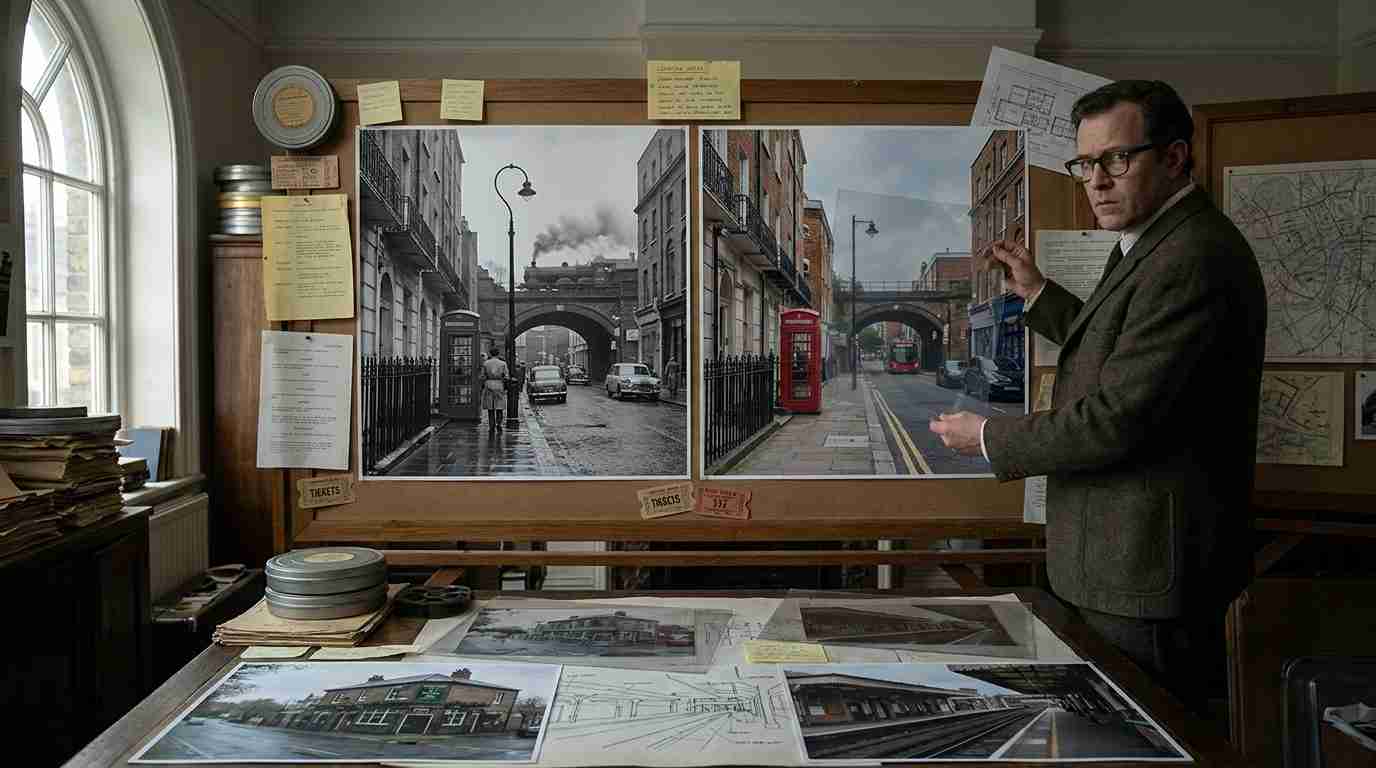
The format itself is deceptively simple, a still from the original film or show paired against a current photo of the same real location, but the strongest examples in this niche pair that original still with a “now” photo shot from the exact same angle, framing, and time of day wherever possible. Established sites in this exact space have built entire followings around getting that match precise enough that the comparison genuinely lands.
This precision is what separates a genuinely memorable comparison from a forgettable one. Anyone can stand roughly where a scene was filmed and snap a photo, but matching the original camera height, the exact lens angle, and even the season or weather conditions takes real, deliberate effort, often multiple attempts across more than one visit to the same location. That extra effort is precisely what readers in this niche have come to expect from the sites they trust most.
Why Is Photographing the “Now” Half of the Comparison Harder Than It Looks?
Matching an original film angle exactly often means visiting a location at a specific time of day, from a specific spot, sometimes years or decades after the original filming, when the surrounding buildings, trees, or street furniture have changed the framing entirely. Getting a photo that’s genuinely comparable, not just a snapshot from roughly the same street, takes real effort and often more than one visit.
This challenge compounds for locations that have genuinely changed a great deal since filming, a building demolished and replaced, a street widened, new construction blocking what was once an open view. In those cases, getting the closest possible match becomes its own small research project, sometimes requiring cross-referencing old maps, historical photos, or local knowledge just to figure out exactly where the original camera would have stood decades earlier.
What Happens When a Genuinely Iconic Location Gets a Weak or Inconsistent Photo?
This directly undermines the entire point of the format. A poorly framed, badly lit, or inconsistent “now” photo makes even a genuinely fascinating location feel like an afterthought, and readers browsing a site built around this exact comparison format notice immediately when one entry looks noticeably weaker than the rest.
This is where a lot of genuinely good, well-researched content quietly underdelivers. A location that took real time and detective work to identify still needs a photo good enough to actually make readers want to visit it themselves, and that final step is where a lot of otherwise strong entries fall a little short, simply because photo quality and photo consistency are a genuinely different skill set from the research that gets a location correctly identified in the first place.
What Are the Traditional Options for Producing These Comparison Photos?
Shooting and editing every “now” photo manually remains the standard approach, and the most respected sites in this niche have built genuinely impressive archives this way over years of dedicated work. Hiring a local photographer for a specific location is the other option, useful for a flagship entry but impractical to repeat across hundreds of locations worldwide, given both the cost and the logistics of coordinating someone else’s schedule with a location the blogger themselves may only visit once.
Where Does Manual Photo Editing Fall Short for a Growing Location Archive?
The constraint is volume and consistency, not photographic skill. A blogger building out a large archive of locations across many countries accumulates photos shot in wildly different lighting conditions, weather, and equipment over years, and getting all of them to a consistent, polished standard after the fact is a genuinely significant editing workload on top of the travel and research itself, one that only grows heavier the longer a site has been running.
|
Manual editing of your own photos |
Hiring a local photographer per location |
AI Image Generator |
|
|
Cost |
Free, but costs real time |
A real per-location fee |
Included in one subscription |
|
Consistency across a large archive |
Variable over time |
High, but expensive to repeat |
High, and fast to apply |
|
Turnaround |
Hours per photo |
Requires scheduling and travel |
Minutes |
|
Best suited for |
A small, developing archive |
A flagship, high-profile location |
A large, ongoing archive |
How Does an AI Image Generator Fit Into a Film Location Blogger’s Workflow?
Higgsfield gives a blogger access to more than 15 leading image models, including Nano Banana Pro, GPT Image, Seedream, and FLUX, from a single workspace, letting them take their own real “now” photo of a location and improve lighting, correct color, and clean up framing quickly, bringing years of inconsistent photography up to a consistent standard without a full manual re-edit of the entire archive.
This matters most for a blogger sitting on years of accumulated photos shot in genuinely different conditions, a sunny afternoon here, an overcast morning there, different cameras across different trips. Being able to bring that whole archive to a consistent visual standard quickly, rather than accepting the inconsistency as permanent or spending months manually reworking hundreds of old photos, is what actually makes a large archive feel professionally curated rather than assembled piecemeal over years.
What Should Bloggers Understand About Using AI Around Copyrighted Film Material?
This is the single most important point in this entire article. The “then” half of any comparison, the original film or television still, is copyrighted material and should be sourced and used appropriately as a genuine comparison reference, never recreated or fabricated by an AI tool. An AI Image Generator’s role here is limited entirely to the “now” side, enhancing a blogger’s own real photograph of the real, current location. Generating a fabricated version of the original film scene, or presenting an AI-created image as if it were the real, historic filming still, would misrepresent exactly the kind of authentic documentation this niche is built on and could rightly cost a site its credibility with readers.
What Can a Film Location Blogger Actually Produce Beyond a Single Comparison?
Beyond one comparison photo, a blogger’s real location photography can be brought to a consistent visual standard across an entire archive, giving years of accumulated photos, shot on different cameras in different conditions, a coherent, professional feel that holds together across the whole site. This kind of consistent presentation matters for the same reason a properly researched location guide, like a full Outlander filming locations tour of Scotland, matters, readers planning a trip around specific, verified spots benefit from an experience that feels considered throughout, not just polished on a handful of flagship posts. This is worth stating plainly, since Higgsfield is sometimes assumed to be a single-purpose image tool. Higgsfield AI is a native AI creative suite, which offers advanced AI image, video, and voice generation, editing, and upscaling tools, meaning a blogger could also produce a short video walkthrough of a location from the same workspace.
Does This Replace the Research and Detective Work That Makes This Niche Worth Following?
No, and this matters as much here as anywhere. What actually makes film location content worth following is the genuine detective work behind it, identifying the exact address, confirming the precise filming angle, tracking down a location that’s changed enough to require real research to verify. An AI Image Generator, whether Higgsfield or a comparable platform, improves how the “now” photo looks. It does not do the identification and verification work that makes a location entry credible and worth trusting in the first place.
What Should a Film Location Blogger Look for in an AI Image Generator?
A few things matter more here than for general travel photography. Working from a blogger’s own real photographs matters most, since the entire credibility of this niche rests on documenting genuine, verified locations. Consistency across a large, growing archive matters practically, given how many entries a well-established site accumulates over years of dedicated work. And straightforward editing matters given how much of a blogger’s actual time already goes into research and travel rather than photo editing.
It’s also worth checking how a platform handles a wide variety of source photo quality, since a genuine archive built over years inevitably includes photos taken on very different equipment, from an early smartphone camera to a much better setup years later. Bringing all of it up to a consistent standard matters more than starting fresh with only the newest, best-equipped shoots.
What Are the Key Takeaways for Film Location Content Creators?
- Film tourism is no longer a fringe hobby. It has become a measurable, well-documented travel trend with real commercial weight behind it, which means the audience for genuinely well-produced location content is larger and more engaged than it’s ever been.
- Film tourism has grown into a significant, measurable travel trend, with two-thirds of travelers reporting that movies and shows now influence where they go, a real shift from a niche enthusiast pursuit into something mainstream travel brands actively cover.
- A weak or inconsistent “now” photo undermines an otherwise fascinating location entry, and consistency across a large archive is a genuine, ongoing production challenge that has nothing to do with how interesting the location itself actually is.
- An AI Image Generator like Higgsfield can bring years of accumulated location photography up to a consistent standard quickly, without a full manual re-edit of an entire archive built across different cameras and conditions over time.
🔹 AI tools belong entirely on the “now” side of a comparison, enhancing real photography. The original film still remains copyrighted reference material and should never be recreated or fabricated by AI under any circumstances.
What Are Some Frequently Asked Questions About AI Image Tools for Film Location Blogs?
Can I use an AI Image Generator to recreate the original movie scene for my “then” photo?
No, this should be avoided. The original film or TV still is copyrighted material and should be sourced and used as a genuine reference, not recreated or fabricated by an AI tool, which would misrepresent what the actual historic filming still looks like and undermine the credibility the entire format depends on.
Will using AI to edit my location photos make my content feel less authentic?
Not if the underlying photo is genuinely your own, taken at the real location. Improving lighting, color, and framing on a real photo is honest editing, entirely different from fabricating an image of a location you haven’t actually documented, and readers in this niche are generally quite good at spotting the difference between genuine, verified content and something that doesn’t hold up to scrutiny.
How important is matching the exact angle of the original film shot?
Very important in this niche specifically. The strongest then-and-now comparisons match the original framing as closely as possible, which is exactly the kind of real, on-location effort an AI tool can’t substitute for, it can only help polish the result afterward, whether that final polish runs through Higgsfield or a comparable platform.
Is this useful for a smaller, newer film location blog, or only large, established archives?
It helps at any size, though the consistency benefit compounds significantly for a larger archive built up over years across many different shooting conditions and equipment changes, whether that archive is maintained through Higgsfield or a comparable platform.
