

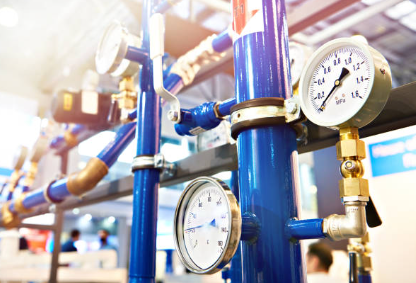
However, the best pumps, sensors, and automation systems in the world need to operate correctly if the flow inside the pipes is not controlled.
Enter into the picture control valves. They regulate the movement of liquids, gas, or steam in a system to maintain the correct pressure, temperature, and flow of the material. They are very quiet. They are only seen when they have problems.
Today, however, control valves are more than just openers and closers. They are linked to sensors and automated control systems and can adapt to changing conditions, give valuable information for operation, and may even alert maintenance personnel to problems before they cause failure.
So, how did this ‘simple looking’ element become such an important part of modern industrial automation?
The Part Nobody Notices Until It Fails
Take a moment to reflect on your own house. Opening a tap involves turning on a valve. The water heater maintains a constant water temperature during showers, and a valve is doing this behind the scenes. It might not be apparent to you, but you notice when it doesn’t work.
The same principle applies to industrial control valves, although on a much bigger scale with much higher stakes. They may control:
- Steam flow control: Control of the quantity of steam supplied to a turbine or equipment.
- Chemical flow: Regulation of the quantity of chemical into a mixing tank.
- Process conditions: Assistance in maintaining pressure, temperature, or flow rate.
The slightest miscalculation or failure in adjusting a manufacturing process can cause equipment failure, loss of materials, or safety issues. This is the reason why control valves are important: they perform vital functions without making a lot of noise.
From Kitchen Taps to Chemical Plants
In layman’s terms, a control valve’sjob is to be a “gate keeper”:
- The amount of water you get into your sink is determined by the water faucet in your kitchen.
- The amount of fuel and air delivered to the cylinders is determined by a car’s engine valve.
- The control valves determine the amount of liquid, gas or steam that flows through a pipeline in a factory.
The fundamentals are the same. How do the pressure, temperature, chemicals, and frequency of the valve adjustment change? In a few systems, it could have to react several times in a minute without any human intervention.
That’s why you see control valves in industries that on the surface do not appear to have anything to do with them: oil refineries, food processing plants, water treatment plants, power plants, and even breweries. A control valve does the work where the flow has to be controlled in a precise quantity.
How Factories Are Teaching Old Valves New Tricks
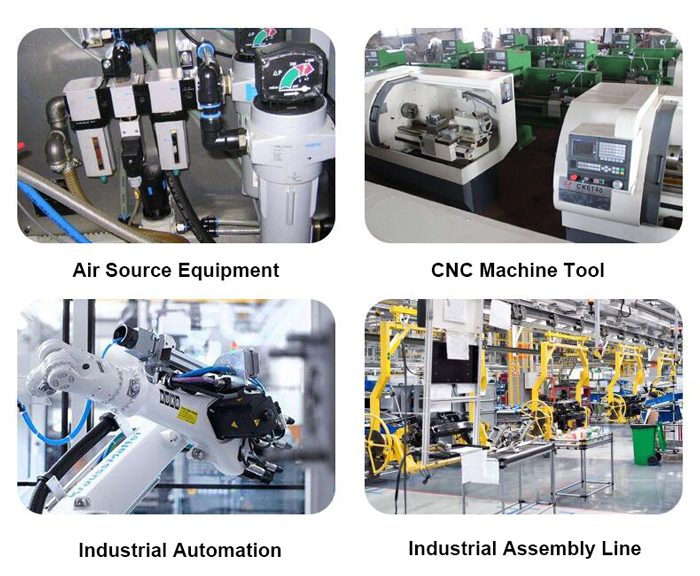
How to teach older valves new tricks in the factories.New tricks for older valves in the factories.
Control valves were mechanical valves until quite recently and were in effect a little bit “stupid” in a good sense. They were simple, functional and single-purpose. This valve would be set by an operator and would stay in that position until someone made a change.
That’s changing fast.
Valves can be equipped with sensors and smart controllers that can react to what is occurring within a system today. They can measure parameters such as pressure, temperature, flow rate, etc. and change the valve when these parameters change.
For instance, a smart control system could detect a sudden increase in pressure within a factory pipeline and remotely operate the valve as opposed to waiting for an operator to become aware of the issue.
This also facilitates easier upkeep. A system can give early indication that a valve may be acting differently or require more adjustment than it’s normal.
The valve hasn’t been a lot different. The technology is different, but not the concept. A mechanical part can now be on a network that monitors, adjusts and helps maintain a smooth running industrial process.
How Sensors Are Changing Control Valves
Sensors are used in modern factories to measure pressure, temperature, and flow continuously and are linked to control valves. This information is transmitted to a “central system” that can instruct the valve to respond to changes in conditions.
When pressure suddenly begins to build up in a pipeline at 3 AM in the morning, the system can react before the operator realizes that there is a problem.
What Do Smart Valves Mean for Plant Managers?
This may mean to the plant manager:
- Less downtime between unscheduled shutdowns: Problems can be identified before shutdown.
- Reduced repair expenses: minor problems may be solved before they turn into big failures.
- Better safety: abnormal pressure, temperature, and/or flow conditions are detected earlier.
A Quick Look: Manual vs Automated Control Valves
Every system is not the same, and it does not require the same amount of automation. In simple applications, a manual valve may be suitable, but for a process that requires continuous monitoring and fine adjustment, an automated valve is more beneficial. A quick comparison is provided here:
|
Feature |
Manual Control |
Automatic Control |
|
Adjustment |
Done by hand, by an operator |
Adjusts automatically based on sensor data |
|
Response Speed |
Depends on how fast a person reacts |
Near-instant, even for sudden changes |
|
Monitoring |
Requires regular manual checks |
Continuously monitored, often remotely |
|
Best Suited For |
Simple systems, low-risk processes |
Complex, high-precision, or hazardous processes |
|
Maintenance Approach |
Reactive: fix it after it breaks |
Predictive: fix it before it breaks. |
Note: You do not have to choose between either. The selection of a right choice will be dependent on the application, the process requirements, operating conditions, and the amount of control desired. Manual valves could work fine in a small workshop, but automated control may be more suitable for a chemical plant that operates around the clock.
Why Does Industry 4.0 Need Better Flow Control?
The overall trend now in manufacturing is changing. Plants are getting connected, automated, and data driven, all often referred to as Industry 4.0. In this discussion, all the attention is paid to robotic arms, automated conveyor systems, and AI-assisted quality checks.
However, if the fundamental material flow, or the actual material flow of liquids, gases, and steam flowing in the plant, is not controlled correctly, all that automation is of little consequence. All this automation depends on the quiet foundation provided by control valves. While a robot arm can be as accurate as one can desire, if the coolant in the system is not controlled appropriately, it can still fail.
The demand on control valves to perform reliably continues to increase as factories become “smarter. There is even more of a challenge on control valves to perform reliably as factories become more “smart.” The only reason for their not being replaced by new technology is that new technology is now a bigger part of them.
How Do Control Valves Affect Everyday Life?
The impact goes beyond the factory floor. Food, clean water, electricity, heating/cooling are just some of the products and services that rely on controlled flow every day.
For instance, control valves can regulate the flow of water in treatment plants before it can be delivered to families’ homes. They also use them in the production of food and beverages to regulate the flow of liquids such as milk, juice and other ingredients during processing.
Control valves can be used in the process of electricity. They are used in power plants to control steam, cooling water, fuel and other fluids used to produce electric power.
You might never see a control valve in your daily life, but its work can be linked to the water that comes out of your tap, the food on your table or the electricity that powers your home. The valve can be inside an industrial system, yet its impact can be quite vast.
Picking the Right One Without the Guesswork
The simple answer to the question of choosing a control valve for a project is that there is no one “best” valve; it depends on what you are controlling. Just a few questions that will quickly cut down on the action:
When selecting a control valve, there are several basic questions that should be asked:
- What substance would be flowing through the pipe? A corrosive chemical, water, gas, or steam? Select valve material and design that would be safe for the medium. For example, in the case of gas applications, a proper air control valve may be necessary.
- What would the pressure and temperature be? Verify PSI/bar and operating temp °F/°C. The valve should be rated for the actual conditions of the system.
- Is flow to be adjusted continually? When frequent valve adjustments are required, use a valve that provides accurate control. An on/off valve may suffice for simple, on/off operation.
- How will this be managed? If frequent or automatic adjustments are required, consider using a valve that will allow for automatic control. Manual operation may be adequate for simpler setups.
Not all the valves that fit the pipe are the right valve. It should correspond to the fluid used, operating pressure, temperature, control method and operating conditions of the system.
Having answers to these questions can help eliminate a lot of hassle when it comes to purchasing. Too small of a valve will be hard to affect and will wear out often. If too large, it will not be as responsive as it could be as it is working outside its best operating range.
Once you know the pressure, temperature, medium, and level of control needed for your process, it is easy to choose the right valve. ATO’s range of control valves is available in a wide range of pressure ratings, materials, and automation levels to ensure you are using the right valve.
Summary
Although small, control valves have a significant role in maintaining the safety, stability, and efficiency of industrial systems. They assist in controlling liquids, gases, and steam and operate sensors and automated control systems in modern plants.
In an increasingly connected and automated industry, the need for reliable flow control is growing in importance to ensure a consistent process and minimize unplanned downtime.
Selecting the right control valve for the right process, pressure, temperature, and level of control can help to ensure a smooth running process and reliability and avoid unneeded maintenance issues.
