

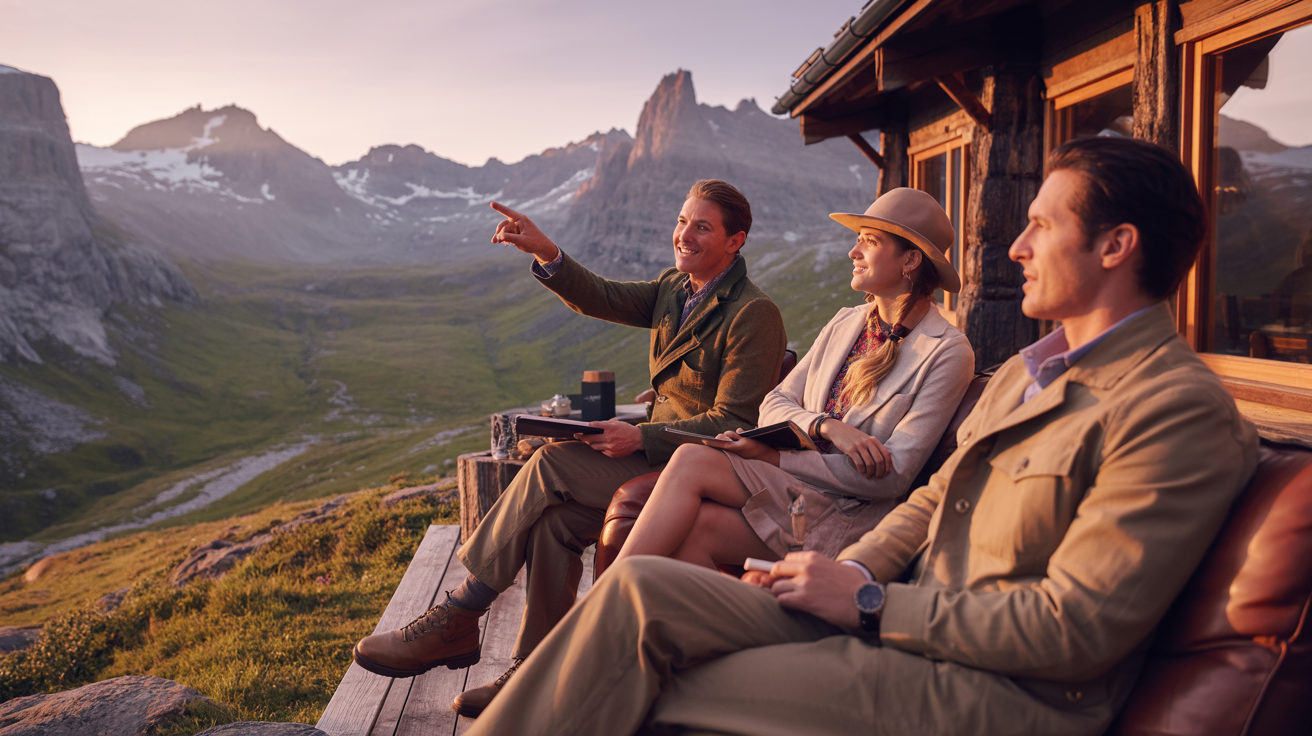
There’s a fascinating shift happening right now at the intersection of extreme exploration and premium travel. For decades, the luxury market was defined by predictable opulence. It meant gilded hotel lobbies, manicured beach resorts, and multi-course dinners in major European capitals. Adventure travel, on the other hand, was always associated with grit, deprivation, and sacrificing comfort just to get access. You could have comfort, or you could have the wild edges of the earth, but you could rarely have both.
That old divide has completely vanished. Today, the most affluent travelers aren’t interested in standard, coddled vacations anymore. They’re looking for something far more compelling, which is high-end adventure. This movement isn’t driven by a desire for material display. Instead, it’s fueled by a craving for deep psychological contrast, the absolute thrill of standing in a harsh, untamed environment while surrounded by total comfort and privacy.
The true luxury of our time has become experiential access. It’s the ability to witness the rarest sights on the planet without the noise, crowds, or rigid schedules of mass tourism.
From Material Display to Experiential Contrast
To understand this trend, you have to look at the psychology of the modern high-net-worth traveler. In a world where premium goods are easily accessible, material luxury has lost much of its cultural weight. When anyone can book a five-star suite in New York or Paris, those experiences stop feeling rare. They become routine.
True luxury is now measured by scarcity and isolation. Affluent travelers spend their daily lives surrounded by hyper connectivity, constant digital demands, and crowded urban environments. When they step away, they want a complete break from that reality. They want to experience landscapes that feel raw, ancient, and entirely indifferent to human presence.
However, running away from the grid doesn’t mean they want to rough it. The modern adventure traveler expects a seamless integration of world class hospitality and wild exploration. They want to spend their afternoon navigating moving ice sheets or tracking rare wildlife, and their evening enjoying gourmet cuisine and exceptional privacy. It’s the contrast between the harshness outside and the warmth inside that creates the magic.
The Power of Ultimate Privacy
As popular travel destinations become more crowded, privacy has become the rarest asset in the travel industry. Even the most exclusive resorts often require sharing amenities, dining rooms, and viewing platforms with strangers. For travelers who value total discretion, this is a significant drawback.
This need for isolation has caused a surge in demand for exclusive asset buyouts in remote regions. Travelers are bypassing traditional luxury lodges in favor of experiences that guarantee they won’t have to share their horizon with anyone else.
When you have complete control over your environment, the nature of travel changes entirely. The schedule becomes your own. If you want to spend six hours watching a single glacier or change your route at a moment’s notice to follow a breaking weather system, you can do it. You’re no longer bound by the logistics of a group or the rigid timetable of a commercial operator.
For travelers who want true distance from the familiar, a private cruise to Arctic regions captures the heart of this new way of seeing the world. Picture a small expedition vessel tracing the remote fjords of Svalbard, far from crowded viewpoints and rigid group itineraries. On board, the pace feels personal: a handful of close companions, an expert crew, and the polar landscape unfolding quietly beyond the glass. The vessel becomes more than transportation. It is a secluded base for watching glaciers, crossing icy waters, and experiencing one of the planet’s most dramatic wildernesses without the usual noise of mass tourism.
The Rise of the Scientific Companion
Another major element of this trend is the desire for intellectual depth. High-end adventure travelers don’t just want to look at a beautiful landscape. They want to understand it. They’re looking for an educational return on their time investment.
Because of this, the traditional tour guide has been replaced by world-class experts. Modern expeditions are accompanied by resident marine biologists, glaciologists, historians, and wildlife researchers. These are professionals who’ve spent decades studying the specific ecosystems being visited.
Instead of reading a generic brochure, travelers spend their evenings discussing polar ice degradation, apex predator behaviors, or early exploration history with the very scientists conducting the research. This intellectual engagement adds a profound layer of meaning to the journey. It transforms a simple vacation into a memorable, deeply transformative experience that stays with the traveler long after they return home.
Redefining the Horizon
Ultimately, the luxury travelers of today are looking for an emotional and mental reset. They want to return to their daily lives feeling completely clear-headed, grounded, and deeply reconnected to the natural world. They want stories about quiet moments of wonder rather than descriptions of busy beach clubs or famous city landmarks.
As the world continues to grow more crowded and connected, the premium placed on silence, space, and wildlife will only increase. The future of high-end travel doesn’t belong to the loudest or most ostentatious destinations. It belongs to the quiet places, the empty horizons, and the unmatched luxury of absolute solitude in the wild.
