

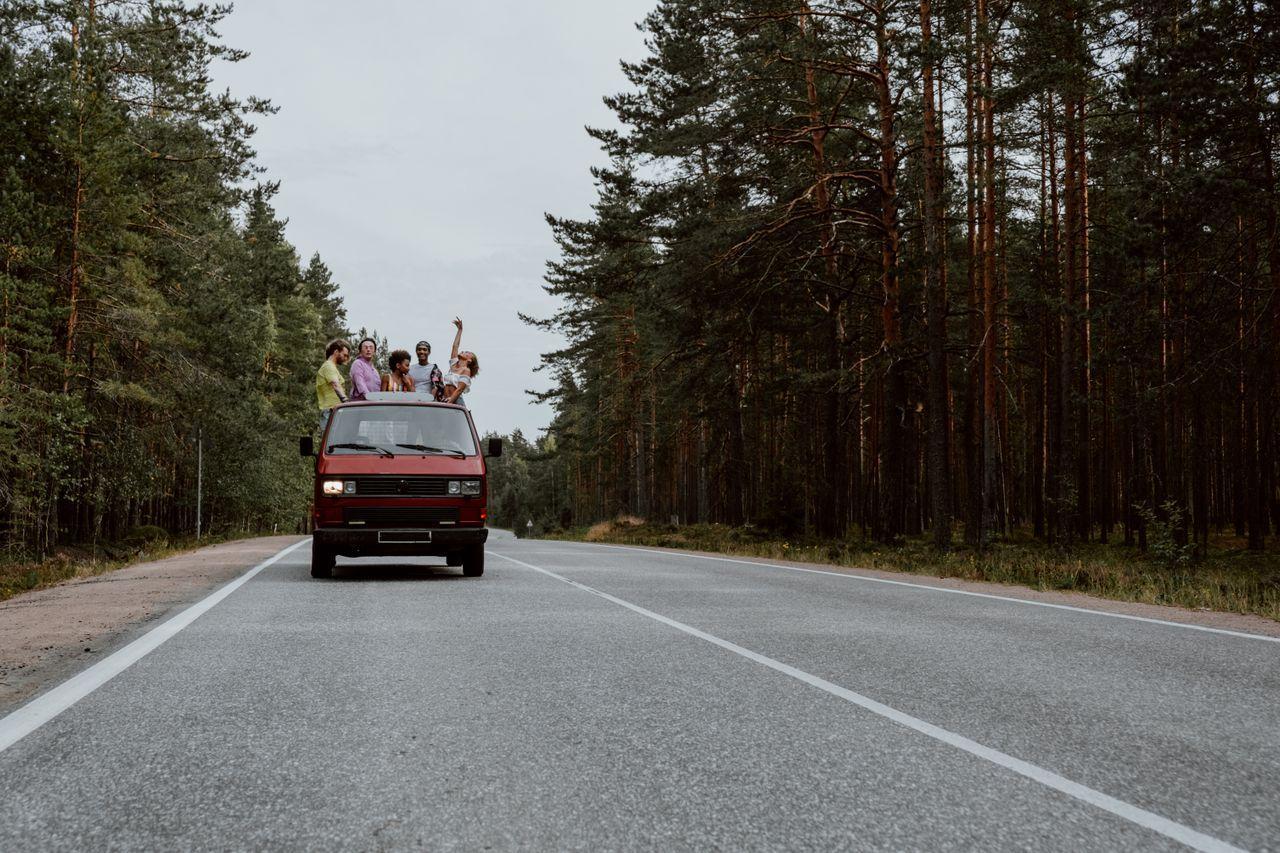
If your idea of a movie road trip begins and ends with the Hollywood sign, we’ll take a wild guess and say you’ve probably never visited Oklahoma. And if you have, you haven’t been to the right places.
Most people think of California or New York when they hear “cinema history.” But Oklahoma has actually anchored some of the rawest, most visceral storytelling in American film. Why? Probably because it doesn’t feel like a movie set pretending to be somewhere else.
If you’ve seen Killers of the Flower Moon, The Outsiders, August: Osage County, or Twisters, you’ve already looked at parts of the state through a movie camera. That’s reason enough to plan a drive.
But if you’re after an unforgettable road trip, please don’t stop for filming locations only – Oklahoma has so much more to offer! From museums to national parks to classic diners and more, there’s plenty to see and experience here.
Pack Like a Seasoned Road-Tripper
If you think you’re a master packer but have never driven across the Plains, you’re in for a surprise. You’ll probably remember your camera; it’s the charging cable you leave behind. Or you’ll drive through cattle country for an hour before realizing there isn’t a lunch spot in sight.
So, keep the basics in the car:
- Plenty of water and non-melting snacks
- A practical first-aid kit and sunglasses
- A paper map (for when signal drops between towns)
- A high-capacity portable battery pack
One thing that’s less fun to think about: traffic safety. Oklahoma sees thousands of crashes every year, and impaired driving remains a serious factor in many of them, according to the Oklahoma Highway Safety Office.
Nobody starts a vacation expecting to deal with insurance companies or legal paperwork. Still, if another driver’s decisions derail your trip, DM Injury Law has resources that explain what comes next after an Oklahoma drunk driving accident. It’s five minutes of reading you hope never matters.
Start in Tulsa, Where Movie History Still Feels Alive
Some cities lean into their film history so hard they become gift shops with sidewalks. Tulsa somehow avoided that, and that’s a good thing.
The Outsiders House Museum is the obvious stop. Fans love it, and for good reason. But spend another hour wandering nearby neighborhoods, and you’ll notice something else too. Brick storefronts, old neon signs, and streets that haven’t been polished into generic downtown districts. The realness, in other words (directors notice details like that, and so do photographers).
If you have time, catch a film at the historic Circle Cinema. It isn’t connected to every Oklahoma production, but it fits the mood better than rushing back to the interstate.
Pawhuska Proves Small Towns Can Steal the Spotlight
When Martin Scorsese filmed Killers of the Flower Moon, he didn’t need Pawhuska to become something different. The town already had what the story needed: wide streets, historic buildings, and space that feels honest instead of curated.
Walk instead of driving through downtown. You’ll notice more that way. And spend a little time learning about the Osage Nation while you’re there. The film tells one chapter, but the community tells the rest, and it’s the better conversation.
Route 66 as the Co-Star
Every Oklahoma road-trip article tells you to drive Route 66. They’re right, but they’re also a little lazy about explaining why.
The appeal isn’t nostalgia alone. It’s the weird little chain of discoveries that keeps interrupting your schedule: an old service station, a diner that somehow still serves pie the way diners should, a restored motel sign… then another. Suddenly you’ve spent forty minutes somewhere you never intended to stop.
Pops in Arcadia usually gets the headlines. It’s fun, so absolutely go. Then keep driving.
The Round Barn sits just down the road. Chandler has more personality than most people expect. And Clinton’s Route 66 Museum adds context that makes the rest of the drive more interesting because you stop seeing old buildings and start seeing the stories behind them.
Head Toward the Tallgrass Prairie Preserve
Movies rarely capture how big Oklahoma actually feels. Drive into the Tallgrass Prairie Preserve, and you’ll understand what the camera misses.
The preserve appeared in To the Wonder, but even without the movie connection, it’s one of the state’s most impressive natural areas. There isn’t much to “do,” but that’s almost the point.
Roll the windows down. Watch the bison if they’re nearby. Stay longer than your itinerary says you should. Oh, and the wide-open prairie photographs surprisingly well throughout the day, especially under changing skies.
Leave Room for Unscripted Stops
A mistake that many road-trippers make is cramming ten destinations into one day because every stop looks “only 20 minutes away.” Unfortunately, that rarely works. You just end up exhausted.
Instead, skip one filming location if your schedule gets tight. Seriously. Replace it with an afternoon that has no destination. Walk through a courthouse square, go to a bookstore, or order pie from a place that still writes the daily specials by hand.
That’s the advantage of an Oklahoma cinema road trip. Hollywood gives you the starting point, which is great, but the state does the rest. By the time you head home, the places you remember most probably won’t be the ones that appeared on screen.
