

Egypt has a way of living in people’s imagination long before they ever visit.
You picture the Pyramids rising out of the desert. You imagine the Sphinx watching quietly as the sun moves across the sand. You think of golden tombs, ancient temples, the Nile, crowded markets, and stories that feel almost too old to fully understand.
And then, once the dream starts turning into an actual trip, the practical questions show up.
Will it be exhausting?
Will it feel too rushed?
Can you travel comfortably and still feel the real wonder of Egypt?
The answer is yes. Absolutely.
Comfort does not have to make a trip feel shallow or over-managed. In fact, when it is done well, comfort can help you experience Egypt more deeply. It gives you more energy, more patience, and more room to actually notice what is happening around you.
Because Egypt is not a place you want to simply “get through.” You want to feel it. You want to stand still long enough for the scale of it to sink in. You want to hear the stories, look closely at the carvings, watch the light change over the Nile, and leave with memories that feel personal, not just a full camera roll.
That kind of trip starts with the right mindset.
Give Yourself Enough Time to Actually Take It In
Egypt is rich in a way that can feel overwhelming at first. There is so much to see, and most travelers naturally want to fit in as much as possible.
That makes sense. You may be traveling a long distance. You may have dreamed about this trip for years. You may feel like you need to make every day count.
But here is the thing. A packed schedule is not always a better schedule.
When every hour is filled, even the most incredible places can start to blur together. One temple becomes another temple. One museum room becomes another room. You are physically there, but mentally you are already thinking about the next stop.
And Egypt deserves more than that.
The Pyramids, for example, are not something you want to rush. Of course, you can stand there, take photos, and say you saw them. But the real moment comes when you pause. When you look up and realize human beings built these massive structures thousands of years ago. When the noise fades a little and the size of the place finally hits you.
That takes time.
A comfortable Egypt trip is not about moving slowly all the time. It is about creating enough breathing room so the big moments have space to land. It means not stuffing your itinerary so tightly that you end each day feeling like you survived it rather than lived it.
You will still see a lot. You will still have full days. But the pace should make sense. There should be time to drink water, sit down, ask questions, take a second look, and maybe just stare at something beautiful without feeling guilty about it.
That is often where the wonder begins.
Let the Stories Do Some of the Heavy Lifting
Ancient sites are impressive on their own. You can walk into a temple or stand in front of a statue and feel the power of it right away.
But when you understand what you are looking at, everything changes.
A wall carving is no longer just a wall carving. It becomes a message. A tomb is no longer just a dark chamber with painted scenes. It becomes a glimpse into how people thought about life, death, power, family, belief, and the world beyond this one.
That is why the right guide can make such a big difference.
Not the kind of guide who simply lists dates and names until your brain gets tired. You want someone who can make the past feel alive. Someone who can point out the small details you would have missed. Someone who can explain why a symbol matters, why a temple was built in a certain way, or why a story from thousands of years ago still feels strangely human today.
Because that is one of the most surprising things about Egypt. It is ancient, yes, but it is not cold or distant. The more you learn, the more personal it becomes.
You start to see ambition, devotion, fear, love, pride, and hope carved into stone. You start to realize that people have always been people, even when they lived in a world that looks completely different from ours.
That kind of context does not take away from the mystery. It adds to it.
It helps you connect. And when you connect, you remember.
Stay Close to What Matters
Comfort in Egypt is not only about soft beds or nice hotel lobbies, although those certainly help after a long day. It is also about smart logistics.
Where you stay matters. How far you have to drive matters. How your days are arranged matters more than most people realize.
When your hotel is well located, you spend less time sitting in traffic and more time experiencing the place you came to see. When transfers are smooth, you do not waste energy worrying about what comes next. When meals, transportation, and site visits are planned thoughtfully, the whole trip feels easier.
And easier does not mean less authentic.
It means you have more energy to be present.
For travelers who want a balanced introduction to the country, an experience like 8 days in Egypt can offer enough time to see the major highlights without turning every day into a race from one landmark to the next.
That balance is important.
Because Egypt can ask a lot from you. The heat, the crowds, the long days, the emotional weight of the history, it all adds up. Even when everything is exciting, it can still be tiring.
Comfort helps protect your attention. It keeps you from spending the whole trip thinking about your sore feet, your next transfer, or whether you packed enough snacks. Those things sound small, but they shape the experience.
The goal is not to be shielded from Egypt. The goal is to be supported enough to meet it fully.
Let the Nile Change the Rhythm
After the energy of Cairo, the Nile can feel like a deep breath.
There is something about being near the river that slows everything down. The pace softens. The light feels warmer. The landscape begins to open up in a different way.
A Nile cruise is one of the best examples of comfort and wonder working together.
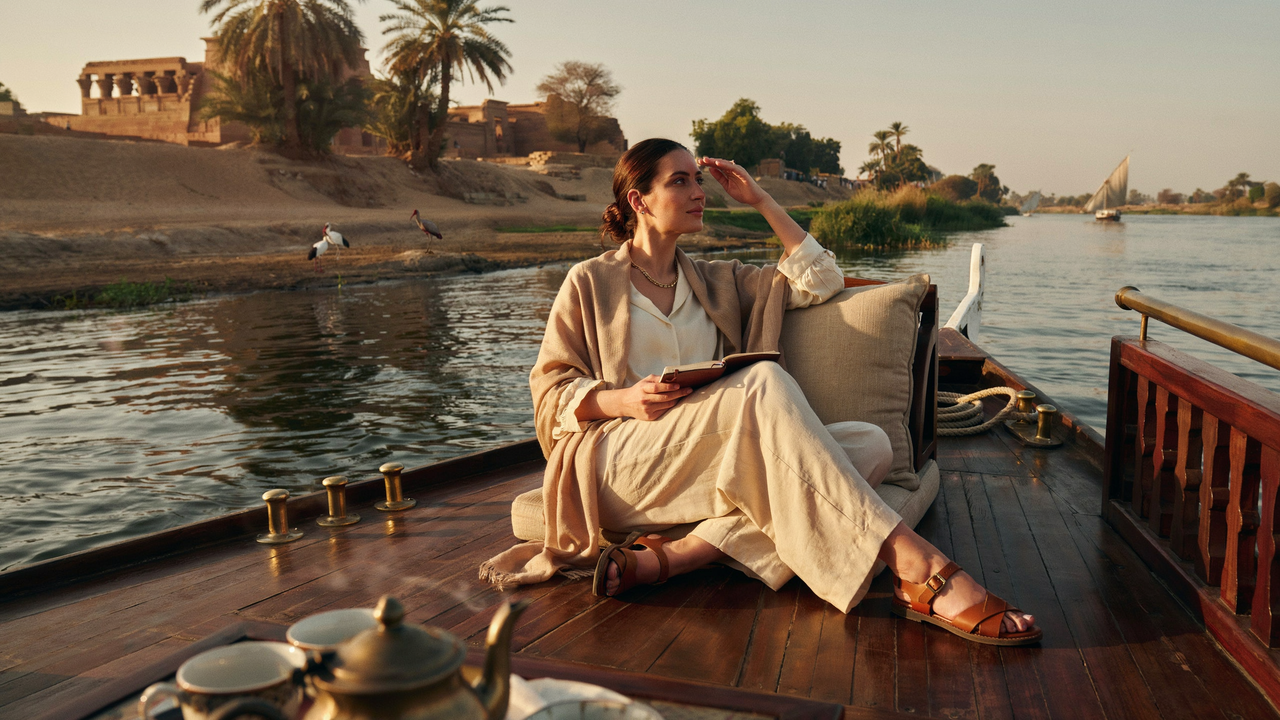
You are not just being transported from one place to another. You are watching Egypt unfold along the water, much as people have for thousands of years. You see small villages, palm trees, fields, boats, birds, and the quiet movement of daily life along the banks.
It is peaceful, but it is not empty.
There is history everywhere. The Nile was not just a pretty backdrop to ancient Egypt. It was life itself. It shaped farming, trade, belief, travel, and survival. To spend time on the river is to understand the country in a way that feels less like reading a fact and more like feeling a truth.
And honestly, after busy sightseeing days, that slower rhythm matters.
You can visit temples, hear incredible stories, and then return to the calm of the river. You can sit with a cup of tea and let the day settle. You can watch the sun drop lower and realize you are not rushing toward anything in that moment.
That is a rare feeling when you travel.
Sometimes the most luxurious part of a trip is not the room, the meal, or the service. It is having enough quiet to absorb where you are.
Make Room for the Small Moments Too
The famous sights are famous for a reason. You should see them. You should let yourself be amazed by them.
But do not overlook the smaller moments.
A trip to Egypt is not only made of monuments. It is also made of conversations, meals, street sounds, warm bread, strong coffee, market colors, boat rides, and the everyday rhythm of people going about their lives in a place layered with history.
Those moments can stay with you just as strongly as the big ones.
Maybe it is the call to prayer drifting through the air while you are getting ready in the morning. Maybe it is the first time you taste a dish you did not expect to love. Maybe it is a quiet smile from someone in a shop, or the way the desert looks just before sunset.
These are not always the moments that make it into travel brochures.
But they matter.
They help you feel the country as a living place, not just an ancient one. They remind you that Egypt is not frozen in the past. It is full of movement, personality, humor, noise, warmth, and daily life.
Comfort should never cut you off from that.
A good trip gives you access to the major landmarks, but it also leaves space for texture. You want enough structure to feel safe and relaxed, but enough openness to notice what is happening around you.
That is where travel starts to feel personal.
Trade the Checklist for Curiosity
There is nothing wrong with having a list of things you want to see. Most people do. The Pyramids, the Sphinx, the Grand Egyptian Museum, the Valley of the Kings, Karnak, Luxor, the Nile, these places belong on the list for a reason.
But if the whole trip becomes only about checking boxes, you may miss the deeper experience.
Try approaching Egypt with curiosity instead.
Ask yourself, what did this place mean to the people who built it? What would daily life have felt like here? Why did these symbols matter so much? What did people fear? What did they hope for? What did they want to leave behind?
Those questions make the experience more human.
They also make it easier to slow down. Instead of just snapping a photo and moving on, you begin to look more closely. You notice the hands carved into the stone. The colors that somehow remain after thousands of years. The scale of a doorway. The silence inside a tomb. The way a guide’s voice changes when they tell a story they clearly love.
That kind of attention turns sightseeing into something richer.
And it does not require you to be a history expert. Not at all. You only need to be open.
You can come to Egypt knowing very little and still leave deeply moved. In some ways, that is part of the joy. You are allowed to be surprised. You are allowed to ask simple questions. You are allowed to stand there and think, how did humans do this?
That question never gets old.
Use Comfort as a Tool, Not a Wall
Some travelers worry that choosing comfort will make their trip feel less real. They imagine that a more comfortable experience means being separated from the country itself.
But comfort does not have to work that way.
Comfort becomes a problem only when it creates distance. When it keeps you sealed away from the place. When the trip feels so polished that nothing unexpected, local, or alive can enter.
But thoughtful comfort is different.
Thoughtful comfort removes the stress that does not add meaning. It helps with the things that can drain you, like confusing logistics, unreliable transportation, rushed schedules, poor planning, and decision fatigue.
That way, you can spend your energy on what actually matters.
You can listen better. You can look longer. You can enjoy your meals instead of rushing through them. You can sleep well and wake up ready for another full day. You can handle the heat, the walking, and the crowds with more patience.
In a country as layered as Egypt, that matters a lot.
There is no prize for being uncomfortable just for the sake of it. A meaningful trip does not have to be hard to count as real. Sometimes the right support is what allows you to go deeper, not less deep.
Think of comfort as a bridge.
It helps you cross from interest into understanding. From excitement into presence. From seeing the highlights into actually feeling them.
Choose Guides, Not Just Plans
A strong itinerary matters, but the people shaping the experience matter just as much.
In Egypt, a good guide can change the entire tone of your trip. They can help you move through busy sites with more ease. They can explain cultural details you might not know. They can read the energy of the group, adjust the pace, and bring stories to life in a way that feels natural.
That human layer is important.
Because travel is not just information. You can read facts online. You can watch documentaries. You can scroll through photos for hours.
But standing in front of an ancient site while someone explains its meaning, with the heat on your skin and the stone right in front of you, is different. It lands differently.
The best guides do more than teach. They help you care.
They turn names into people and ruins into places that once held ceremonies, prayers, politics, grief, celebration, and ordinary daily life. They help you see the difference between simply visiting Egypt and actually paying attention to it.
That is where the wonder deepens.
Keep Some Flexibility in the Day
Even the best-planned trip needs a little breathing room.
Not every minute has to be scheduled. In fact, some of the best travel moments happen in the spaces between plans.
Maybe you want ten more minutes at a viewpoint. Maybe a museum room catches your attention more than expected. Maybe you need a slower morning after several full days. Maybe you simply want to sit and watch the Nile for a while without feeling like you are falling behind.
That is not wasted time.
That is part of the experience.
A comfortable trip allows for small adjustments. It does not treat you like a machine that can absorb history, beauty, and movement nonstop without needing a pause.
You are human. Travel should make room for that.
When there is some flexibility, the whole journey feels less pressured. You are not constantly measuring the day against a schedule. You are living it.
And when you are more relaxed, you are more likely to notice the details that make Egypt unforgettable.
Let Egypt Be Big
One of the best things you can do when visiting Egypt is to let it feel big.
Do not try to reduce it to a simple travel experience. Do not expect to understand everything right away. Do not rush to turn every moment into a caption or a neatly packaged memory.
Some places are meant to leave you a little speechless.
Egypt is one of them.
There will be moments when the history feels too vast to fully take in. Moments when the beauty feels almost unreal. Moments when you realize that people stood in the same landscapes thousands of years before you, looking at the same river, the same sun, the same desert sky.
That feeling is part of the gift.
A comfortable trip does not make that wonder smaller. When planned with care, it gives you enough steadiness to receive it.
You do not need to choose between ease and awe. You can have both.
You can travel with good support, stay in comfortable places, move at a thoughtful pace, and still feel the mystery of ancient Egypt all around you. You can enjoy the practical side of a well-planned trip while still leaving room for surprise, emotion, and quiet amazement.
In fact, that may be the best way to experience Egypt.
Not rushed. Not overwhelmed. Not so focused on logistics that you miss the magic.
Just a present.
Egypt stays with you because it feels larger than ordinary life. The more space you give yourself to experience it, the more it gives back.
