

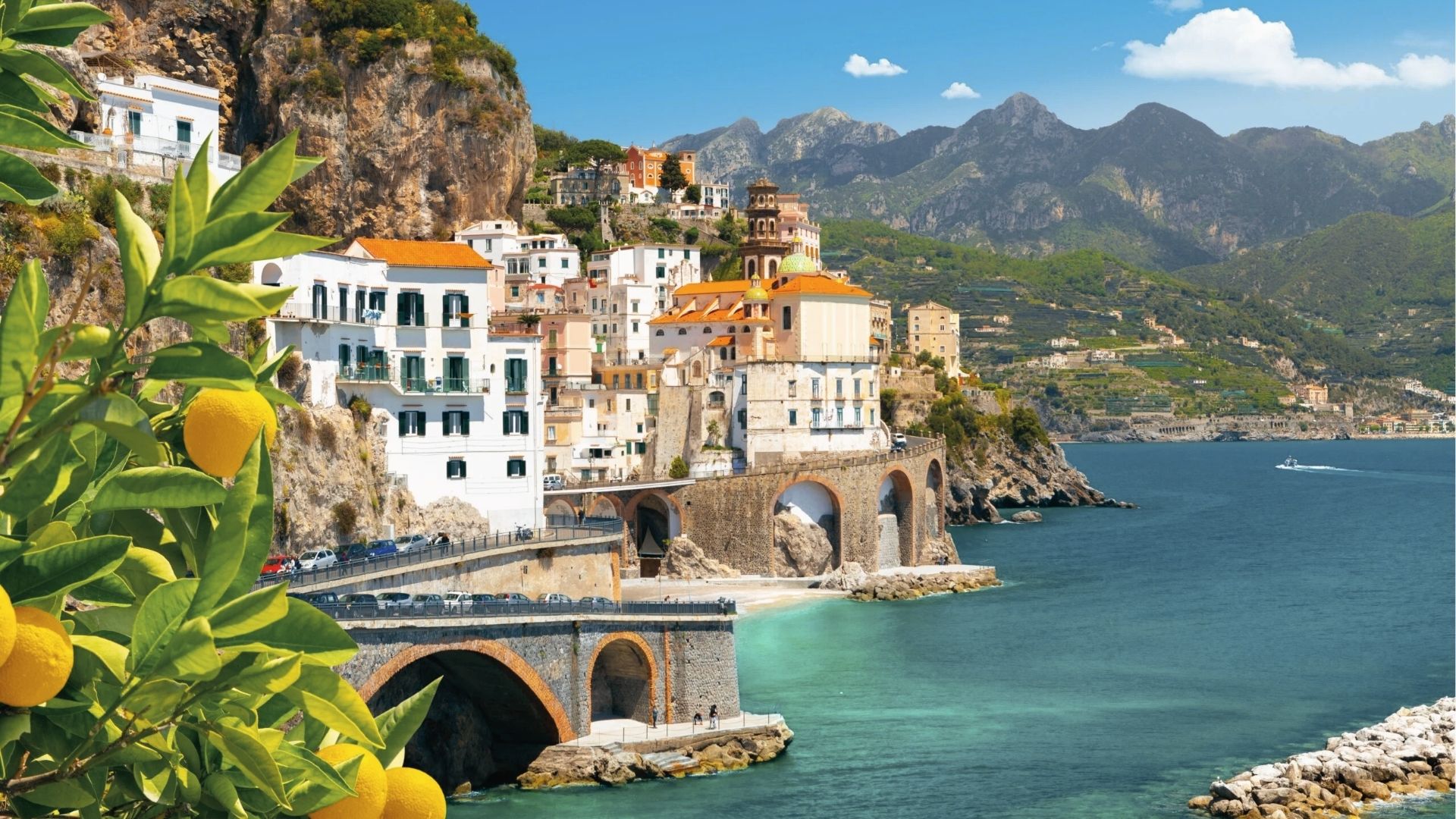
I’ve been asked about the Amalfi Coast location more times than I can count. People want to know where it sits, how to get there, and which towns are worth staying in.
This guide covers all of that in one place. I’ll walk you through the map, the main towns, every way to get here, and tips I picked up from real time spent on this coast.
You’ll also get a simple itinerary and a list of nearby places worth seeing. I’ve done the research and the leg work so you don’t have to start from scratch.
By the end, you’ll know exactly how to plan a trip that actually works.
Amalfi Coast Location on the Map (Understanding the Region)

If you’ve ever searched “where is Amalfi Coast located,” here’s the clearest answer I can give you. The Amalfi Coast Italy location sits in southern Italy, along the Tyrrhenian Sea.
Here’s how the geography breaks down:
Italy → Campania region → Sorrentine Peninsula → Amalfi Coast
That hierarchy matters when you’re planning transport and understanding how far things actually are from each other.
The coast stretches about 50 kilometers. Positano anchors the western end. Vietri sul Mare sits at the eastern end. If you pull up a map of Amalfi Coast Italy, you’ll see how tightly the towns are packed along that narrow cliff road.
Naples is the closest major city, roughly 65 kilometers to the north. Salerno sits at the eastern end and is often overlooked as a starting point. Both cities act as gateways to the area.
The terrain is steep. Roads are narrow. Every town clings to a cliff. That’s just how this place is built, and it affects how you plan everything.
Why the Amalfi Coast Location Is So Famous
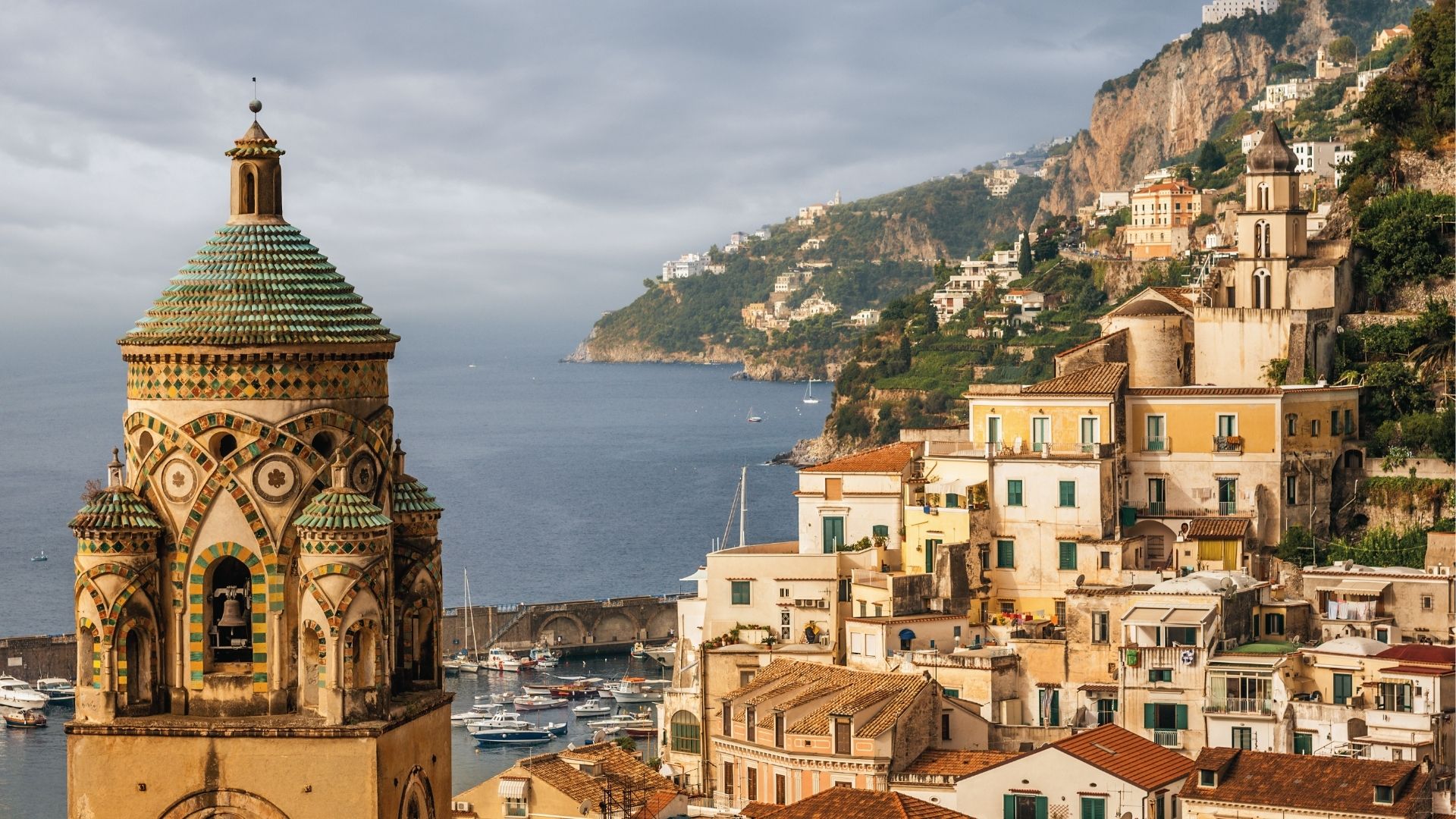
It’s not just the water. The location itself is what makes this coast stand out.
It sits between mountains and the sea. Towns are carved into rock faces that drop straight down to the shore. The views shift constantly as you move along the road. That combination of rough cliffs and calm blue water is hard to find anywhere else in Italy.
In 1997, it was named a UNESCO World Heritage Site. That wasn’t just about scenery. Centuries of people building towns directly into impossible terrain made this coast what it is today.
I’ve seen a lot of coastlines. This one feels different because of how the land, sea, and towns all press together in such a tight space.
How to Get to the Amalfi Coast (Best Routes Explained)
There’s no airport on the coast. Getting here means combining a few transport options, so planning matters.
By Air
Fly into Naples International Airport. It’s your best option for reaching the Amalfi Coast Italy location. Rome’s Fiumicino works too, but it adds significant travel time.
From Naples, you have multiple ways to reach the coast.
By Train
From Naples, trains run to both Salerno and Sorrento. Salerno gives direct ferry access to Amalfi and Positano.
Sorrento connects you via ferry or bus along the coast road. Both work well depending on where you want to start.
By Car
Driving is possible, but I’d think carefully before renting one. The SS163 coast road is narrow, winding, and extremely busy from June through August.
Parking is costly and hard to find. If you drive, leave early in the morning before the traffic builds.
By Ferry
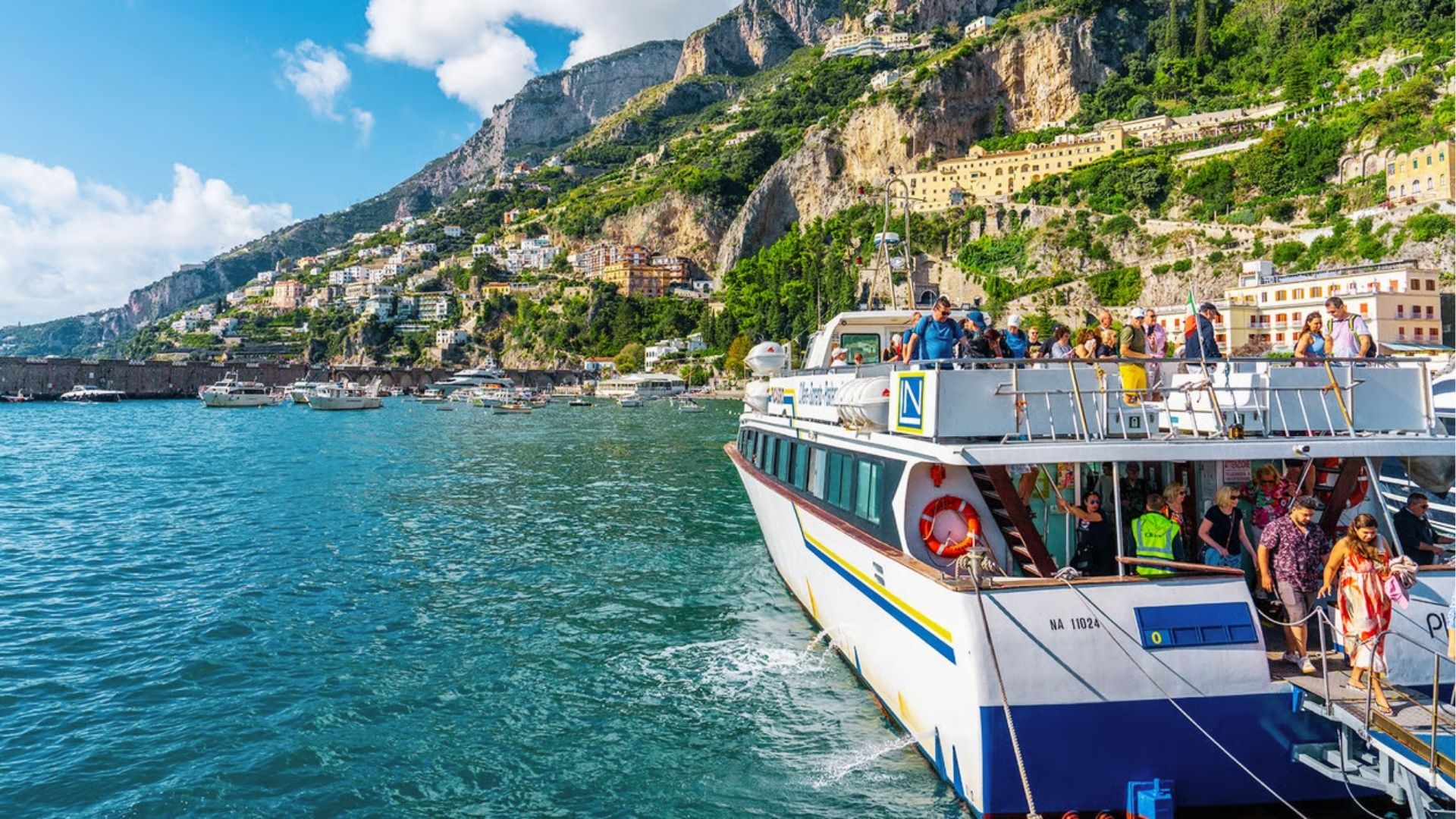
This is the option I’d choose every time. Ferries run from Naples, Sorrento, and Salerno to most towns on the coast.
Arriving by sea, watching Positano rise up from the cliffs, is a completely different experience from arriving by road. It’s also faster in peak season.
Best Towns on the Amalfi Coast Location Map
Where you stay shapes your entire trip. Here’s what you need to know about each main town.
Positano (Central & Scenic)
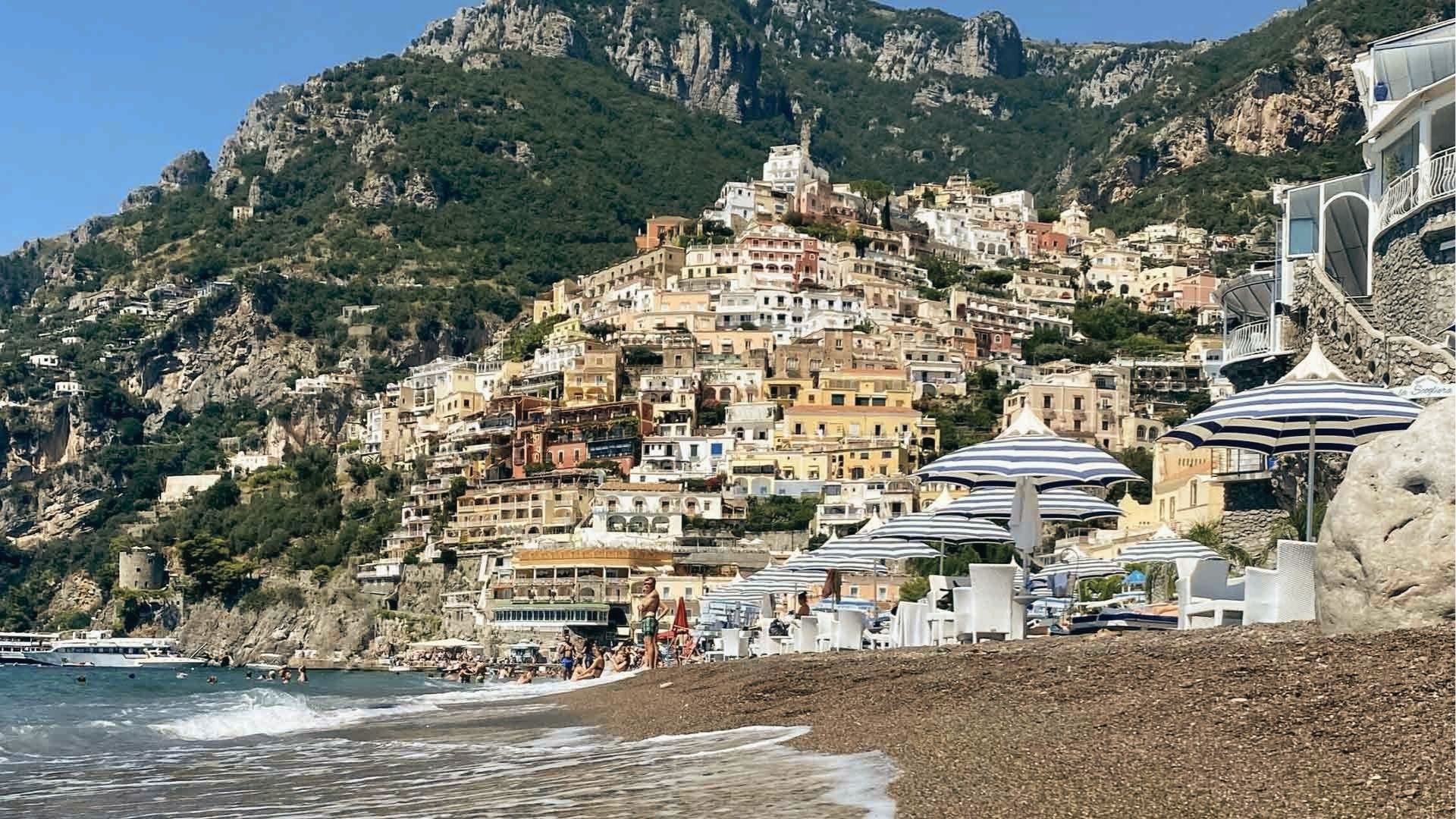
Positano is the most photographed town on the coast and sits roughly in the middle of the Amalfi Coast location map. It’s a good base because ferries and buses run frequently from here.
Prices are high. Most hotels are built into the hillside, so expect a lot of stairs no matter where you book.
Amalfi (Convenient Hub)
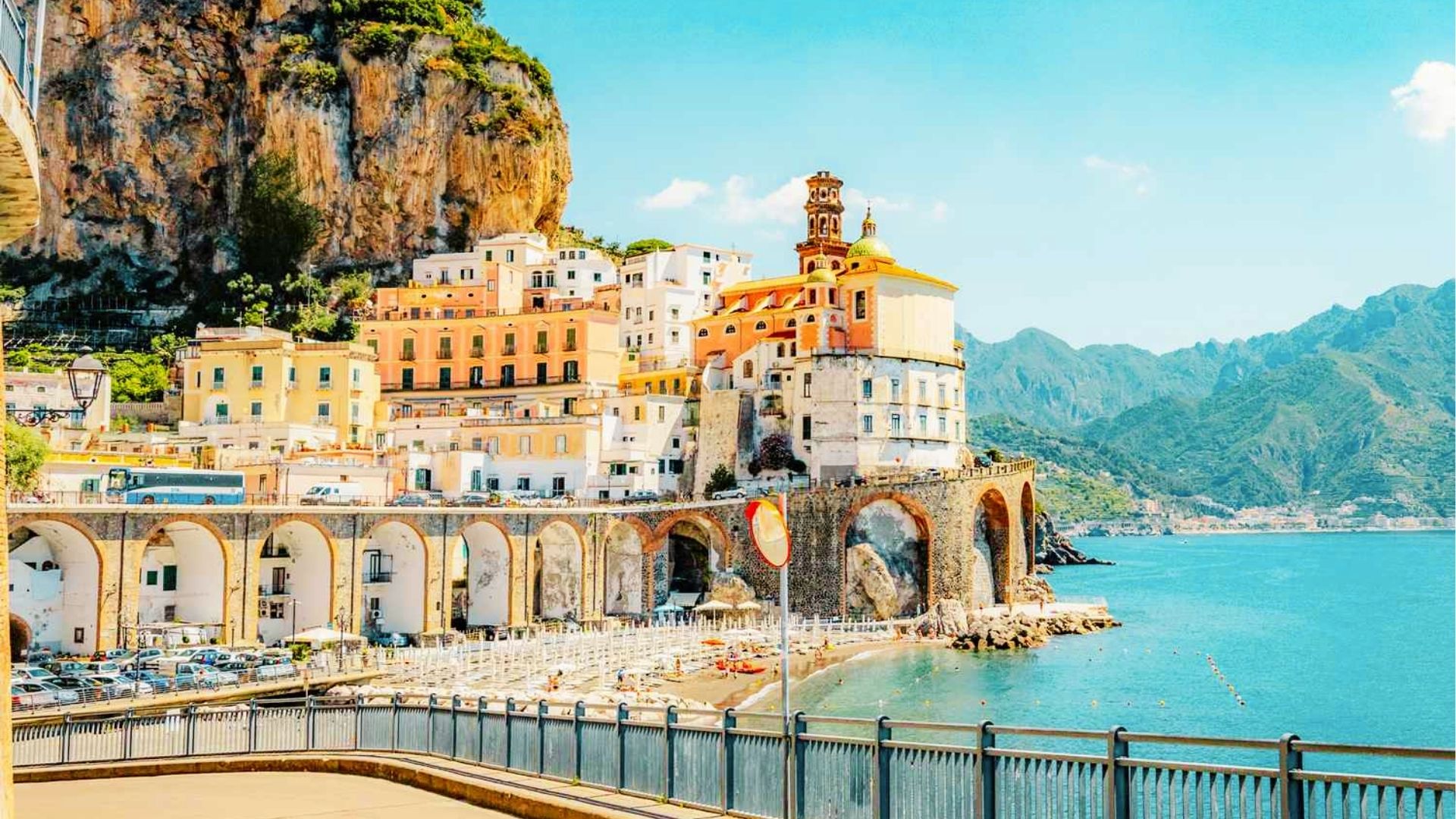
Amalfi town has ferry access, bus connections, and more flat ground than most other stops. It’s more affordable than Positano and makes day trips easy.
The cathedral in the main square is worth your time. Mornings are calm. By noon, the day-trippers arrive.
Ravello (Quiet & Elevated)

Ravello sits about 350 meters above the sea. It’s cooler, quieter, and far less crowded than the coastal towns.
The Villa Rufolo gardens are one of the best spots on this entire stretch. If you want calm over convenience, Ravello is the answer.
Praiano (Less Crowded Option)
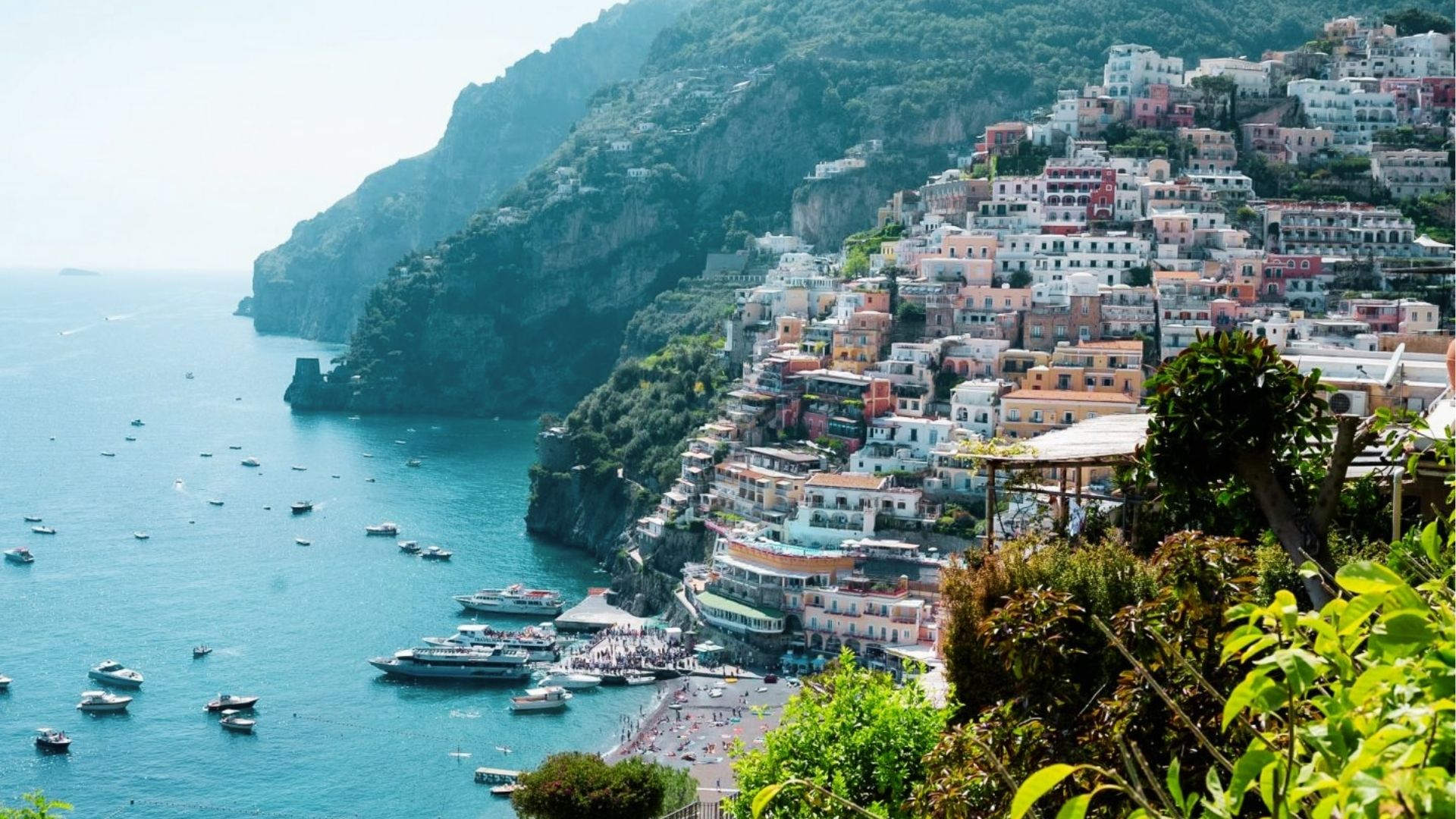
Praiano sits between Positano and Amalfi and gets far fewer visitors. It feels like a real working town.
Prices are lower, the pace is slower, and you can still reach both neighboring towns by bus or boat. I’d pick this one if I were going back on a tighter budget.
Amalfi Coast Location Travel Tips (Local Insights)
Go in May or early October. July and August are packed, expensive, and honestly exhausting. The shoulder season gives you better weather, fewer crowds, and a much calmer experience.
Use the ferry as your main transport. It cuts out the slow coast road and gives you better views.
Book accommodation months in advance. The good spots go fast, especially in summer.
Wear comfortable shoes everywhere. Every town involves steps and uneven ground.
Carry cash. Smaller restaurants and shops often don’t take cards.
Don’t over-schedule yourself. Some of the best moments here come from walking without a plan.
Places Near the Amalfi Coast Location
Knowing the Amalfi Coast Italy location also means knowing what’s within easy reach.
Pompeii is about an hour from Salerno by train. Most visitors pair it with the coast and it fits well into a longer itinerary.
Capri is a short ferry ride from Positano or Sorrento. It’s pricey and busy, but a half-day visit is worth it.
Paestum has ancient Greek temples that most tourists never see. It’s south of Salerno and takes about 40 minutes to reach.
Naples deserves at least a full day. The food alone is a reason to go.
Sample Itinerary Based on Amalfi Coast Location (3–5 Days)
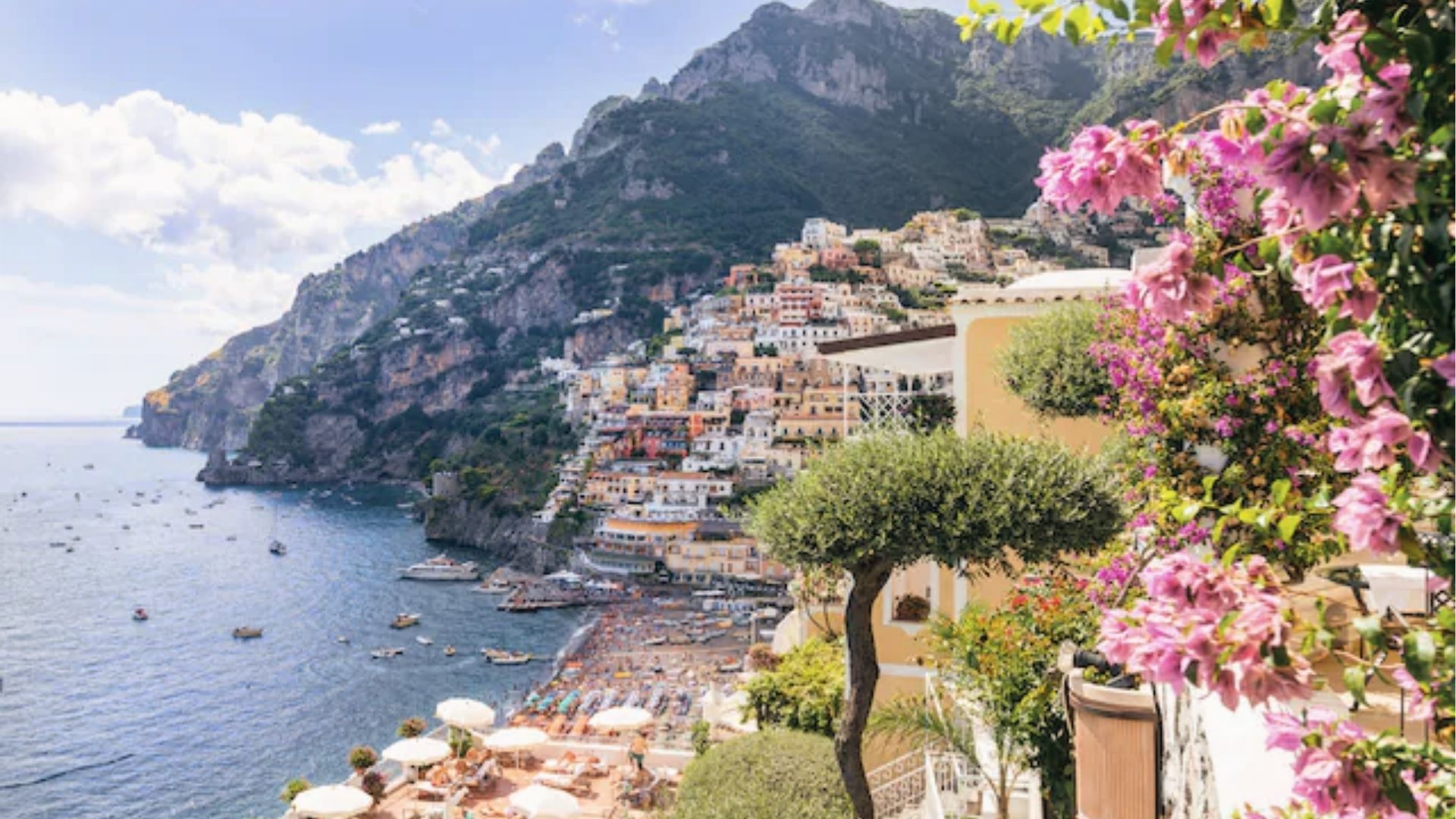
This plan is built around where things actually sit on the map so your travel time between stops stays low.
- Day 1: Arrive in Naples. Rest, eat, walk the old city center.
- Day 2: Ferry to Positano. Settle in, walk around, watch the evening light from the shore.
- Day 3: Ferry to Amalfi. See the cathedral. Take the bus up to Ravello for the afternoon.
- Day 4: Day trip to Capri or Pompeii. Return to your base by evening.
- Day 5: Slow morning in Praiano or your chosen town. Ferry back to Salerno or Naples.
This pace works without feeling rushed. You get to actually feel each place rather than just pass through it.
Common Mistakes Travelers Make About the Amalfi Coast Location
Thinking it’s easy to get around. It’s not. Roads are slow, ferries run on fixed schedules, and not every town has the same access.
Staying only in Positano. It’s a solid base, but you miss a lot if you don’t move between towns.
Going in August. The coast hits peak crowds and peak prices. May and October are significantly better.
Underestimating distances. Towns look close on a map of Amalfi Coast Italy but can take well over an hour to reach by road.
Not booking ahead. Hotels, ferries, and popular restaurants fill up fast in peak months. Plan early or pay the price later.
Conclusion
The Amalfi Coast location is one of those places that’s hard to put into words until you’re standing in it.
I’ve walked you through where it sits on the map, how to get there, which towns work best as a base, and what mistakes to skip. You now have a real starting point instead of just a vague idea.
My honest advice: go in the shoulder season, lean on the ferries, and slow down.
This coast rewards people who aren’t in a rush. Pick a town that fits your pace, settle in for a few days, and let the place show itself to you. That’s when it actually starts to feel worth the trip.
So, which town on the Amalfi Coast are you thinking of making your home base?
Frequently Asked Questions
Where exactly is the Amalfi Coast located?
It sits on the Sorrentine Peninsula in the Campania region of southern Italy. The coast runs along the Tyrrhenian Sea between Positano and Vietri sul Mare.
Is the Amalfi Coast closer to Rome or Naples?
Naples is about 65 kilometers away and is the most practical starting point for most travelers. Rome is roughly 280 kilometers north, making Naples the far better option for flights and connections.
What is the best time to visit the Amalfi Coast?
May and early October offer the best combination of weather, smaller crowds, and reasonable prices. Summer is peak season and comes with packed roads and inflated costs.
Can you drive along the Amalfi Coast?
You can, but the coast road is narrow and gets extremely congested in summer. Ferries and local buses are often a faster, less stressful way to move between towns.
How many days should you spend on the Amalfi Coast?
Three to five days gives you enough time to see the key towns without rushing. Two days is possible for a short visit, but you’ll barely scratch the surface.
