

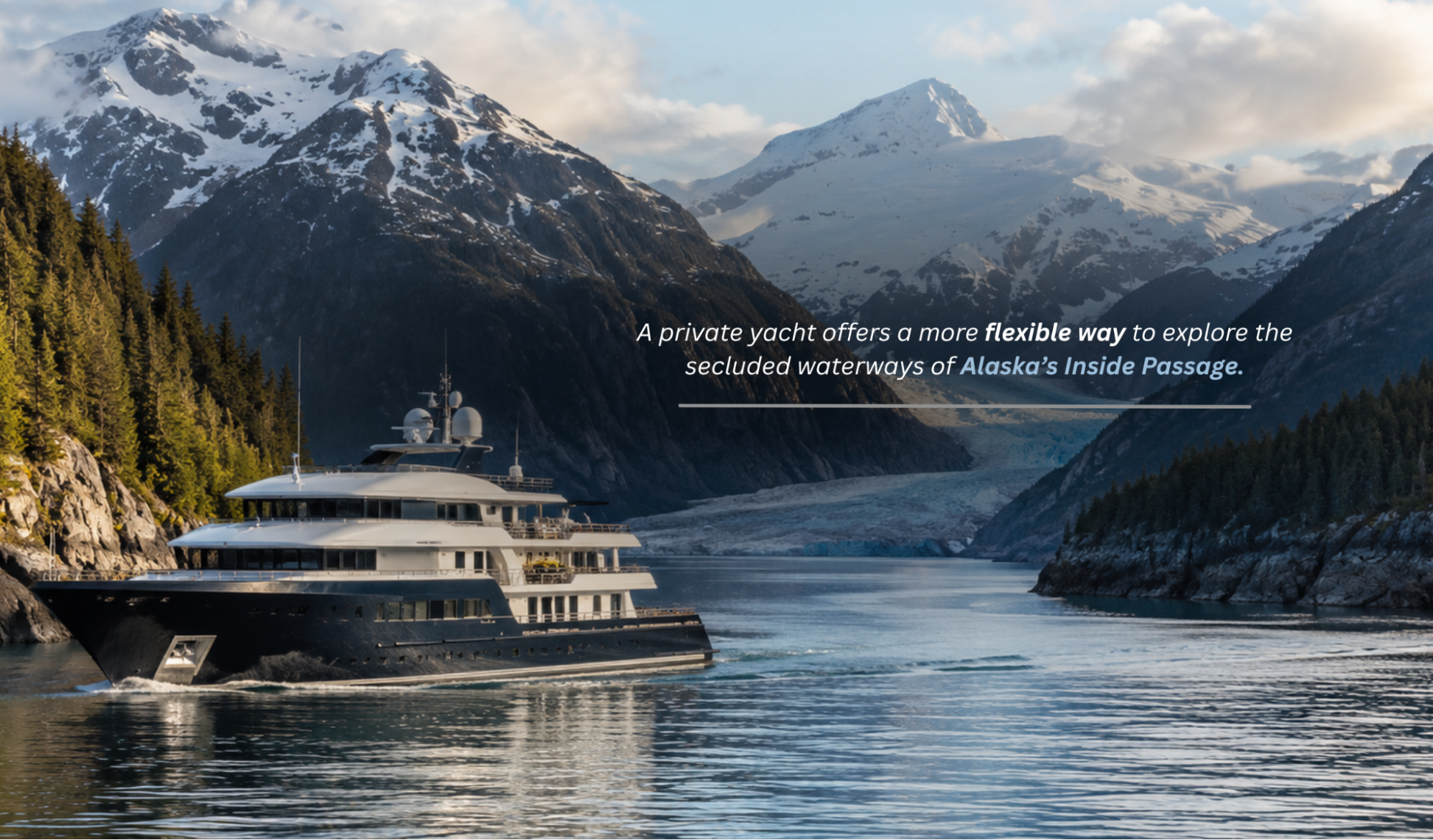
Alaska’s Inside Passage attracts travelers with tidewater glaciers, forested islands, coastal communities and some of North America’s most productive wildlife habitats. Yet growing visitor numbers have made the method of exploration almost as important as the destination itself.
Juneau received almost 1.7 million cruise-passenger visits in 2024. Beginning in 2026, agreements in the state capital limit daily cruise arrivals to 16,000 passengers from Sundays through Fridays and 12,000 on Saturdays. The limits reflect an ongoing effort to balance tourism revenue with congestion, infrastructure demands and residents’ quality of life.
Large cruise ships and private expedition yachts both provide access to Southeast Alaska, but they deliver distinctly different journeys. A conventional cruise emphasizes convenience, predictable costs and onboard amenities. A private yacht emphasizes flexibility, privacy and access to smaller waterways.
The better option depends on whether the priority is seeing Alaska’s best-known highlights or exploring the quieter reaches of the Inside Passage.
Large cruises make Alaska easier to plan
A mainstream Alaska cruise packages transportation, lodging, dining and entertainment into one itinerary. That structure removes many of the logistical decisions involved in moving between communities such as Ketchikan, Sitka, Juneau, Haines and Skagway.
Most large-ship itineraries follow a published schedule. Passengers know the ports, sailing days and available shore excursions before departure. Families and multigenerational groups may also value medical facilities, children’s programs, accessible cabins and multiple dining options.
Cost is another major advantage. A cruise cabin typically costs substantially less than chartering an entire expedition vessel, particularly when the price is divided among only a few travelers.
Large ships can also provide meaningful access to protected landscapes. Cruise vessels visiting Glacier Bay National Park generally spend nine to 10 hours in the park, including time near a major tidewater glacier. National Park Service rangers board participating ships to provide ecological and cultural interpretation.
For travelers seeking a straightforward introduction to Alaska, a large cruise remains an efficient choice.
A fixed schedule can limit time in the wilderness
The convenience of a conventional cruise comes with constraints.
Large vessels must follow assigned port times, shipping lanes and carefully coordinated schedules. A ship may leave even when whales begin feeding nearby, weather clears over a glacier or conditions improve for kayaking.
Port visits can also concentrate thousands of passengers in the same downtown districts, trails and excursion sites. Juneau’s recent passenger limits illustrate the scale of these arrivals and the pressure that peak-day traffic can place on popular destinations.
Much of the Inside Passage lies beyond these established ports. The Tongass National Forest surrounds the region and covers most of Southeast Alaska. The U.S. Forest Service identifies it as the country’s largest national forest, with habitats that support bears, salmon, eagles and other wildlife.
A large ship can pass through this landscape, but its size limits entry into narrow channels, shallow anchorages and secluded coves.
Private yachts follow conditions rather than a timetable
A private yacht changes the rhythm of an Alaska expedition.
Instead of coordinating the day around a fixed port departure, the captain and expedition leader can adjust activities according to tides, weather, wildlife reports and passenger interests. A planned hike may become a whale-watching excursion. A morning departure may be delayed when bears appear along the shoreline.
“No trip goes as planned, no matter how well-planned it is,” said Jen Martin, head of expeditions at EYOS.
That uncertainty is not necessarily a disadvantage in Southeast Alaska. It can become part of the expedition when the vessel carries experienced guides, suitable tenders and contingency plans.
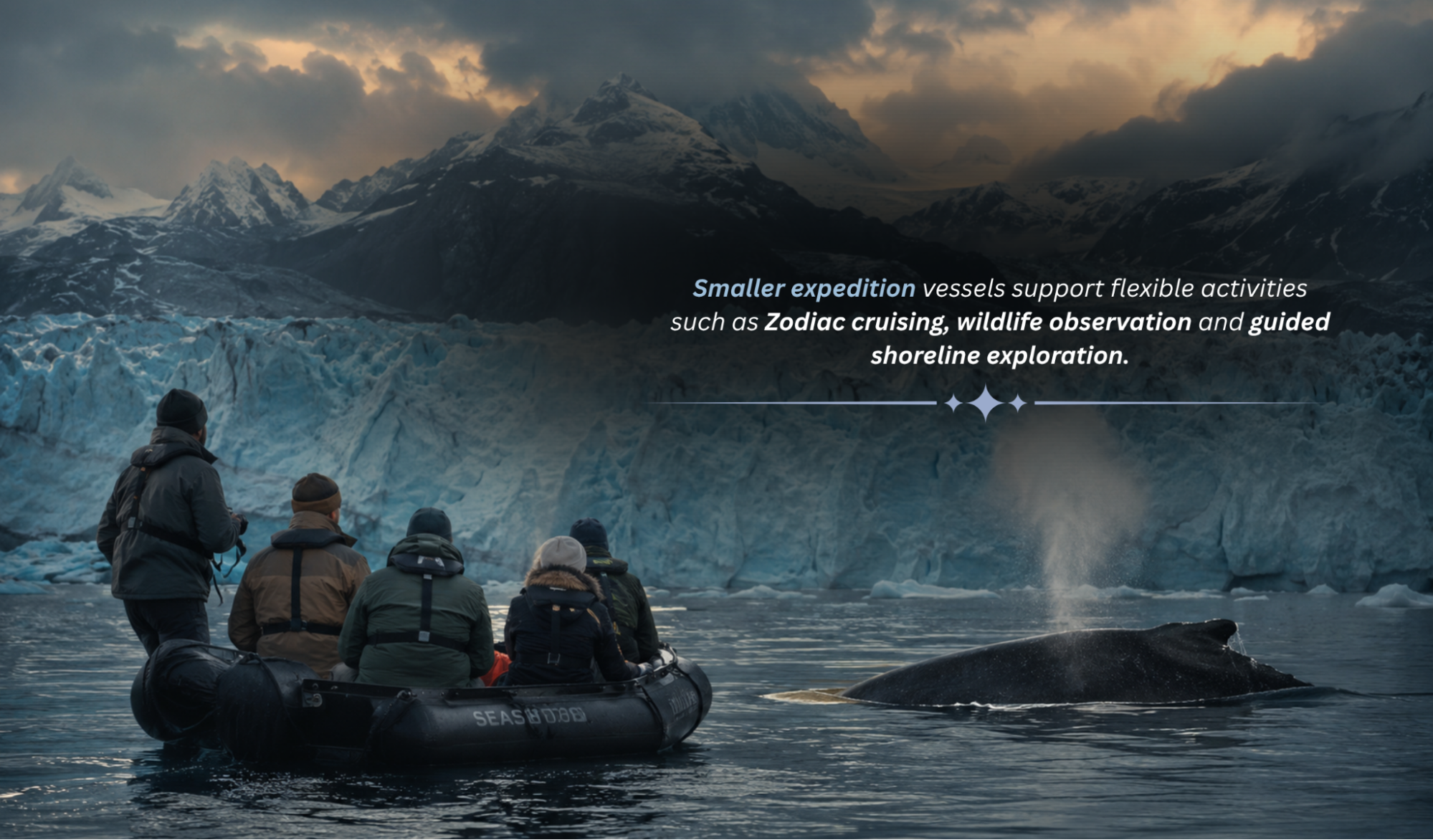
Companies specializing in Alaska private yacht charters may build daily programs around kayaking, Zodiac cruising, hiking, wildlife observation and glacier viewing. EYOS, for example, describes flexible itineraries in which captains and expedition leaders select activities and landing sites according to the conditions encountered during the voyage.
The distinction is less about luxury than control. A private yacht gives one group greater influence over when the vessel moves, where it anchors and how long an activity continues.
Smaller vessels reach more secluded waterways
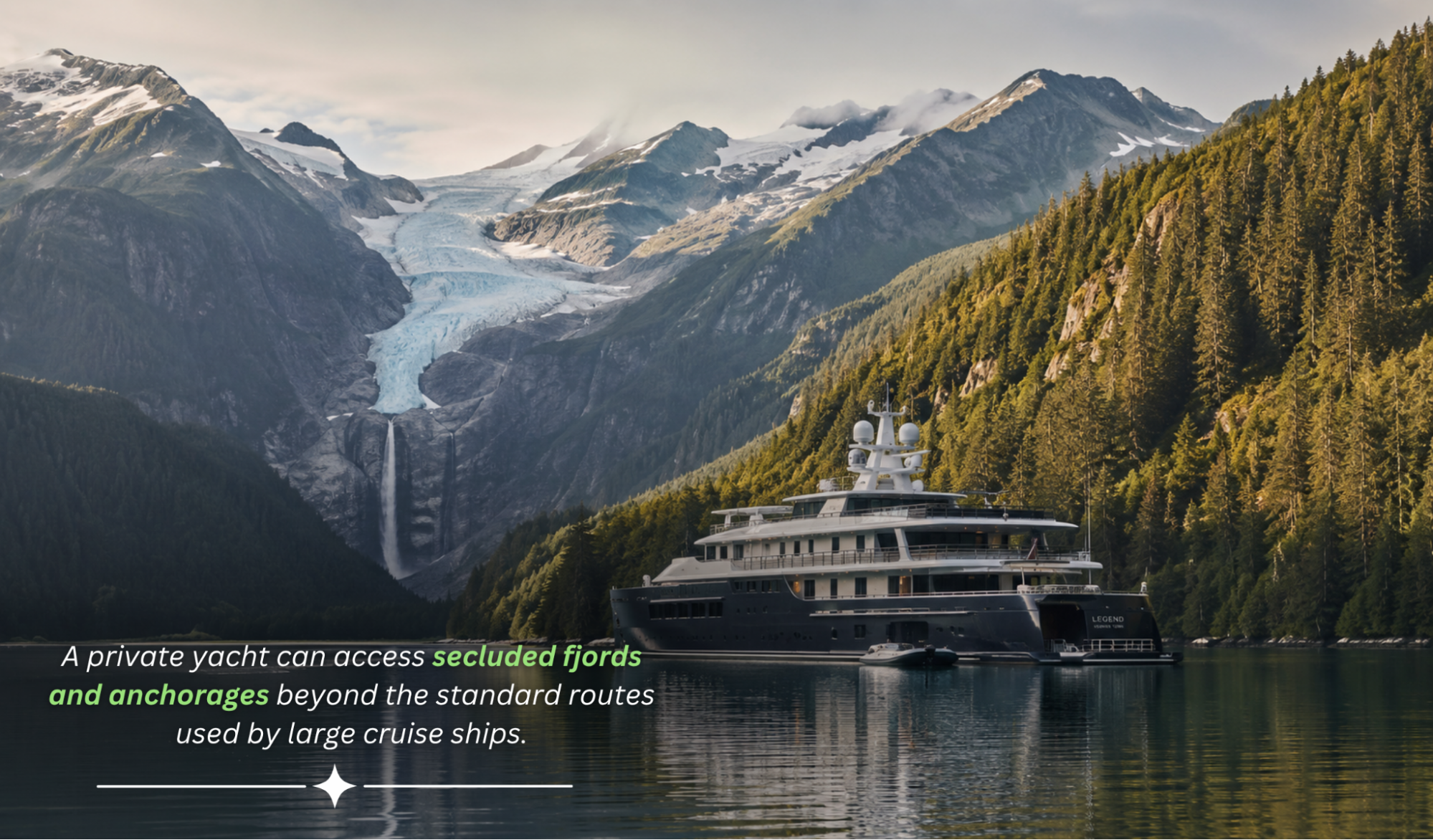
The Inside Passage is a network of channels, islands, fjords and inlets rather than a single shipping route.
Expedition yachts can often enter smaller waterways that cannot accommodate conventional cruise ships. Tenders and kayaks extend that access farther, allowing guided exploration of protected bays, forested shorelines and the edges of glacial waterways.
This mobility may improve wildlife-viewing opportunities, although sightings can never be guaranteed. Humpback whales feed intensively during warmer months, using techniques that include bubble-net feeding to corral fish and krill. Southeast Alaska is an important seasonal feeding region for these whales.
A smaller vessel can slow down or reposition when wildlife appears, provided that all required approach distances, speed restrictions and marine-mammal protections are followed.
Private access does not mean unrestricted access. Glacier Bay National Park, for example, requires permits for recreational vessels entering designated waters from June 1 through Aug. 31. For the 2026 season, the park makes 25 private-vessel permits available per day, while commercial vessels require separate authorization.
Experienced operators must therefore manage permits, vessel qualifications, environmental rules and local operating requirements well before departure.
Private charters offer more time ashore
Cruise-ship passengers usually select from excursions that fit within a defined port call. These tours can be well organized, but their duration must accommodate transport, group movements and the ship’s departure.
A private expedition can devote more time to one location. A landing may include a guided rainforest walk, a shoreline wildlife watch or a kayak journey through a sheltered inlet without the pressure of returning for a scheduled sailing.
Smaller groups also change the character of an excursion. Boarding tenders takes less time, guides can adjust the pace more easily and activities can reflect the group’s experience level.
That format particularly suits photographers, naturalists, active families and travelers returning to Alaska for a deeper second visit.
Cruises provide more entertainment and social variety
Private yachts do not win every category.
Large cruise ships offer theaters, pools, spas, casinos, organized children’s activities, lectures, restaurants and structured evening entertainment. They also create opportunities to meet a wide range of passengers.
An expedition yacht typically places greater emphasis on the destination. Evenings may revolve around naturalist briefings, photography reviews, route discussions or quiet time at anchor.
Travelers who regard the ship as a central part of the vacation may prefer a conventional cruise. Those who view the vessel primarily as a platform for exploration may prefer a private yacht.
Environmental impact requires more than a ship size
Neither travel format is automatically sustainable.
A large vessel carries more passengers but can distribute fuel consumption and other operational impacts across thousands of guests. A private yacht carries far fewer passengers but may generate a higher impact per traveler, depending on its size, engine efficiency, routing and onboard equipment.
Responsible evaluation should consider fuel use, waste handling, wildlife protocols, local sourcing, shore-party behavior and support for scientific or conservation initiatives.
EYOS states that its conservation partnerships include Yachts for Science, Ocean Census, Nekton and Yacht Carbon Offset. Its role as a founding partner of Yachts for Science connects private vessels with researchers seeking access to remote marine environments.
Prospective charter clients should request vessel-specific environmental information rather than relying only on broad sustainability claims.
Which option is better?
A large Alaska cruise is generally better for travelers who prioritize:
- A lower per-person cost
- Simple booking and predictable schedules
- Extensive dining and entertainment
- Children’s programs or accessibility features
- A first overview of several Alaska ports
A private expedition yacht is generally better for travelers who prioritize:
- Flexible daily itineraries
- Privacy and smaller groups
- Kayaking, hiking and Zodiac exploration
- Access to secluded coves and narrow waterways
- More time observing wildlife or landscapes
- An itinerary shaped around specific interests
The difference can be summarized simply: a cruise is designed to show passengers the major attractions of the Inside Passage, while a private yacht is designed to explore the spaces between them.
For convenience and value, the conventional cruise has the advantage. For access, adaptability and depth, the private yacht offers a stronger exploration platform.