

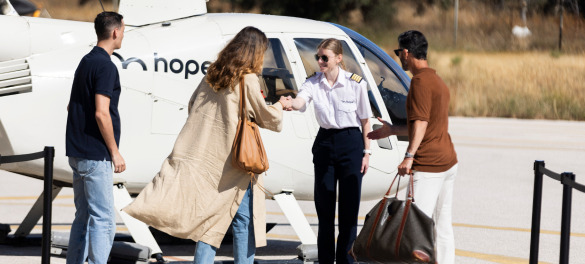
A trip from Geneva to Val Thorens begins with a choice. A helicopter can shorten the journey across the Alps. Road travel can cost less per person, especially by coach or train, and can keep the group together with its luggage. The right option depends on time, budget, weather, group size, and where each service leaves its passengers.
The resort website lists Geneva Airport 201 kilometres from Val Thorens. A private helicopter route covers about 115 kilometres and has an estimated flight time of 31 minutes. That makes a helicopter transfer from Geneva to Val Thorens worth comparing with a car, coach, or train. The flight estimate covers time in the air, not the whole trip from airport arrival to accommodation.
A short stay may make saved hours valuable. A larger group may find better value on the road overall. A fair choice compares the full journey, not just the time shown for a flight or drive.
Compare each complete journey
The helicopter has a clear speed advantage while it is in the air. The Geneva to Val Thorens route listing gives about 31 minutes for the flight and says this is a cruise estimate. It does not include taxiing, climb, or descent. A traveller must also allow time to reach the departure point, check in, board, collect bags, and continue from the landing site.
Compare time, cost, and luggage
The flight leaves from Geneva Airport and lands at the Val Thorens Helipad. So it does not take a passenger from an airport door to a hotel door in 31 minutes. The total time includes airport steps and the ride from the helipad to the lodging. Travellers should ask how early to arrive and how they will reach their accommodation after landing.
The route listing gives a starting price of €3,669 per helicopter, not per seat. The date and time affect the price shown at booking. For several people travelling together, sharing a charter can change the cost per person, but only if the aircraft has enough seats and room for the group’s bags. Travellers should compare the charter’s total price with a private road quote, then compare per person costs with coach and train fares.
Road travel has its own delays
The resort gives drivers directions via Albertville, Moûtiers, and the D117. The route climbs into the high mountains, and its timing changes with road conditions. Travel time can change with traffic, snow, road works, and holiday demand. Drivers need to check road conditions before leaving. In winter, the resort advises drivers to carry chains or use approved winter tyres under France’s mountain equipment rules. A hired driver lets passengers avoid driving, while a rental car gives them more control over stops and luggage on a long trip.
A road transfer suits people who want to travel directly from the airport without first arranging a flight. A private car can carry the group’s skis, suitcases, and child seats if these fit the vehicle and are agreed in advance. A coach may cost less per person, but it can have set departure times and stops. Each service has its own luggage rules, so travellers should check the details before paying.
There is also a train and bus option. Trains run from Geneva Cornavin to Moûtiers with one or more connections. The quickest journeys listed by the resort currently take just under four hours to Moûtiers. Train schedules can change seasonally. From there, the S63 bus, a taxi, or a private hire car goes on to Val Thorens. This is not a direct trip from the airport to the resort, but it can suit travellers who prefer rail and can manage the connection with their bags.
Comfort and luggage. A helicopter limits time spent travelling, but cabin size and baggage limits depend on the aircraft and group. A road vehicle can keep everyone together, with its own limits on seats, luggage, and ski gear. Neither option should be booked until the provider confirms the passenger count and baggage allowance.
The heliport is a separate arrival point, and lodging may not be beside it. Before booking, travellers should confirm the exact landing place, the onward ride, ski carriage, and what happens if the flight cannot leave as planned. Road passengers should ask if the vehicle reaches their accommodation or ends at a nearby stop.
A quick check before booking:
- Compare total travel time, including airport arrival and the ride after landing.
- Confirm passenger numbers, ski bags, suitcase limits, and child seats.
- Check the road forecast, winter equipment, and parking plan.
- Compare the total price for the whole group, including onward transport.
Weather can affect both transfer choices. Snow or traffic can slow a road transfer. A helicopter flight must meet safe operating conditions, so its planned flight time is not a promise of an exact arrival time. Travellers with a tight connection or a ski lesson booked soon after arrival should leave a buffer and ask about the provider’s change and cancellation terms.
Travellers can checkHoper for flight details and compare them directly with the resort’s transport guidance. The key is to compare the whole journey and total cost for the same travel date.
Which transfer is right for the trip?
Choose the helicopter when time matters
A helicopter is most useful when saving time has real value. It may suit a short stay, a late arrival, or a group that wants to avoid a long road journey and can share the charter cost. It also gives a direct route to the resort helipad. The group still needs a plan for luggage and the last part of the trip.
Choose road or rail when value matters
A road transfer is often more practical for people focused on price, luggage, or flexible stops. A coach or train and bus can reduce costs, while a private vehicle can make the journey simpler for families or groups with ski equipment. Road and rail trips take longer than the flight on this route, and winter traffic can add delays.
It comes down to the value of saved time. Before booking, travellers can compare the flight quote, road vehicle price, coach fares, and any onward ride from the heliport. They should use the actual arrival time, luggage needs, group size, and road conditions for their dates. A helicopter can make the Geneva to Val Thorens journey much shorter in the air, while road and rail give more ways to match the budget. Both work well when the full journey is planned.
