

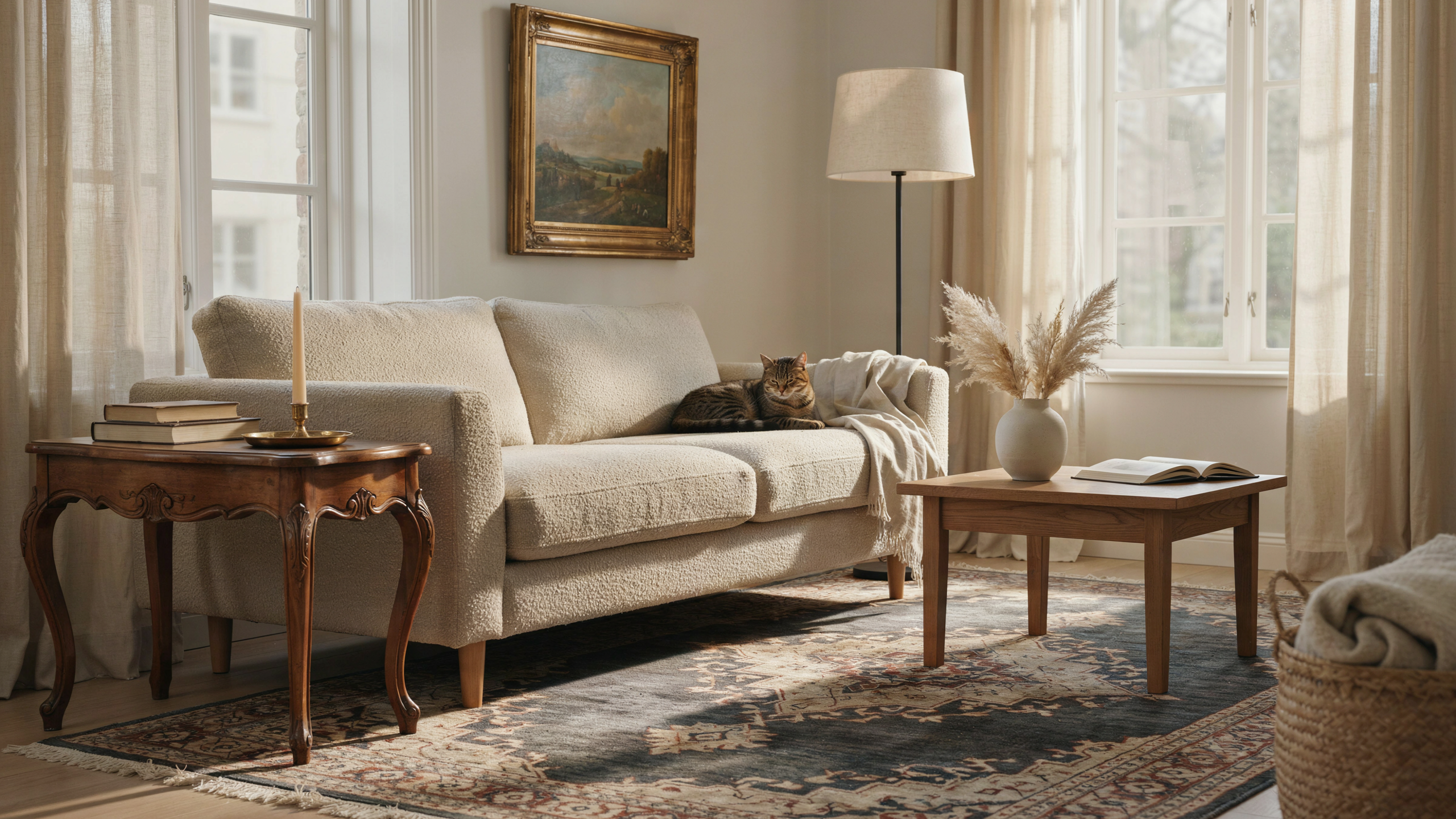
A home does not have to look like it belongs to a single decade to feel complete. In fact, some of the most inviting interiors blend contemporary pieces with antiques that have lived long, interesting lives. The contrast between sleek finishes and timeworn craftsmanship creates rooms that feel collected instead of decorated. Whether you are refreshing one space or redesigning an entire home, combining old and new can add warmth, personality, and depth that is difficult to achieve with matching furniture alone.
Start With One Statement Antique
Many people assume antique decorating means filling every room with ornate furniture, but the opposite approach often creates a stronger result. A single antique cabinet, dining table, mirror, or writing desk can become the centerpiece of a modern room without making the space feel dated. Natural wood grain, hand carved details, and signs of age give these pieces a story that mass produced furniture simply cannot replicate.
Mixing periods also prevents a room from feeling like a showroom. Pairing an antique chest beneath contemporary artwork or placing vintage dining chairs around a modern table keeps the eye moving throughout the space. The contrast highlights the best qualities of each piece while creating a home that reflects personal taste rather than a decorating trend.
Blend Collectibles With Contemporary Design
Collectors often discover that Claude Monet paintings for sale in online auction houses are easier to find than you might think, especially when searching for authorized prints, exhibition posters, books, or other historical pieces connected to the artist. While original masterpieces remain exceptionally rare, decorative items with historical ties can still introduce artistic character into a thoughtfully designed home.
The goal is not to fill every wall with antiques. Instead, let older pieces complement modern lighting, clean lined furniture, and updated textiles. A centuries old sideboard beneath a minimalist painting or a vintage clock beside contemporary ceramics creates visual interest because each object has room to stand on its own. Homes become far more memorable when every item contributes something unique instead of blending into the background.
Create Contrast With Color and Texture
One of the easiest ways to make antiques feel current is by surrounding them with fresh finishes. Rich wall colors, polished concrete floors, soft linen fabrics, and metal accents all provide an appealing backdrop for furniture that has aged gracefully. Even dramatic choices like black interior paint can make carved wood details, vintage brass hardware, and antique artwork stand out in unexpected ways.
Texture matters just as much as color. Smooth stone countertops, woven rugs, velvet upholstery, and reclaimed wood create layers that prevent a room from feeling flat. Antique pieces naturally bring texture through worn finishes, handcrafted joints, and subtle imperfections developed over decades of everyday use. Those characteristics help modern spaces feel more welcoming without sacrificing a clean aesthetic.
Focus on Meaning Instead of Matching
One reason mixed interiors remain timeless is that they prioritize personal connections over perfectly coordinated furniture sets. An antique rocking chair passed through generations or a weathered trunk discovered during travel carries history into a home in a way that new furniture rarely can. These objects often spark conversations because they reflect craftsmanship, family traditions, or memorable experiences.
That same philosophy applies throughout the room. A sleek sectional can sit comfortably beside a vintage coffee table, while modern shelving can display antique pottery or framed maps. Instead of asking whether everything matches, consider whether each piece contributes something distinctive. Rooms with variety often feel more authentic because they develop over time instead of appearing finished all at once.
Let Every Room Evolve Naturally
The most successful interiors rarely appear overnight. They grow through thoughtful choices, unexpected discoveries, and meaningful additions collected over many years. Mixing antiques with modern design encourages flexibility because every new piece has an opportunity to complement what is already there instead of replacing it.
As trends shift, homes built around quality craftsmanship and personal history continue to feel inviting. Antique objects bring texture, individuality, and stories into contemporary spaces, while modern elements keep those rooms functional for everyday living. Together, they create interiors that remain beautiful long after decorating trends have faded. Blending modern style with antiques is less about following design rules and more about creating a home that feels genuinely personal.
