

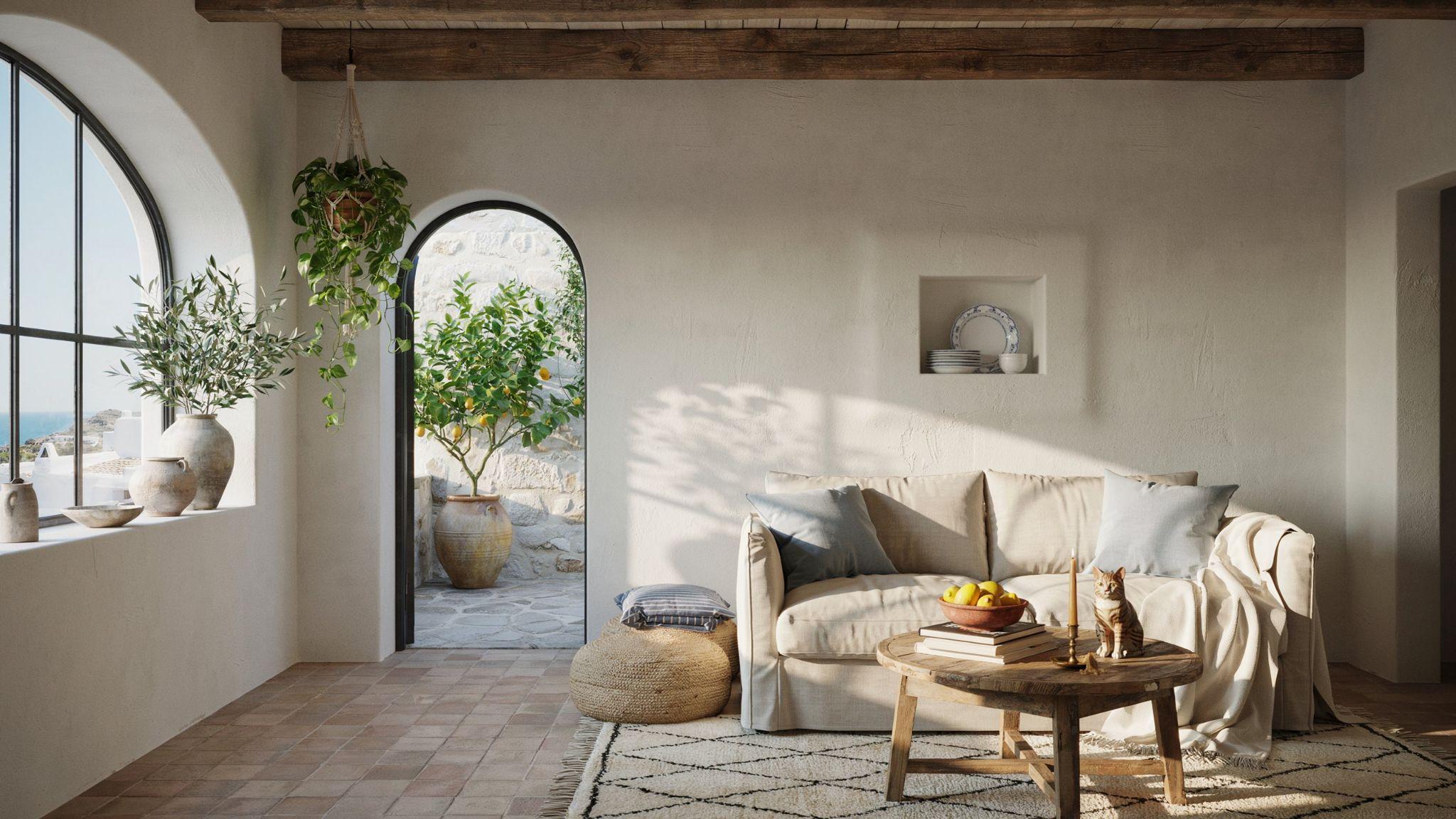
Have you ever looked at a photo of a sunlit room with white walls, warm wood, and blue accents and felt instantly calm? Something about it just feels right.
That's the pull of Mediterranean interior design. It feels open, bright, and easy to live in.
If you want that same feel in your own home, you're in the right place. In this blog, I'll walk you through different Mediterranean styles, from Spanish to Greek to coastal looks.
I'll also cover key design elements, color choices, and how to bring this style into a modern home.
On top of that, I'll point out common mistakes to avoid, so your space feels balanced from the start.
By the end, you'll have a clear idea of where to begin, no matter the size of your room.
What Is Mediterranean Interior Design?
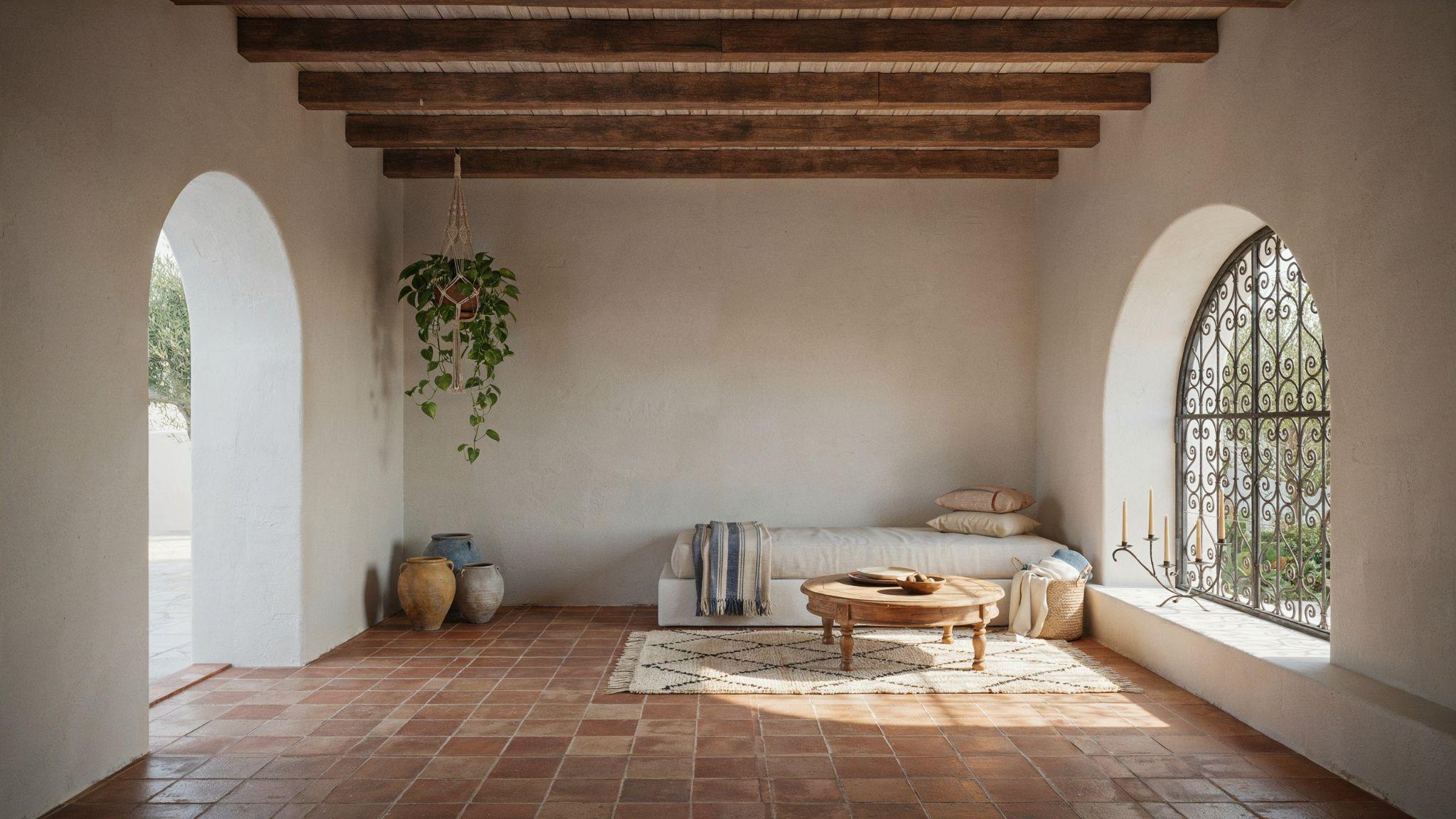
Mediterranean interior design takes ideas from countries along the Mediterranean Sea, like Spain, Italy, Greece, and Morocco.
It uses warm colors, natural materials, and simple shapes. Think white walls, wood beams, and tile floors.
This style focuses on comfort and light. Rooms often feel open and connected to the outdoors.
You'll also see arches, textured walls, and warm metal accents like iron or copper.
The overall feel is relaxed but put together. It works well for homes that want a calm, sunny feel all year round.
List of 11 Popular Mediterranean Interior Design Styles
Mediterranean design isn't just one look. Here are 11 styles that fall under this style.
1. Spanish Mediterranean Style
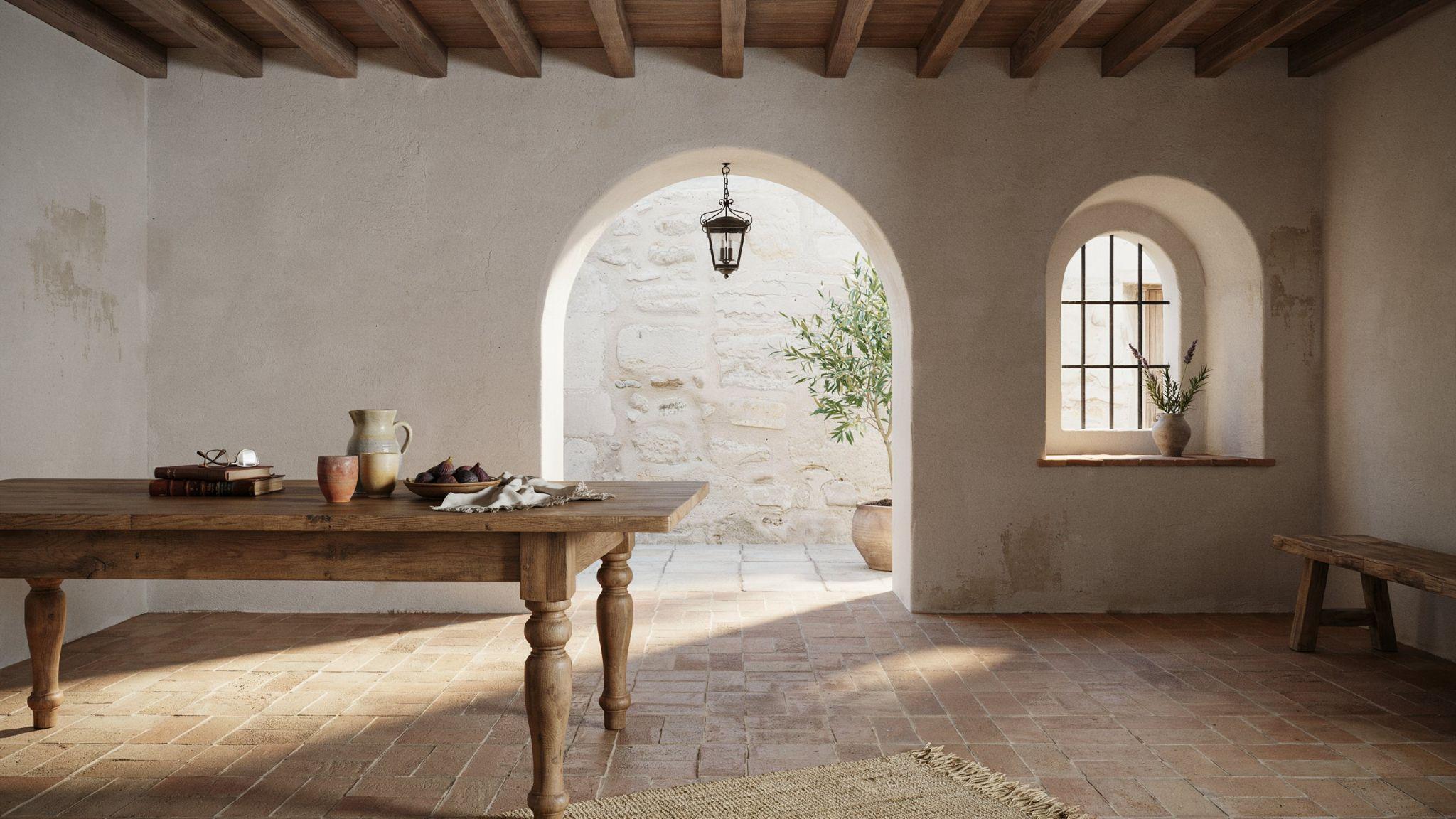
This style uses warm terracotta tiles, white stucco walls, and wood beams.
Arched doorways and wrought iron details add character. Colors stay warm, with browns, oranges, and creams.
The overall feel is cozy and sun filled. It works well for homes that want a rustic, lived in look with strong texture throughout each room.
2. Spanish Colonial Style
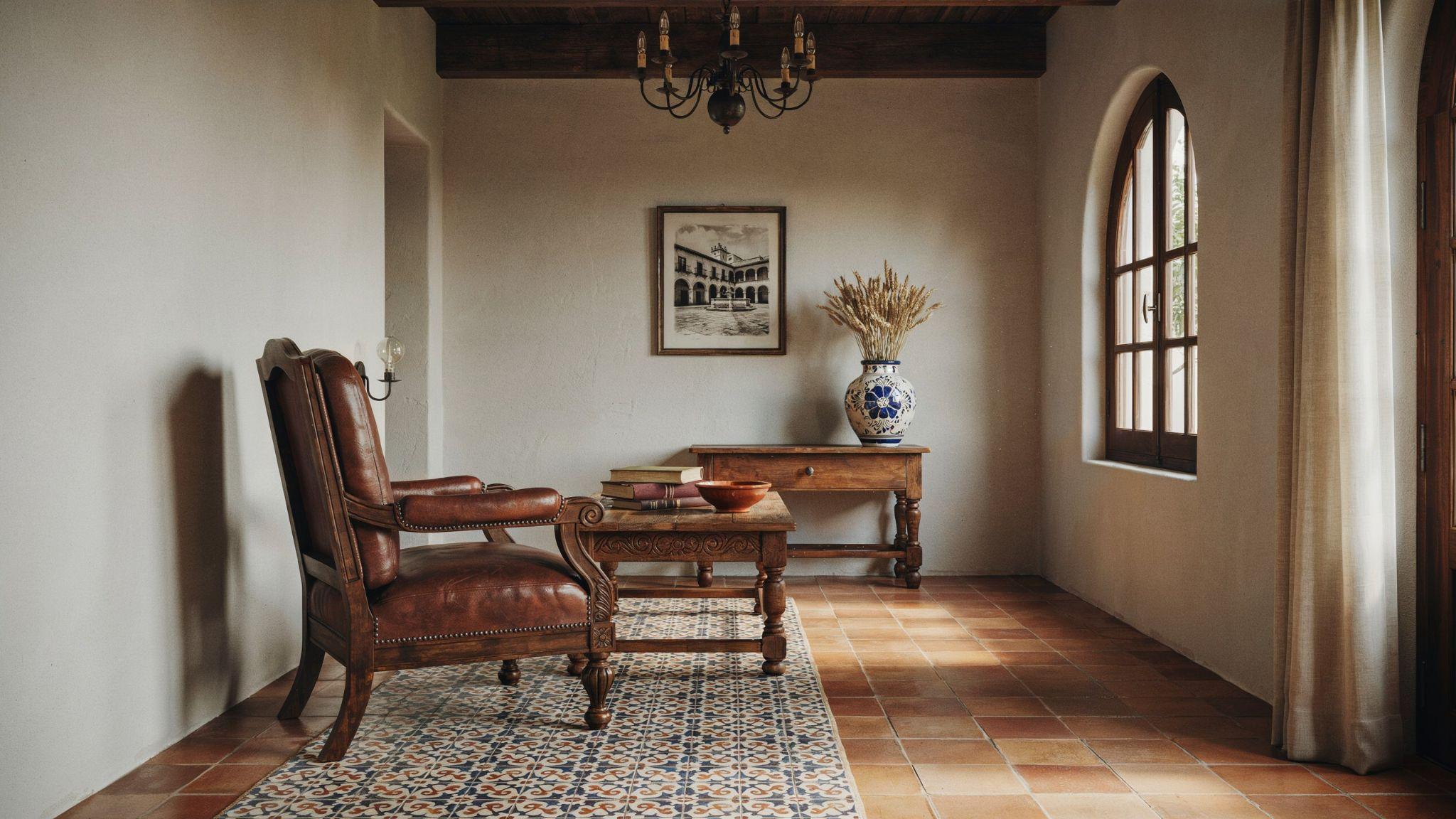
Spanish Colonial style mixes Spanish design with influences from former colonies.
You'll see dark wood furniture, iron fixtures, and tile work with bold patterns. Walls are often white or warm toned.
This style feels a bit more formal than other Mediterranean looks. It works well in homes that want a sense of history paired with warm, earthy tones.
3. Tuscan Mediterranean Style
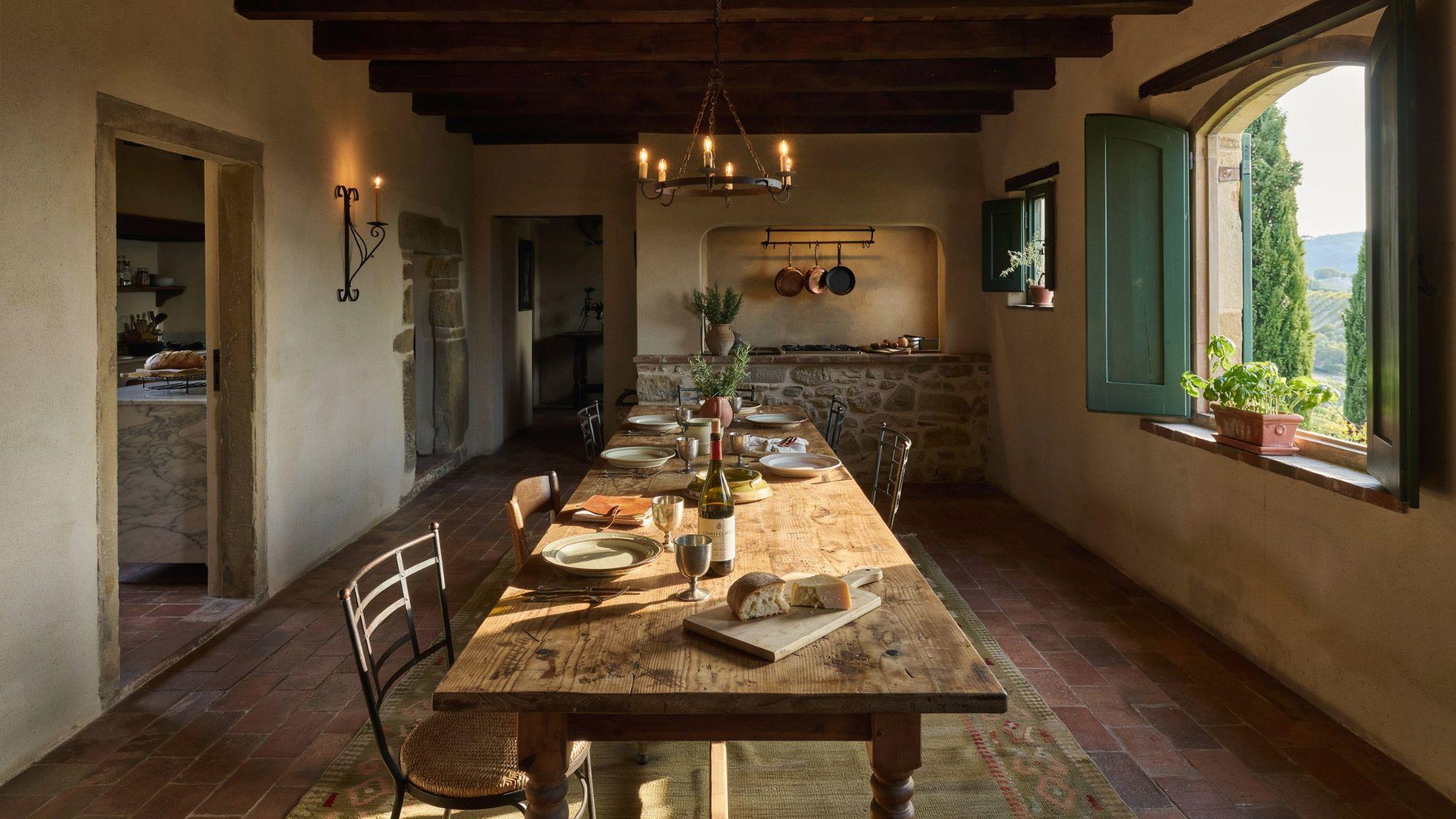
Tuscan style brings in warm, golden tones inspired by the Italian countryside.
Think stone walls, wood beams, and wrought iron lighting. Colors lean toward gold, terracotta, and deep green.
This style feels rustic and warm. It works well for kitchens and dining areas, where the goal is a cozy, gathering focused feel.
4. Italian Villa Style
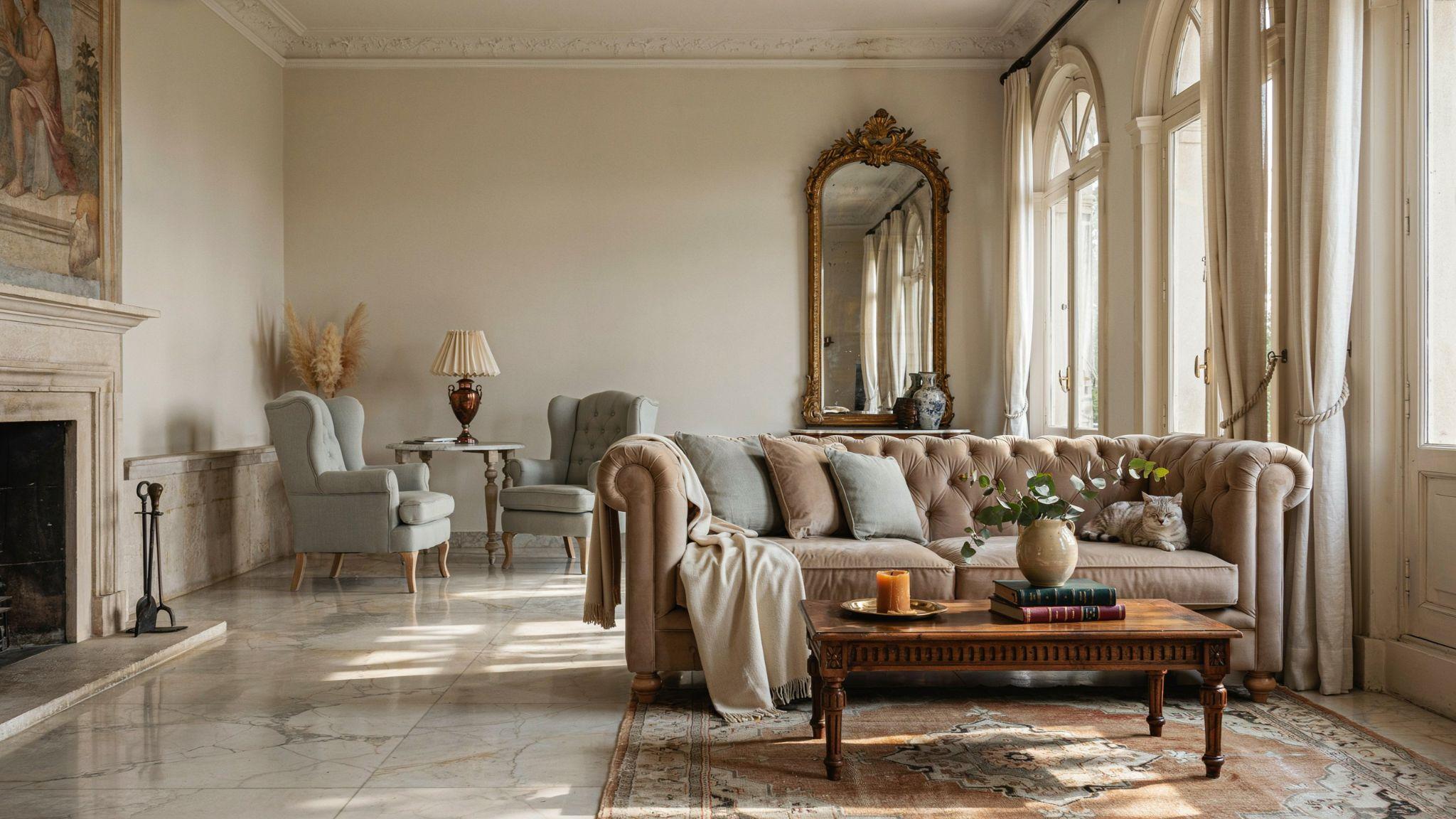
Italian Villa style feels more polished than rustic Tuscan design.
It uses marble floors, classic furniture shapes, and soft neutral colors. Arched windows and tall ceilings are common features.
This style feels open and bright. It works well in homes that want a refined feel without losing warmth or comfort.
5. Greek Mediterranean Style
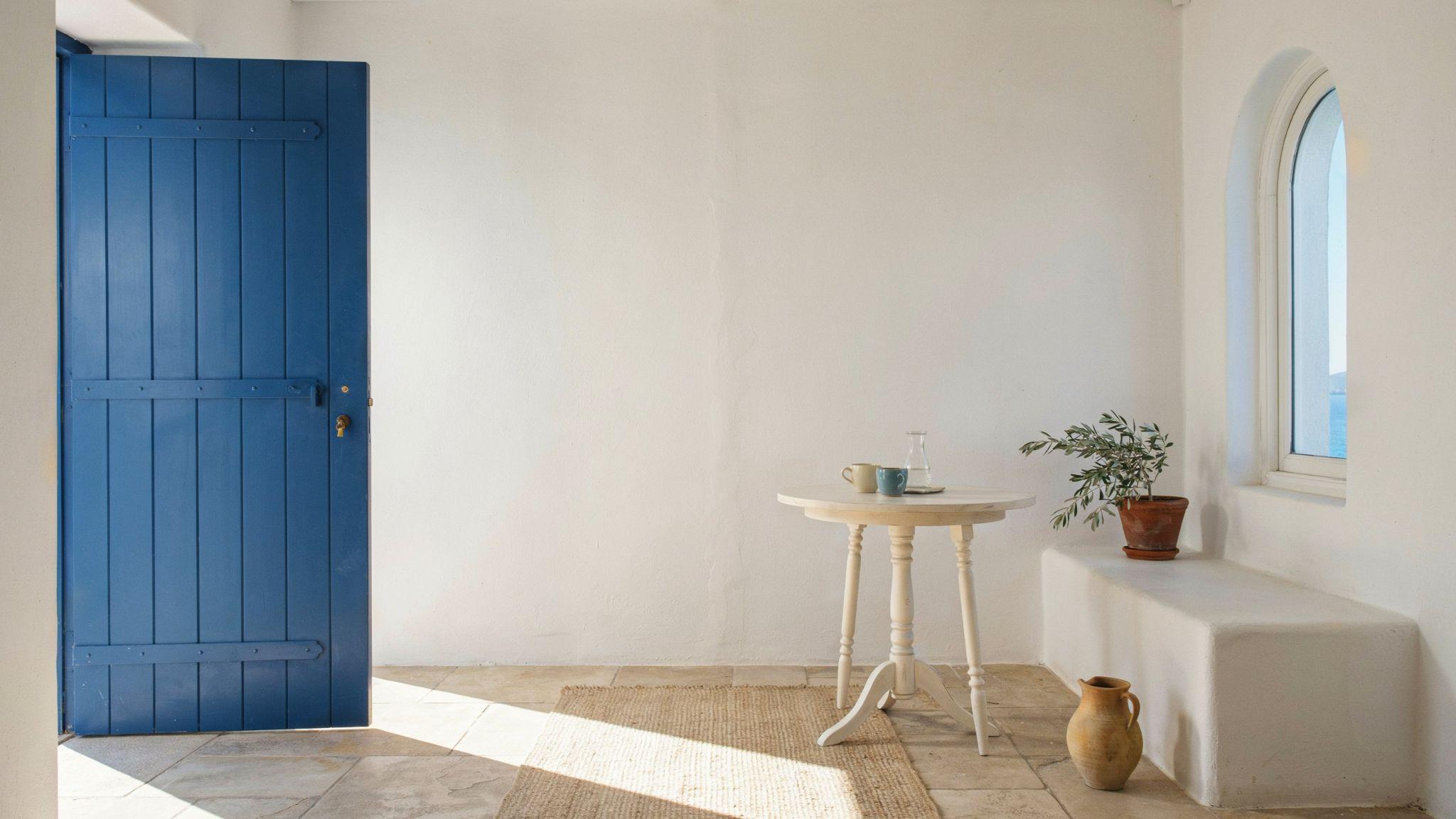
Greek style is known for its white walls and blue accents.
Think whitewashed surfaces paired with deep blue doors, shutters, or textiles. Simple shapes and clean lines keep the look calm.
This style feels bright and airy. It works well in homes near water or in rooms that get plenty of natural light.
6. Moroccan Mediterranean Style
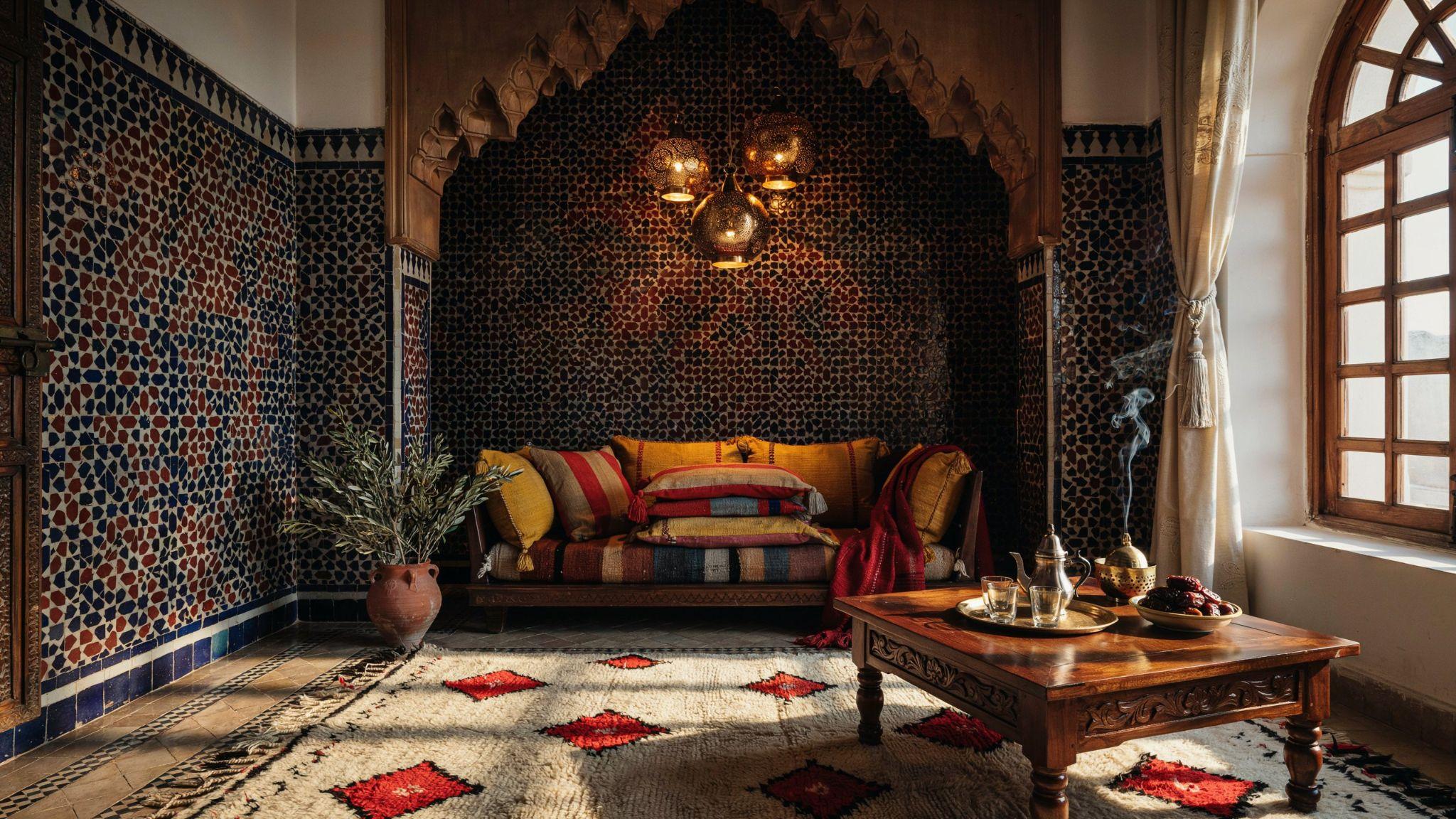
Moroccan style brings in bold patterns and rich colors.
Think patterned tiles, brass lanterns, and layered textiles. Colors often include deep reds, blues, and golds alongside neutral bases.
This style feels warm and layered. It works well for spaces that want more pattern and a strong sense of personality throughout the room.
7. French Mediterranean Style
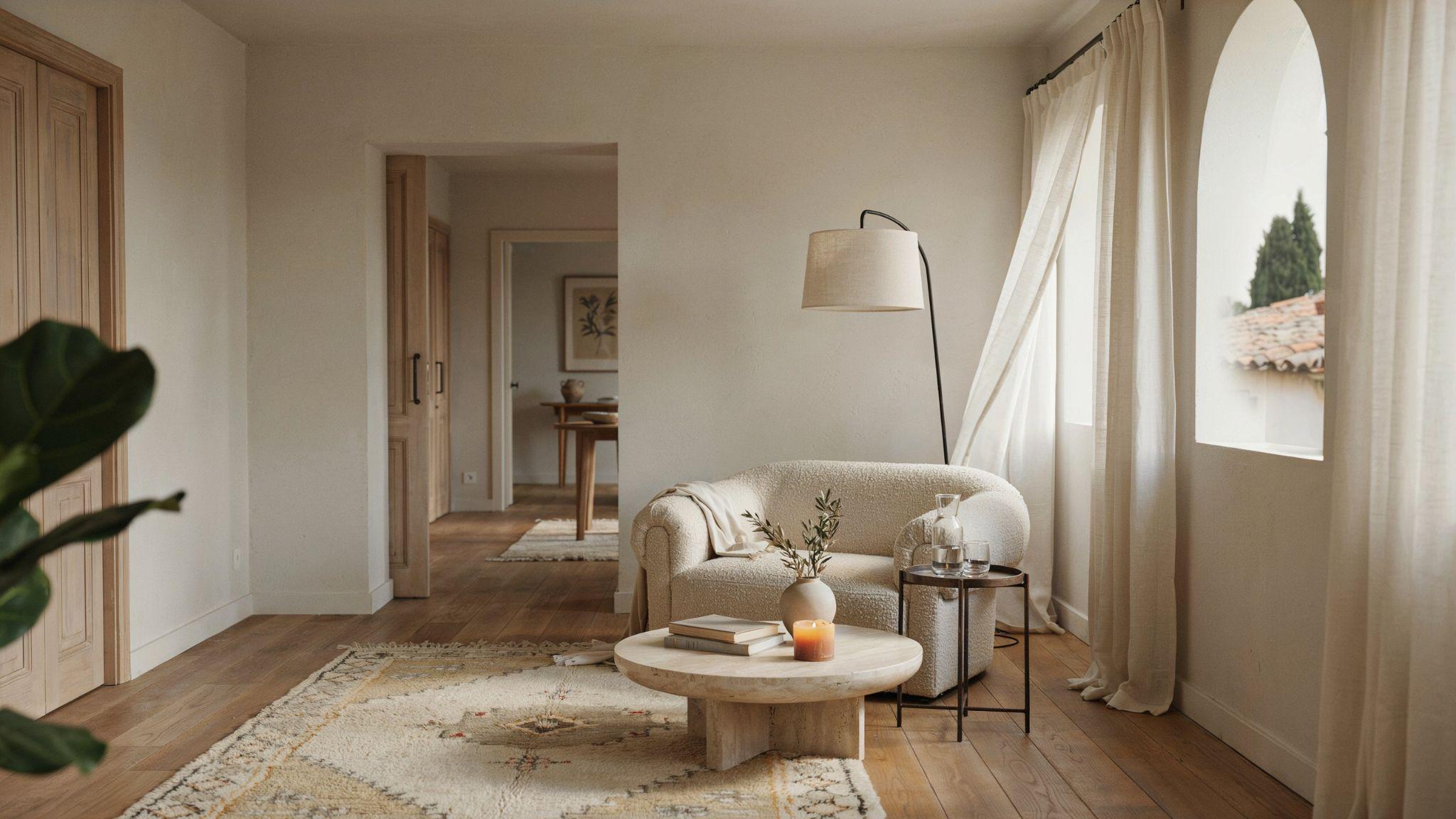
The French Mediterranean style feels soft and a little romantic.
It uses light colors, linen fabrics, and wrought iron details. Furniture often has curved lines and a worn, aged look.
This style feels calm and relaxed. It works well in bedrooms or living rooms where a softer, more gentle feel is the goal.
8. Andalusian Style
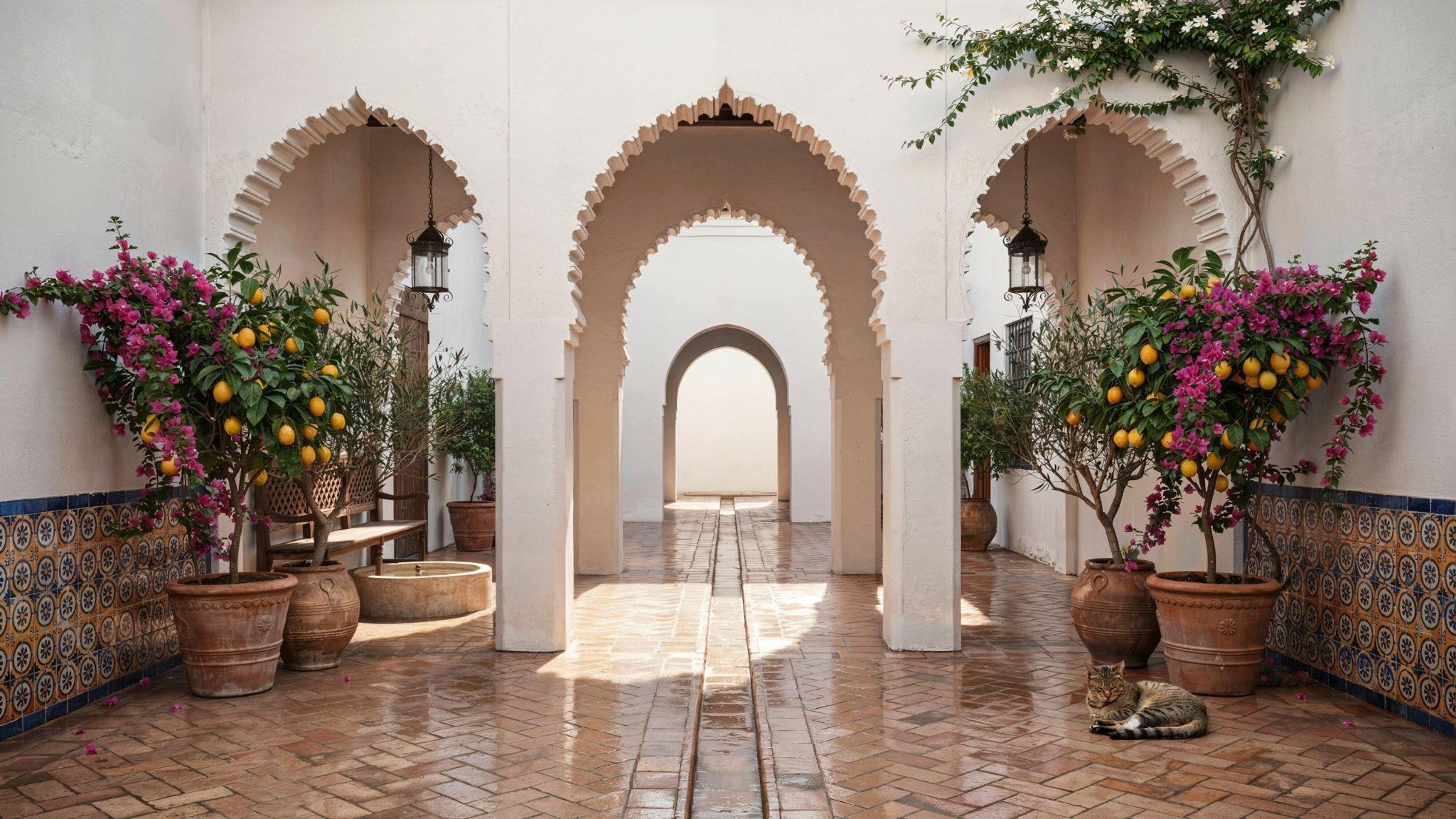
Andalusian style comes from southern Spain and mixes Spanish and Moorish influences.
You'll see colorful tile work, arched doorways, and courtyard style layouts. Plants and water features are often part of the design.
This style feels lively and connected to nature. It works well for homes with outdoor space or a strong indoor outdoor flow.
9. Coastal Mediterranean Style
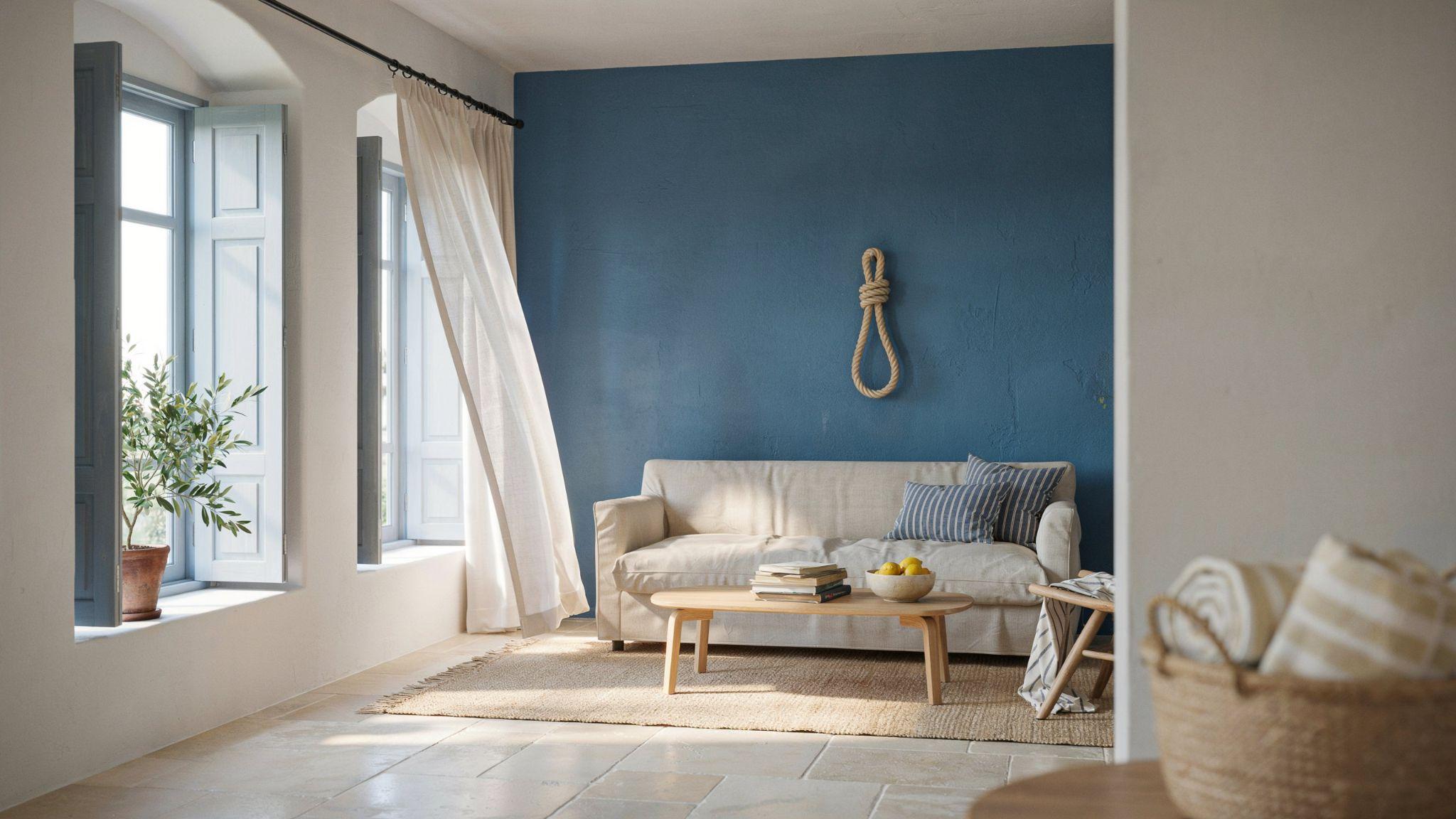
Coastal Mediterranean style leans into light, breezy colors.
Think whites, blues, and sandy neutrals. Natural materials like rope, linen, and light wood are common.
This style feels relaxed and airy. It works well for homes near the coast or anyone who wants a fresh, light filled space all year.
10. Rustic Mediterranean Style
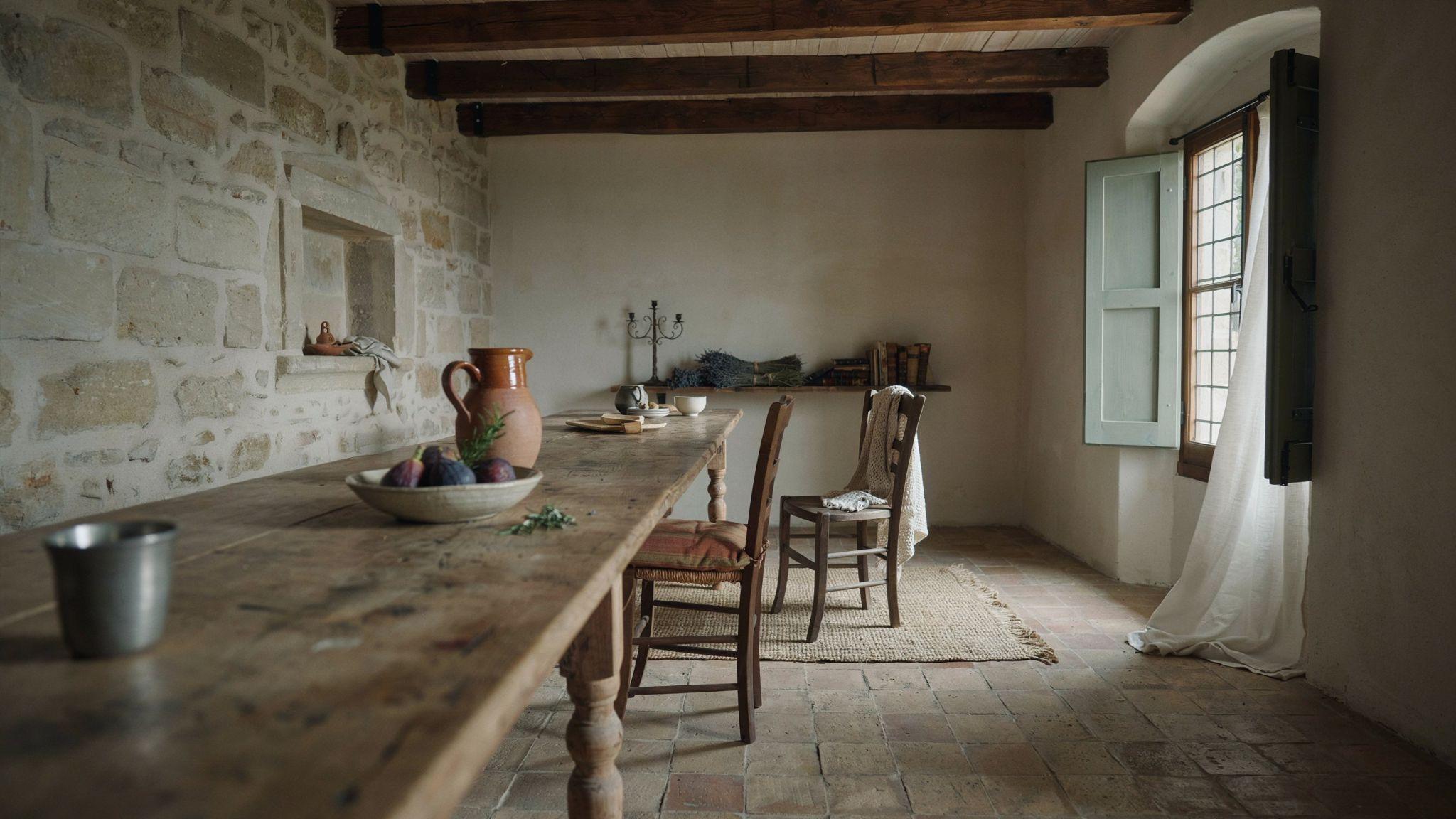
Rustic Mediterranean style focuses on natural, slightly rough materials.
Think exposed wood beams, stone walls, and worn furniture. Colors stay warm and earthy, with browns, greens, and terracotta tones.
This style feels grounded and simple. It works well for homes that want a cozy, lived in feel without too much polish.
11. Contemporary Mediterranean Style
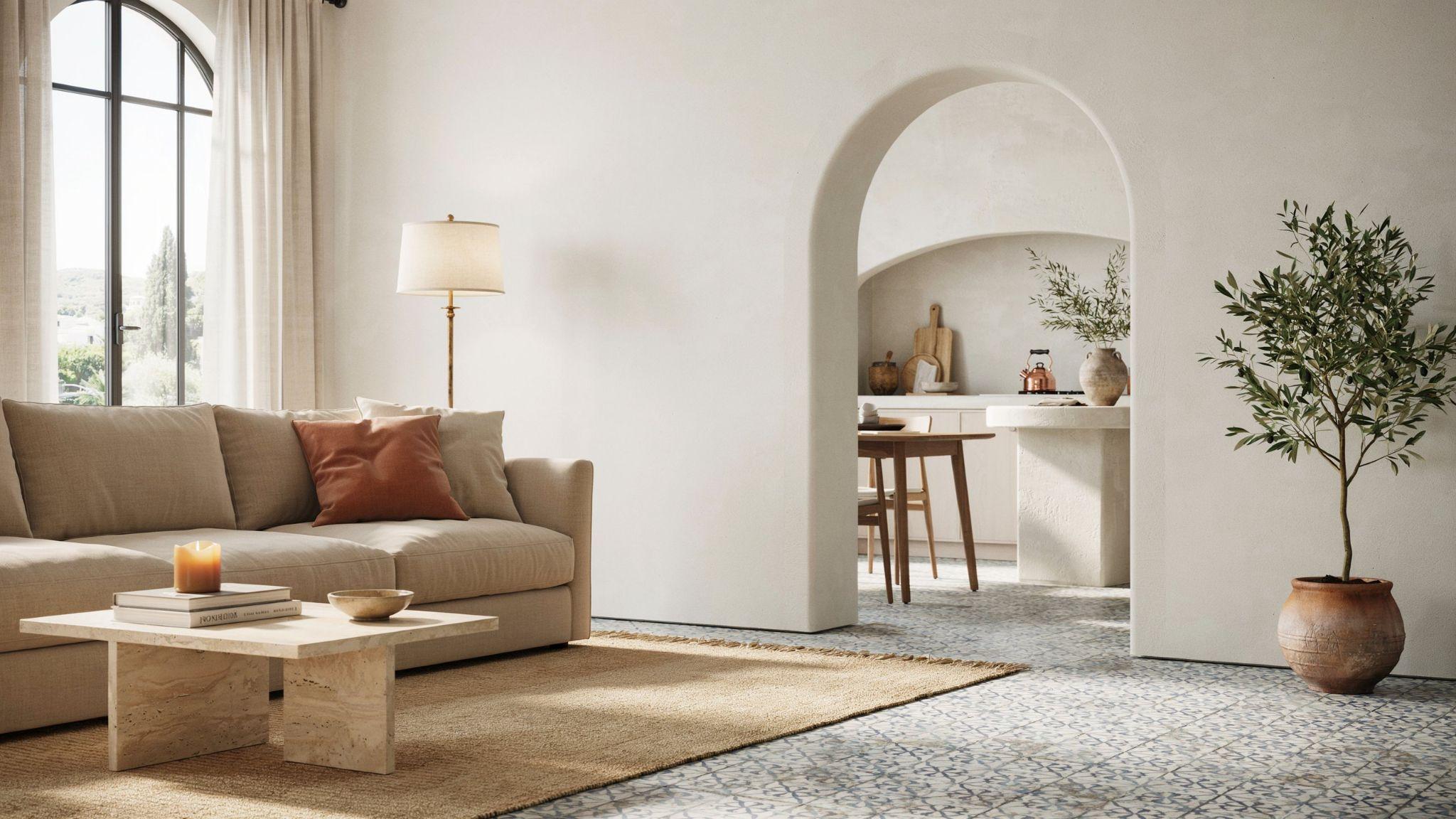
Contemporary Mediterranean style mixes traditional materials with modern furniture.
Think clean lined sofas paired with tile floors or arched windows. Colors often stay neutral, with warm accents added through decor.
This style feels balanced and current. It works well for homes that want classic Mediterranean warmth with a more modern feel.
The History and Origins of Mediterranean Interior Design
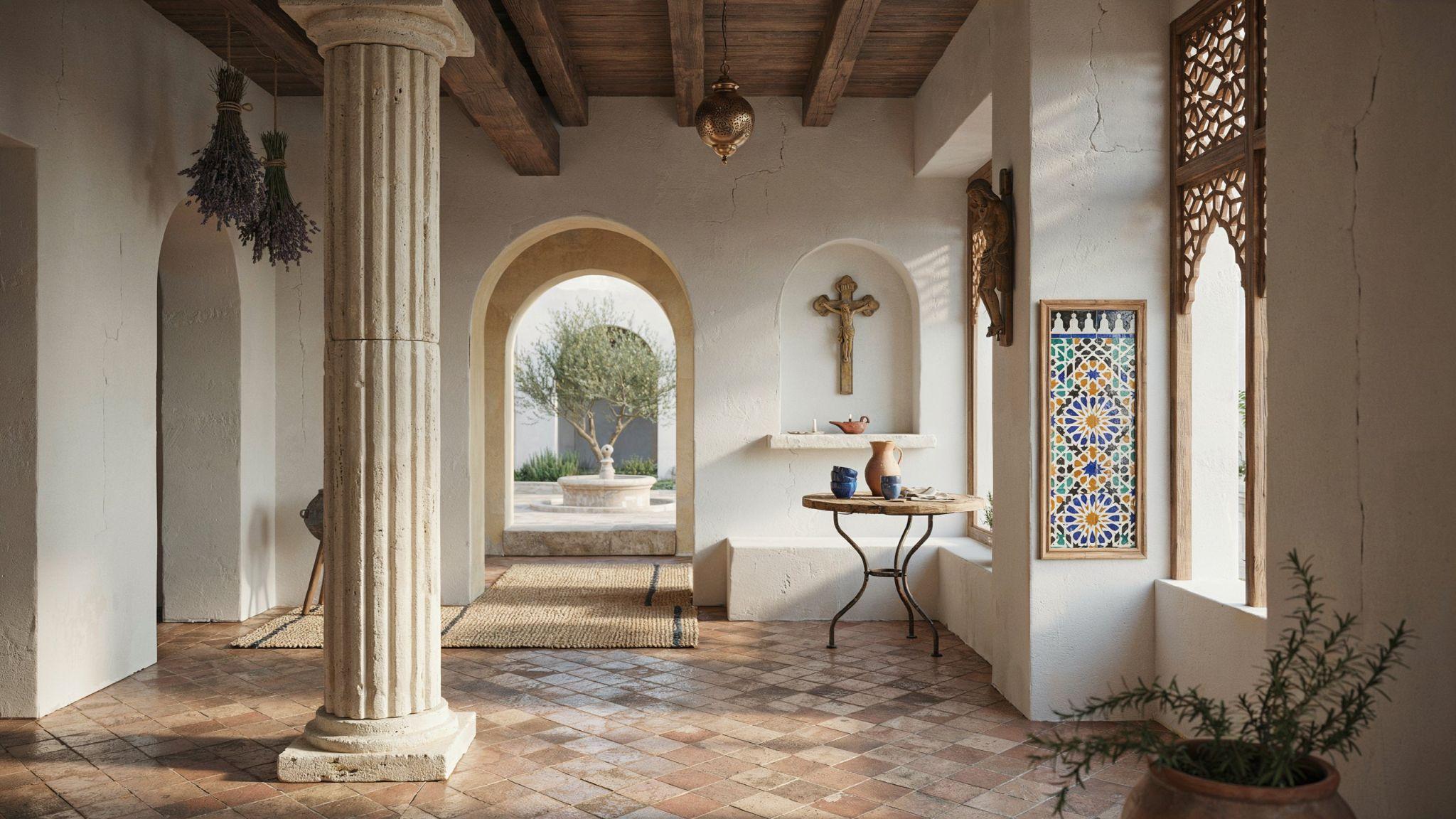
Mediterranean interior design has roots that go back thousands of years.
Ancient Greek homes used simple shapes, columns, and open courtyards, ideas that still show up in this style today.
Roman buildings added arches, tile work, and a focus on light and airflow.
Spanish and Italian homes brought in warm colors, wood beams, and stucco walls, shaping much of what we now see as classic Mediterranean style.
Moroccan and North African design added bold patterns, tile details, and rich color accents.
Together, these influences created a style built on comfort, light, and natural materials.
5 Key Elements of Mediterranean Interior Design
These 5 elements show up again and again in Mediterranean homes.
1. Warm Earth-Tone Color Palettes
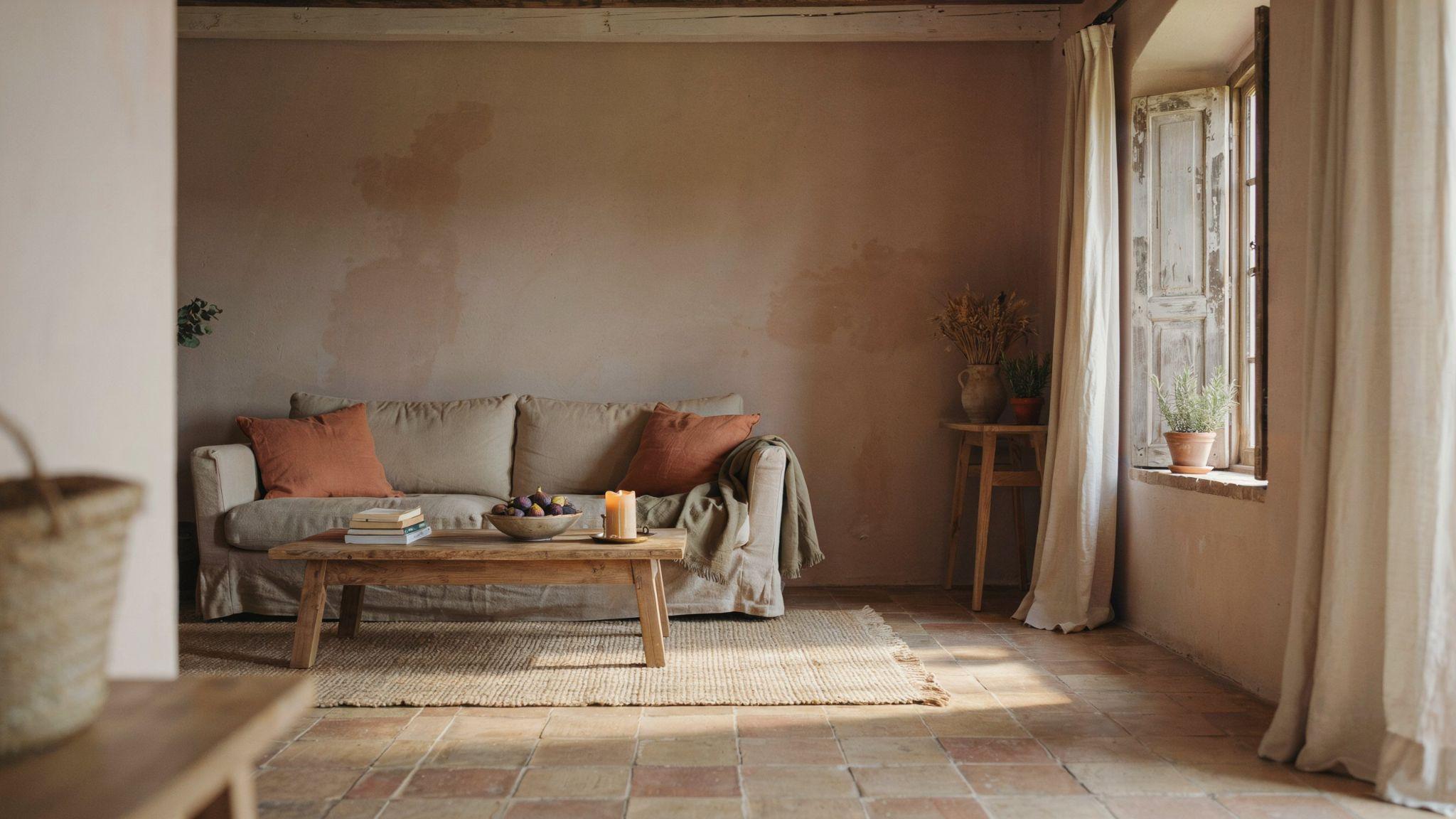
Warm colors form the base of this style.Think terracotta, sand, olive, and warm browns. These tones feel calm and work well on walls, furniture, and decor.
You don't need bright colors to make a room feel alive. Warm neutrals do that job on their own, especially when paired with natural light and wood tones throughout the space.
2. Natural Materials and Organic Textures
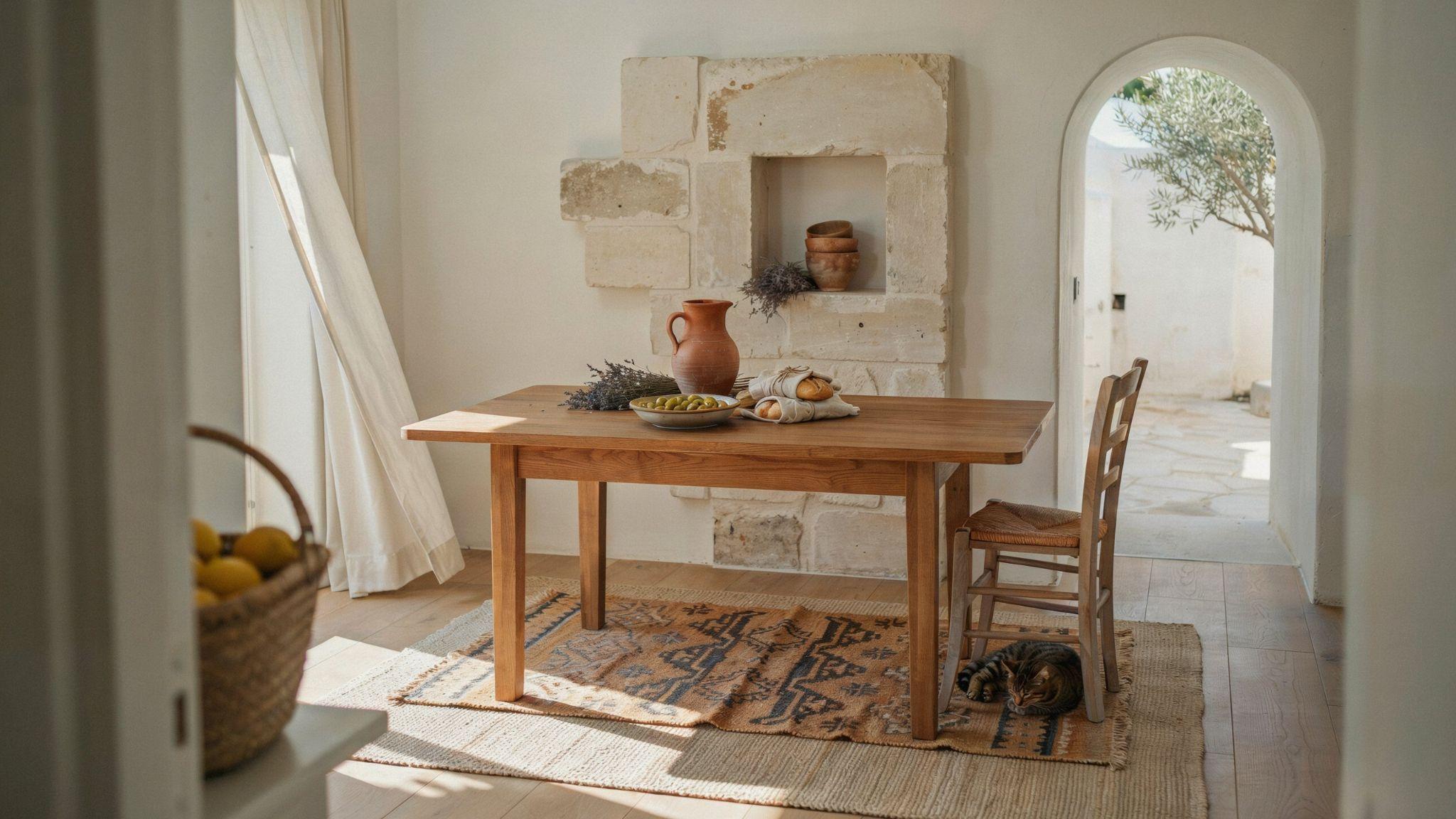
Natural materials give this style its grounded feel.Wood, stone, clay, and woven fibers all show up often. These materials add texture without feeling heavy.
Mixing a few different textures, like a wood table with a woven rug, adds depth to a room. It also keeps the space feeling warm and connected to nature.
3. Arched Doorways and Architectural Curves
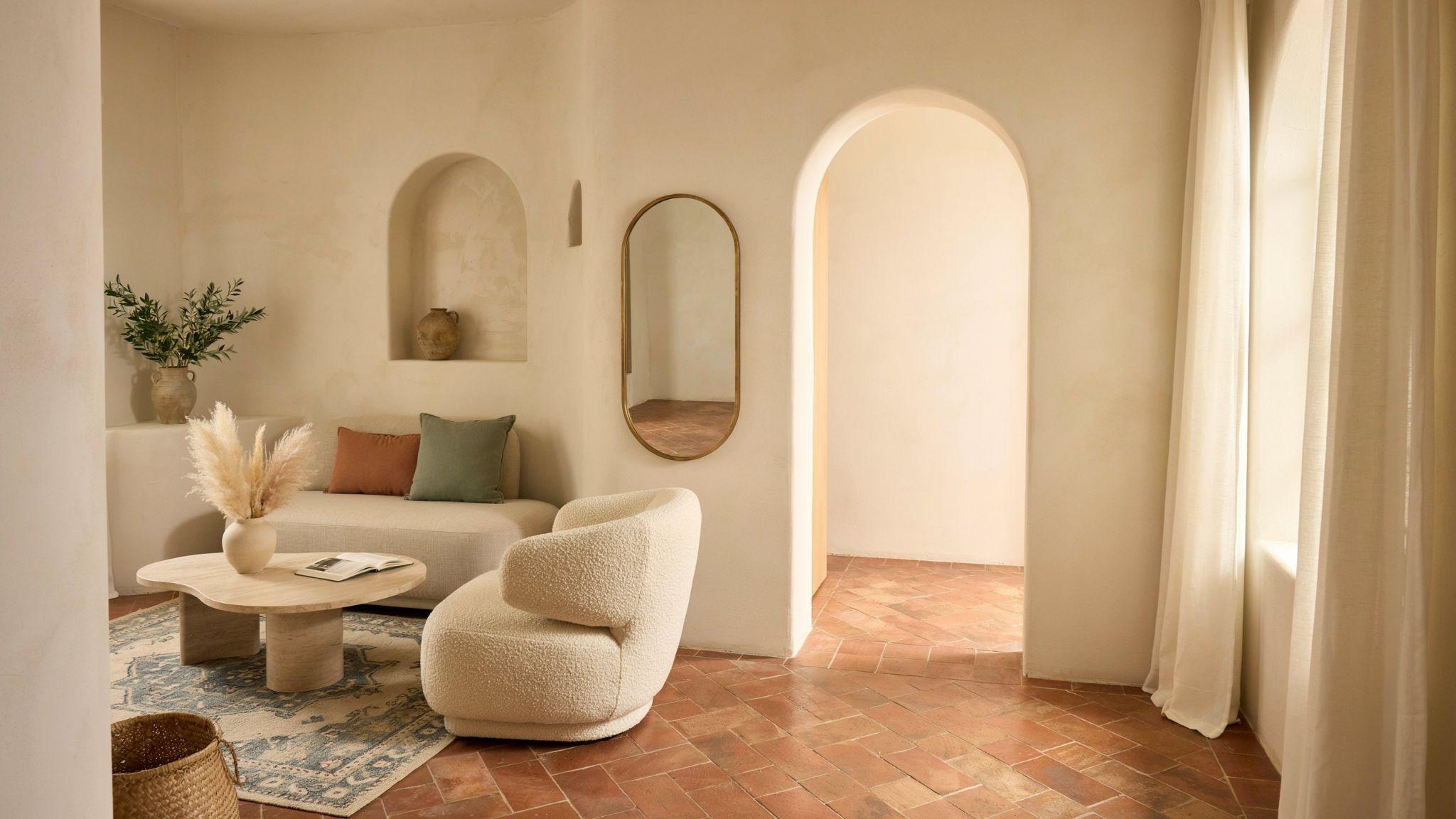
Curved shapes soften the overall look of a room.Arched doorways, rounded mirrors, and curved furniture all add this effect. These shapes feel old and welcoming at the same time.
You don't need to change your home's structure to get this look. Arched mirrors or curved furniture pieces can bring in the same soft feel.
4. Exposed Wooden Beams
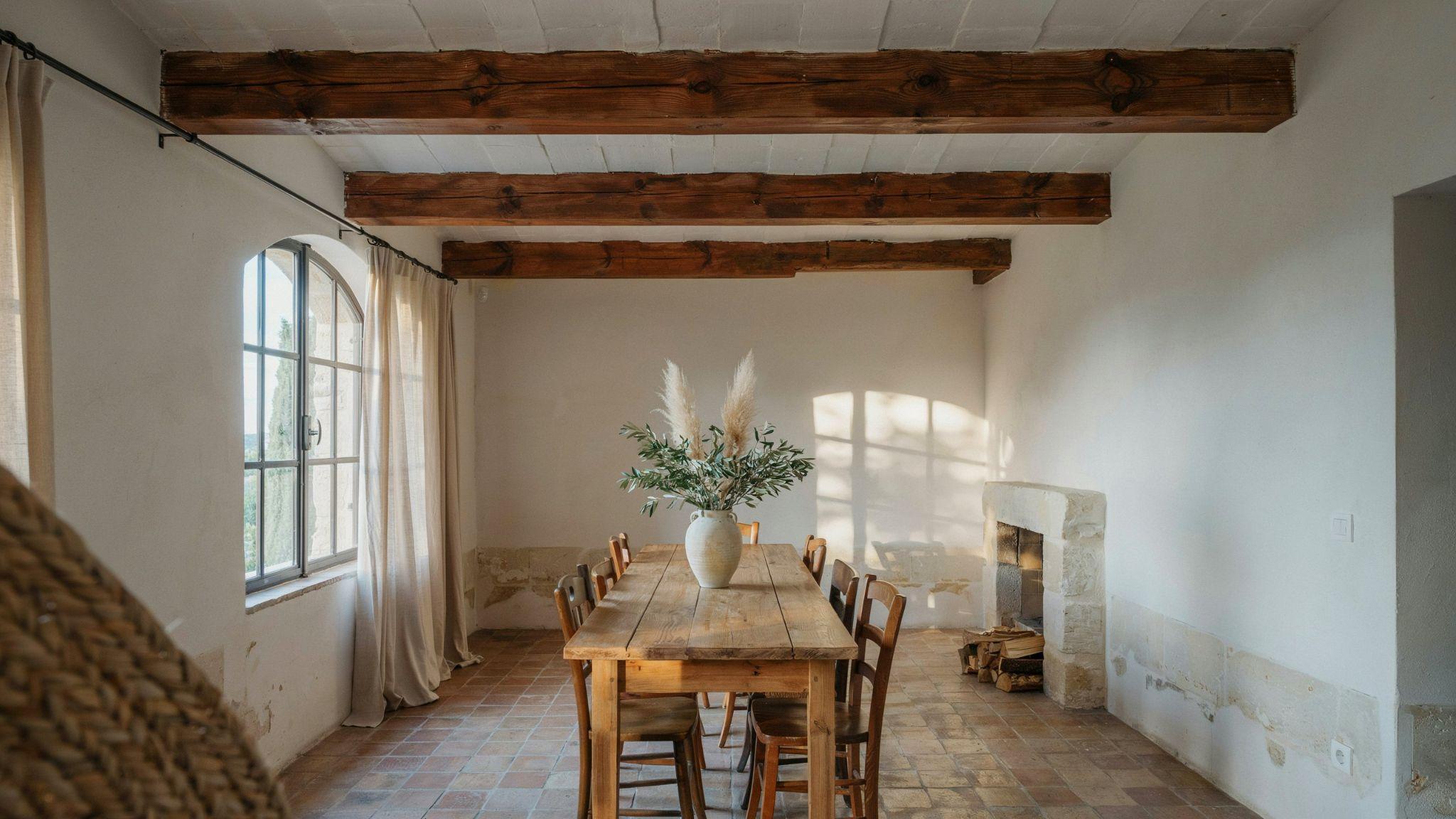
Wooden beams add warmth and structure overhead.They draw the eye upward and give a room a sense of history. This works well in living rooms, kitchens, and dining areas.
Even if your home doesn't have real beams, decorative wood beams can create a similar look. This small detail changes how a ceiling feels.
5. Textured Plaster Walls
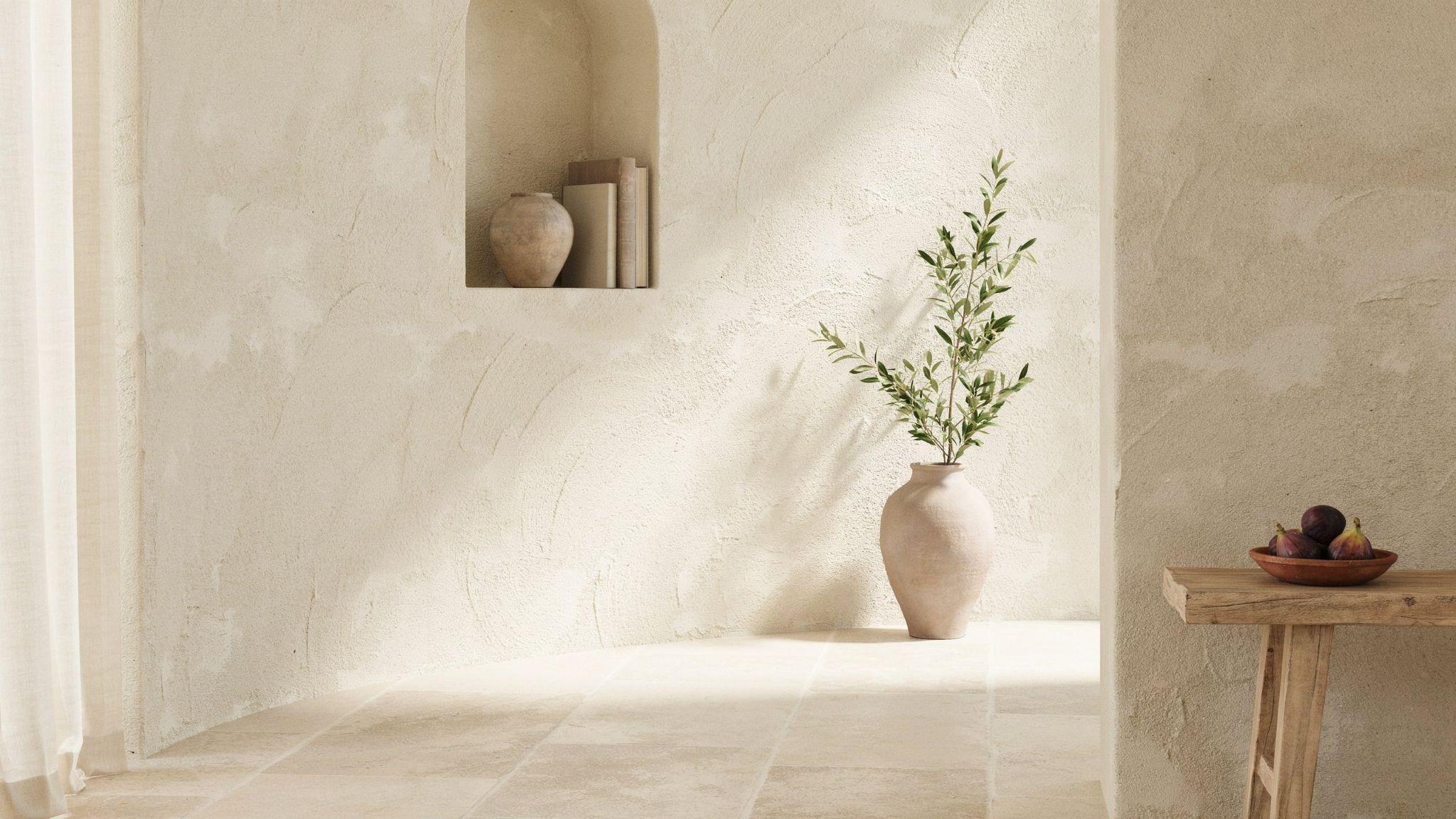
Textured walls add depth without using bold colors.Plaster finishes often have a slightly uneven, hand done look. This texture catches light in a way that smooth walls don't.
This works well in entryways, living rooms, or accent walls. It adds interest to a space without needing extra decor.
Mediterranean Color Palette
Color plays a big role in tying this whole style together.
Terracotta and Clay Tones
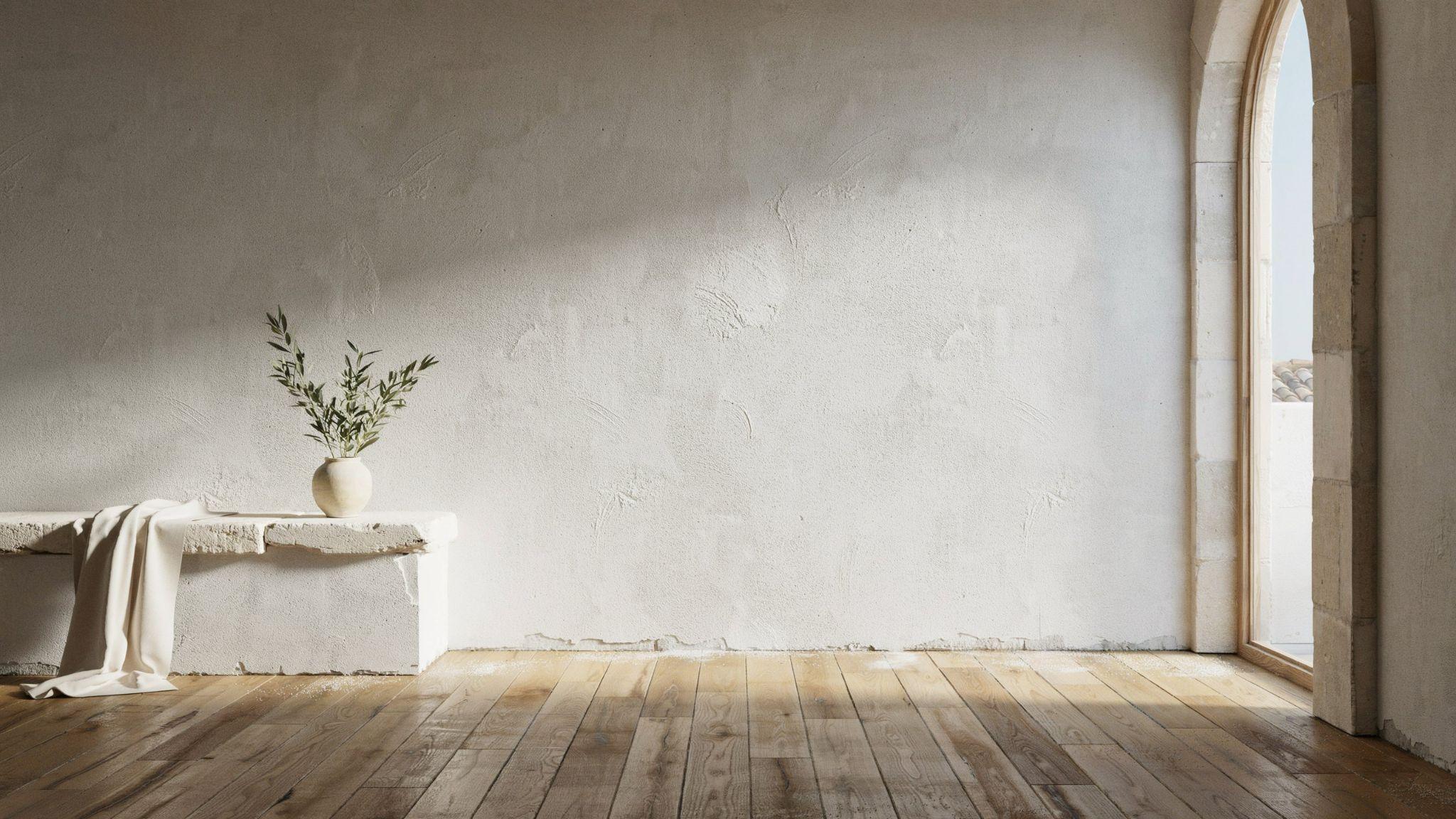
Terracotta and clay tones bring warmth to a room.These colors work well on walls, tiles, and pottery. They feel earthy and grounded.
You don't need to use them everywhere. Even one wall or a few decor pieces can bring this tone into a space without much effort.
Sand, Beige, and Cream Neutrals
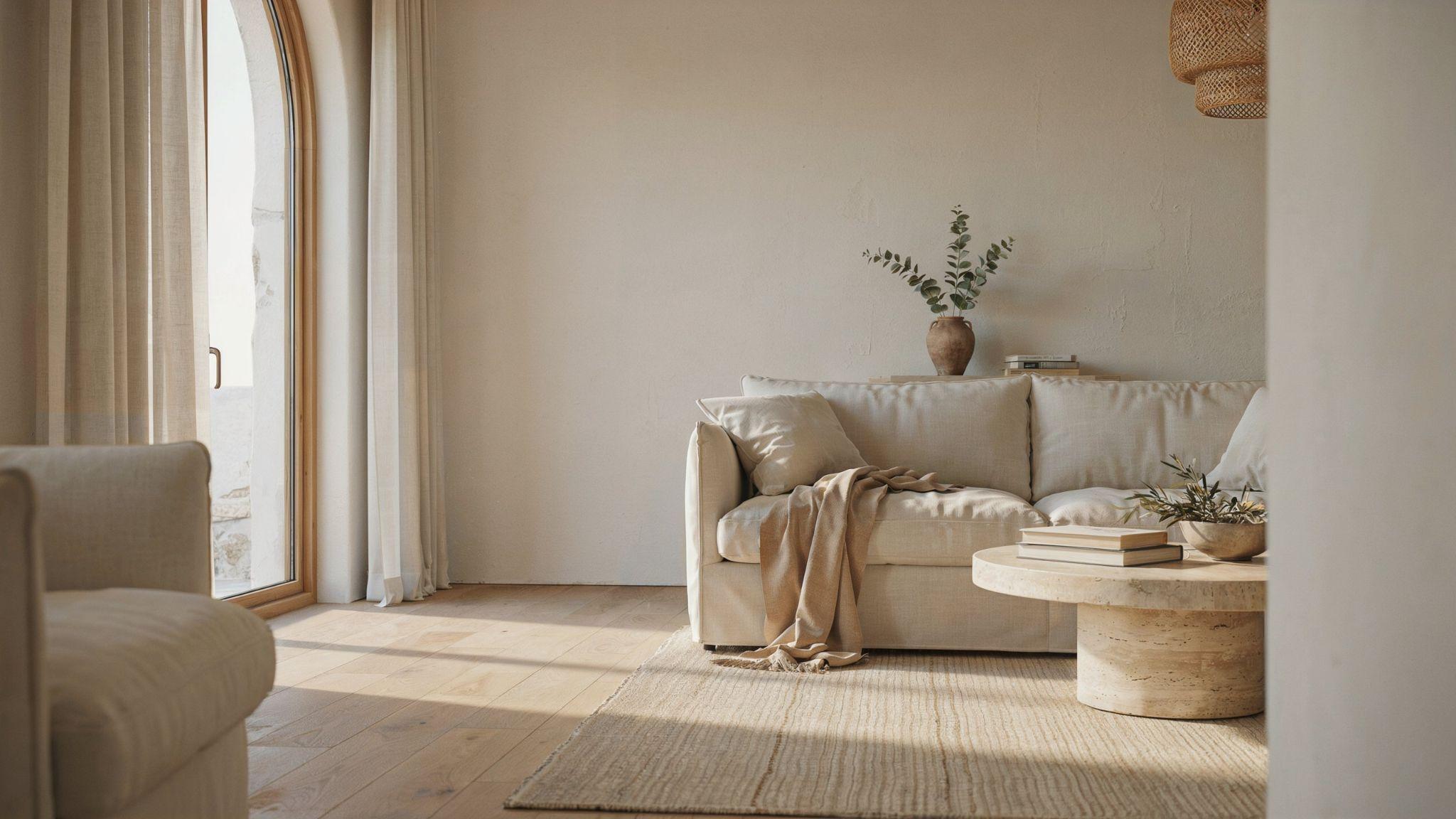
Neutral tones like sand, beige, and cream form a calm base.These colors work well on walls, furniture, and large pieces like sofas or rugs. They feel soft and easy to live with.
Neutrals also make it easier to add other colors later. They give a room a calm starting point that works with almost anything.
Olive Green and Nature-Inspired Shades
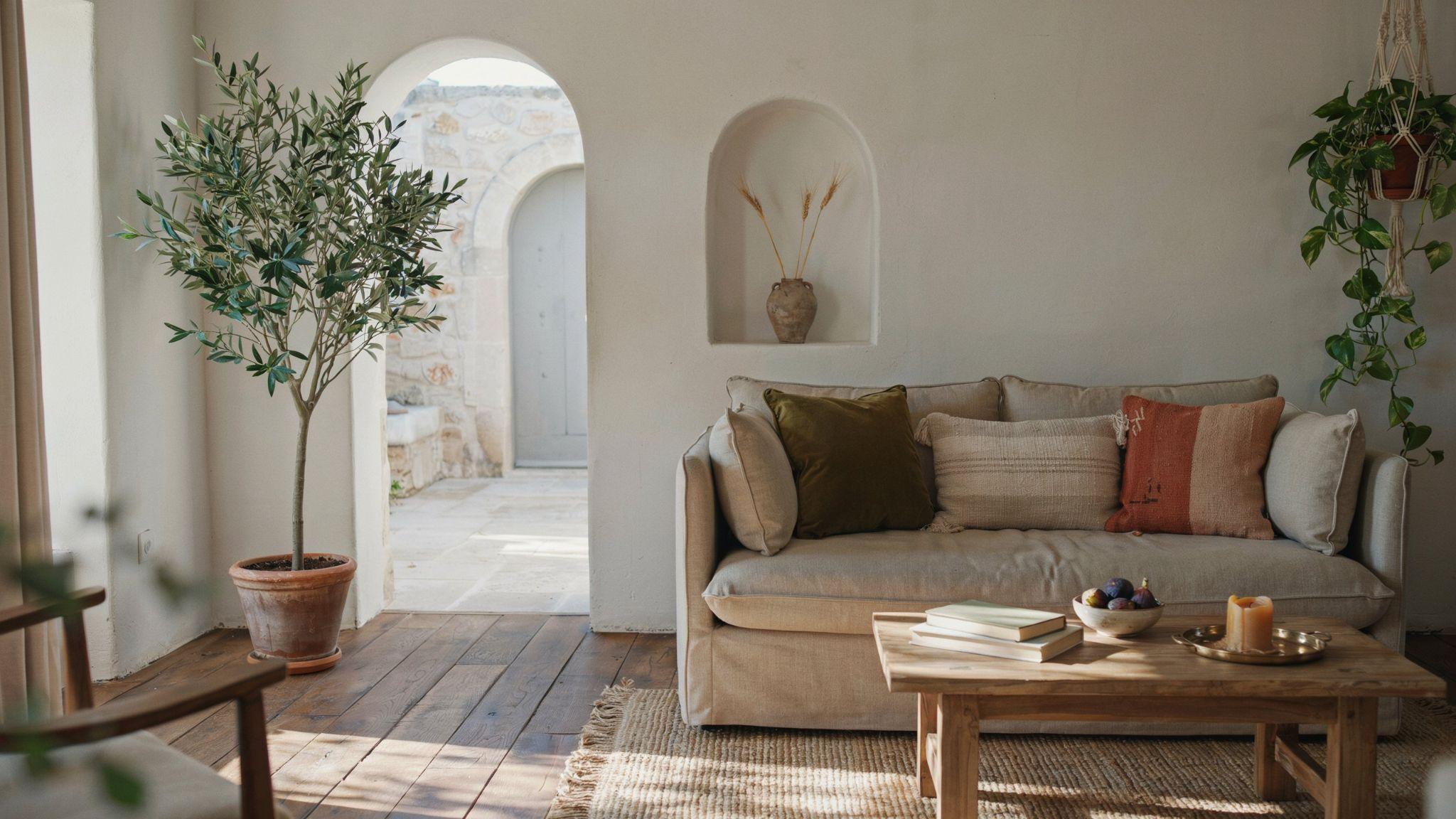
Olive green and other nature inspired shades add a fresh touch.These colors work well on textiles, plants, or small accents. They feel calm without being too bold.
Pairing olive green with warm neutrals creates a balanced look. It also connects the space to the outdoors, which fits well with this style.
How to Create a Mediterranean Home
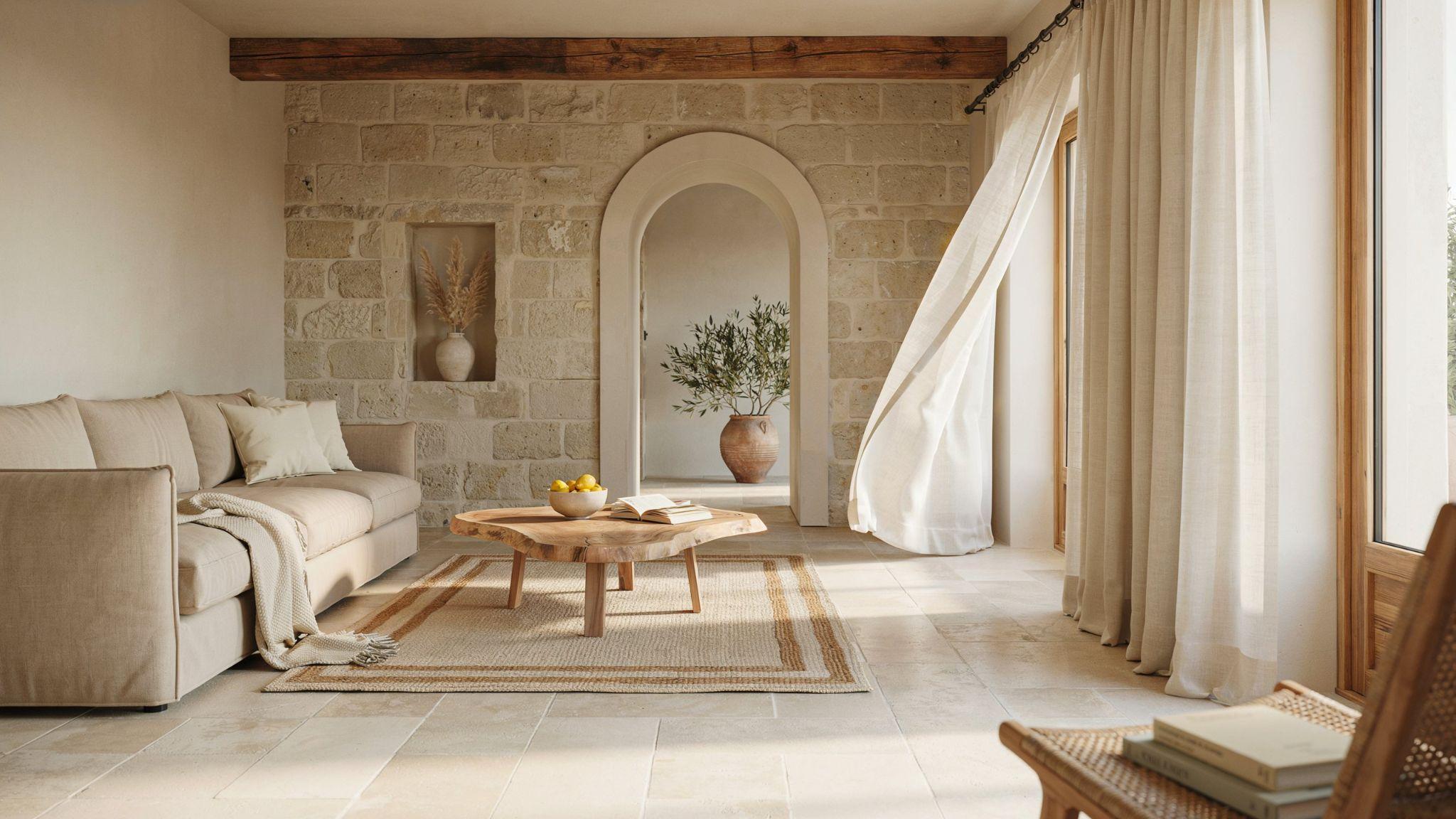
Getting this look in your own home is simpler than it seems. Start with a neutral base on walls and large furniture. Then add natural materials like wood, stone, or woven textures.
Focus on a few architectural details, like an arch or exposed beam, if you can. Layer in textures through rugs, pillows, and curtains for warmth.
Make the most of natural light with simple window coverings.
Many homeowners today embrace modern Mediterranean interior design by combining clean lined furniture with classic Mediterranean materials and textures, which keeps the space feeling both current and warm.
Common Mediterranean Interior Design Mistakes to Avoid
A few small mistakes can throw off the calm, warm feel of this style.
- Using too many dark colors:dark tones can make a room feel heavy instead of light
- Ignoring natural materials:skipping wood, stone, or clay can make a space feel cold
- Overdecorating the space:too many items at once can feel cluttered
- Forgetting indoor-outdoor flow:closed off rooms lose the open, connected feel
- Mixing too many design styles:too many looks at once can feel messy
Conclusion
Out of everything I have worked on, Mediterranean interior design is still one of my favorites. There is something about warm colors and natural light that just feels right.
If you have been thinking about trying this style, start small. A few terracotta accents or a textured rug can go a long way.
Pick one idea from this list and give it a try this week.
Let me know in the comments what you tried first. If this helped, share it with someone planning their own home update.
Frequently Asked Questions
What colors work best for Mediterranean interior design?
Warm tones like terracotta, sand, olive green, and blue work well.
Can I use this style in a small home?
Yes, light colors and natural materials work well in small spaces too.
Does Mediterranean style need a lot of plants?
No, a few plants near windows or doors are enough.
Can I mix modern furniture with this style?
Yes, clean lined furniture pairs well with classic materials and textures.
Is this style expensive to create?
No, small changes like color, texture, and lighting can make a big difference.
