

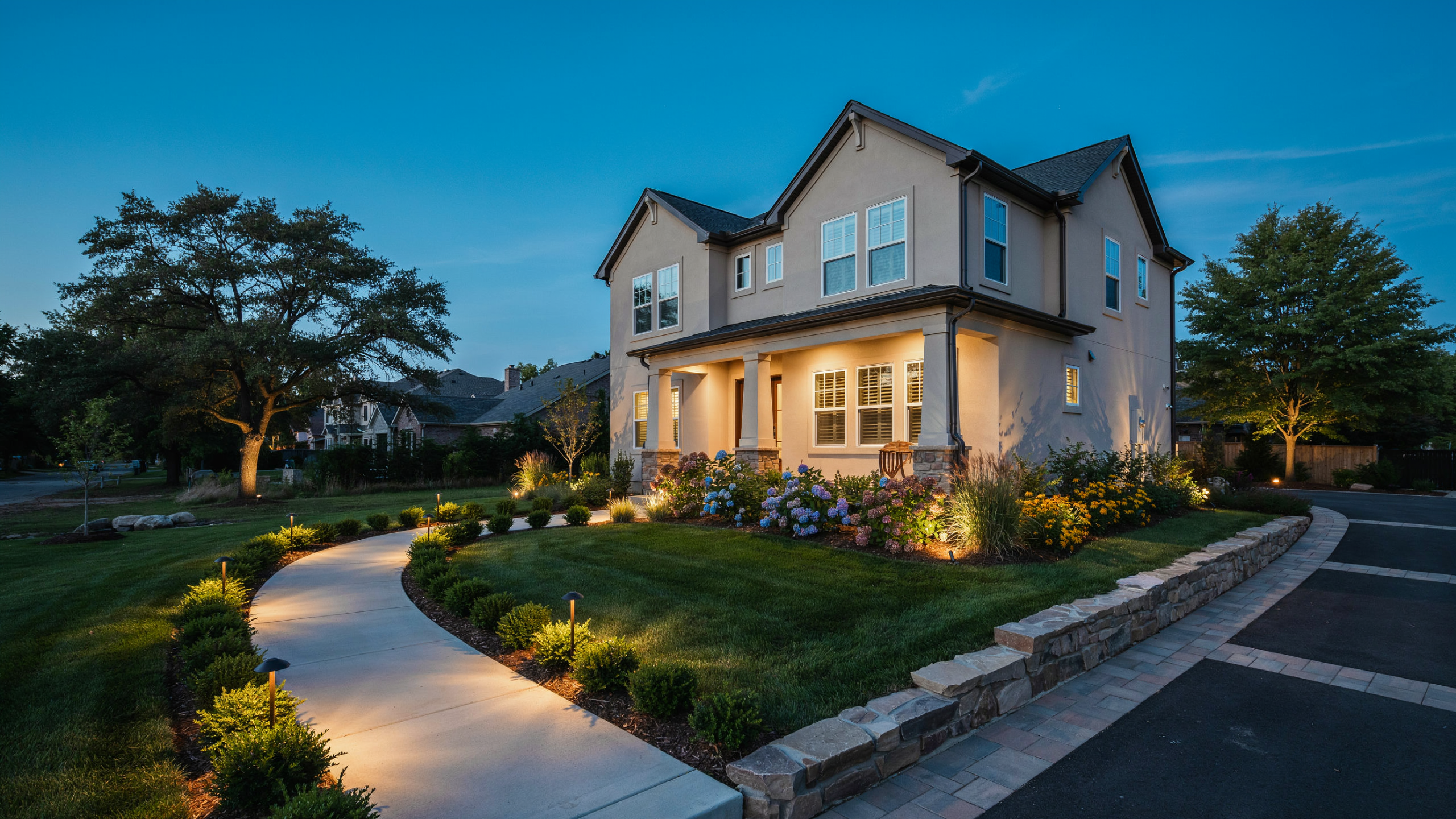
Outdoor lighting transforms how your home looks and feels when the sun goes down, but nailing down an actual price can be frustrating. The truth is, costs in Omaha swing wildly based on what you’re trying to accomplish. A simple pathway setup bears almost no resemblance to a custom architectural system wrapped around a luxury property. So before you call contractors, it pays to understand what drives the numbers. This guide walks through outdoor lighting costs in Omaha, NE, what factors them up or down, and what you should realistically budget at different project tiers. Whether your focus is a modest front yard or several acres of grounds, knowing the basics helps you plan without getting blindsided by what the quote says.
What Affects Outdoor Lighting Costs in Omaha
Pricing doesn’t follow one formula. A trusted outdoor lighting company will almost always visit your property before giving you a number. The reason? Every yard presents different obstacles. A flat, open lot lights easily. One with mature trees, grade changes, or a complicated roofline? That’s harder and pricier. Beyond the physical layout itself, a few other things shape what you’ll pay.
Property Size and the Number of Fixtures
More ground means more fixtures, more wire, more labor. Six to eight path lights and a couple of uplights on a focal tree, that’s a small front-entry job using one transformer and maybe a few hundred feet of low-voltage cable. Now shift to full-perimeter coverage: front yard, back patio, pool area, driveway. You’re looking at thirty-plus fixtures across multiple zones. Each zone needs its own transformer capacity. Trenching, routing, connections, the labor stacks up. Omaha’s labor rates for licensed electrical and outdoor lighting work track with regional construction costs, so expect something closer to what mid-size cities charge, not rural pricing.
Here’s the practical angle: the fixture count is something you can actually control. Experienced designers ask what matters most to you first, not what costs the most. Prioritize a few key zones. You’ll get a polished result without spreading your budget paper-thin.
Fixture Quality and the Technology You Choose
Not all fixtures are created equal. Entry-level pieces run fifteen to thirty dollars each; premium brass or copper uplights from solid manufacturers? One hundred fifty dollars or more per unit before you even install them. LED is now standard in most professional work because the long-term energy savings are real, and today’s LED fixtures deliver excellent color with a fraction of the operating cost that old halogen systems demanded.
Smart controls push costs higher. App-controlled transformers, dimming, and zone scheduling all add upfront money but give you way more flexibility in how you use the system day to day. And Omaha’s weather is rough on outdoor gear. Harsh winters, spring flooding, summer heat; cheap fixtures corrode or die within a few seasons. You end up paying more to replace them. Quality hardware, installed right, typically lasts ten to fifteen years with normal maintenance.
Typical Price Ranges for Outdoor Lighting in Omaha, NE
Most homeowners looking at outdoor lighting in Omaha land somewhere between a couple thousand and well into five figures. The tier depends on the scope. But these aren’t random figures; they reflect real labor rates, fixture pricing, and how complex the design is. Breaking it down by project level helps you match expectations to what you want to spend.
Entry-Level and Mid-Range Projects
A starter project in Omaha, modest front entry with path lights, one or two tree uplights, step or wall lighting, typically costs three thousand to six thousand dollars installed. That assumes quality LED fixtures, a properly sized transformer, and professional installation, not a DIY kit from a big-box store. Mid-range jobs that include front and backyard coverage, patio or deck accent lighting, maybe some bistro or string lights for outdoor living, tend to land between six thousand and fifteen thousand dollars.
At this level, you’re working with someone who designs the space rather than just placing fixtures wherever. That design piece? It’s crucial. Fixture placement, beam angles, and layering of light levels are what make a system look intentional instead of just bright. Most mid-range clients also want room to expand later, so the infrastructure gets built with future zones factored in.
Custom and High-End Installations
Premium outdoor lighting for high-end Omaha homes runs from fifteen thousand dollars to six figures for estate projects. These typically feature architectural lighting tied to the home’s structure, tree canopy work, specialty lighting for pools or water features, and fully programmable smart controls.
The design process resembles what an architect does: sight lines, shadows, color temperature across different materials, and visual effect from multiple angles. Materials scale up too, solid brass, copper, and marine-grade stainless. Installation gets more layered; you might need to coordinate with electricians and possibly the general contractor or landscape architect. And here’s the thing: if you’re building new or doing a major renovation, folding outdoor lighting into construction costs less than retrofitting after the fact.
Conclusion
The answer to “how much does outdoor lighting cost in Omaha?” isn’t a single number; it’s a range shaped by your property, your goals, and what quality system you want. Entry projects start around three thousand dollars. Mid-range runs six thousand to fifteen thousand. Custom high-end goes well beyond that. Fixture quality, technology, design complexity, and Omaha’s labor rates all feed into the final bill.
Before committing, get an on-site assessment from a qualified installer who can evaluate your specific property and give realistic numbers. A ballpark from a website or a neighbor’s experience won’t cut it. Your yard, your home’s look, your priorities, they’re all different, and the price should reflect that.
