

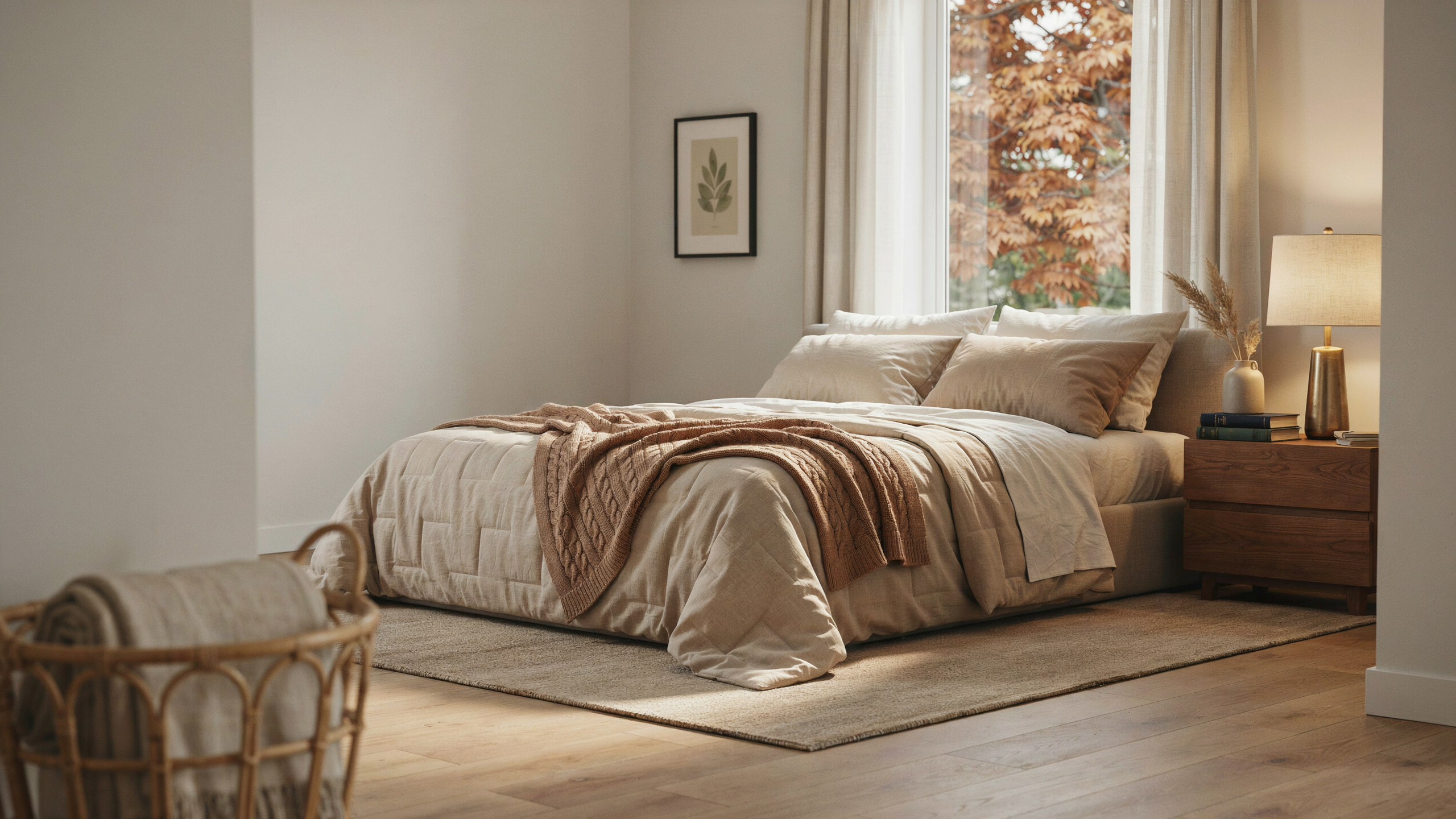
The best duvet is one that handles the season’s mood swings. British autumns lurch between mild, muggy nights in September and near freezing ones by late November, so the ideal duvet either sits in the versatile middle ground of around 10.5 tog or adapts by combining layers. Warmth matters, but so does weight, breathability and comfort.
This guide looks at what actually makes a duvet right for autumn, and where Simba, the sleep technology brand, fits into the picture.
What Tog Rating Do You Need for Autumn?
Tog measures thermal insulation, and for autumn the sweet spot for most UK sleepers is between 9 and 10.5. Summer duvets of 4.5 tog leave most people cold by October, while winter duvets of 13.5 tog or more can feel stifling in a modern, well insulated home. A 10.5 tog duvet is widely considered the year round standard for British bedrooms, warm enough for autumn and most of winter, but not so heavy that a mild spell means kicking it off at 3am.
Central heating changes the calculation. Households that keep bedrooms at 18 degrees or above may be comfortable under a lower tog all season, while those in older, draughtier properties may want the option to add warmth as the temperature drops.
Best All Round Autumn Duvet: The Simba Hybrid Duvet
For a single duvet to carry you from September through to spring, the Simba Hybrid™ Duvet with cooling Stratos® technology makes a strong case. It’s a 10.5 tog duvet designed around temperature regulation rather than simple insulation. The Stratos® treatment on the fabric provides an instant cool touch feel and helps heat dissipate away from the body, technology that fabric testing found can keep treated material up to 3 degrees cooler than untreated fabric*.
That matters in autumn because overheating, not cold, is what wakes most duvet owners. A duvet that insulates while still letting excess heat escape suits the season’s variability far better than a heavy, traditional filled duvet. The Hybrid™ Duvet’s fill offers down like softness without feathers, making it suitable for allergy prone sleepers, and the fibres in Simba’s Renew™ fill are made using recycled plastic bottles, which will appeal to shoppers weighing sustainability alongside comfort.
Best for Couples and Fluctuating Temperatures: The Simba 3-in-1 Approach
Autumn is the layering season, and Simba applies the same logic to bedding that outdoor brands apply to clothing. The Simba Hybrid™ 3-in-1 Duvet is effectively two duvets in one, a 7 tog and a 3.5 tog that can be used separately or fastened together. Through early autumn, the 7 tog layer alone is usually enough. When the clocks go back and nights turn properly cold, combining both layers creates a full 10.5 tog duvet.
This modular approach solves one of the oldest problems in shared beds, which is that two people rarely run at the same temperature. It also means one purchase covers every season, rather than storing a summer duvet in a cupboard for half the year.
Weight: Why Heavier Is Not Always Cosier
Duvet marketing often equates weight with quality, but the two are unrelated. Modern microfibre and treated fills achieve high tog ratings at a fraction of the weight of dense, old fashioned fills. A lighter duvet drapes over the body more evenly, eliminating cold spots, and is far easier to shake out, change covers on and wash. Sleepers who specifically enjoy pressure should look at weighted blankets as an addition, rather than choosing an unnecessarily heavy duvet that traps heat.
What About Natural Fills?
Down and feather duvets do remain popular for their loft and warmth, but they suit autumn less well than their reputation suggests. They are slower to wick moisture, harder to wash, unsuitable for many allergy sufferers and often too warm for centrally heated homes. Wool filled duvets breathe well and regulate temperature naturally, though they tend to be heavier and pricier per tog. For most UK households, a well engineered synthetic or hybrid fill now outperforms natural alternatives on every practical measure except tradition.
The Verdict
For autumn 2026, the smart money is on adaptable, breathable duvets rather than sheer insulation. A 10.5 tog duvet with genuine temperature regulating technology covers the whole season for most sleepers, while a layered 3-in-1 design suits couples and homes where the thermostat is a matter of ongoing negotiation.
*Temperature testing carried out by HeiQ in November, 2020 on Stratos®-treated vs untreated fabric to measure immediate and continuous cooling.
FAQs
What tog duvet is best for autumn in the UK?
A 10.5 tog duvet suits most UK bedrooms in autumn. It provides enough insulation for cold nights while remaining comfortable during milder spells, particularly if the duvet uses breathable, temperature regulating fabric.
Can you use a 10.5 tog duvet all year round?
Many people do. In a typical centrally heated UK home, a 10.5 tog duvet with good breathability works from autumn through to late spring, and cooler sleepers often keep it through summer as well.
What is Stratos® technology in a duvet?
Stratos® is Simba’s proprietary cooling fabric treatment. It gives the duvet an instantly cool feel against the skin and encourages body heat to dissipate rather than build up, with testing showing treated fabric can stay up to 3 degrees cooler than untreated fabric*.
Is a heavier duvet warmer?
No. Warmth is measured by tog rating, not weight. Modern fills achieve high tog ratings while remaining light, which improves drape, reduces cold spots and makes the duvet easier to wash and handle.
