


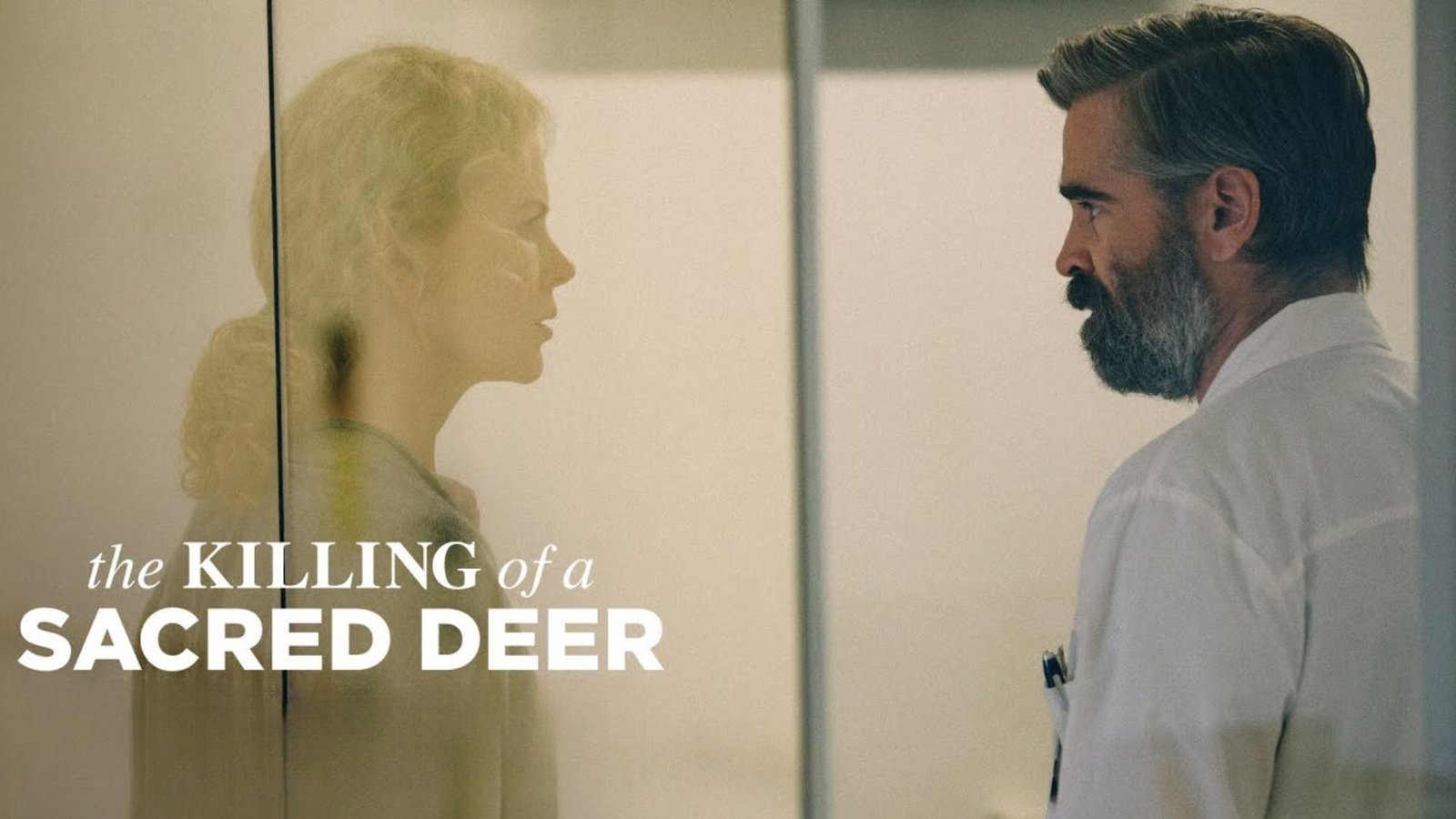
I still remember the first time I watched The Killing of a Sacred Deer. I sat through the entire film feeling deeply uncomfortable, unsure if I even liked what I was seeing.
That was back in 2017, and honestly, I’m still processing it. Yorgos Lanthimos made something that divided audiences right down the middle.
My friends either loved it or hated it. There was no in-between. Years later, I decided to watch it again, and I had completely different feelings about it.
Let me walk you through why this film continues to mess with people’s heads.
Film Overview

The Killing of a Sacred Deer came out in 2017. Yorgos Lanthimos directed it and co-wrote it with Efthymis Filippou. The runtime is about 2 hours.
Is it a psychological drama? A thriller? Horror? It’s honestly all three. The genre keeps shifting.
Where This Film Fits
If you’ve seen The Lobster, you’ll recognize Lanthimos’ style. Both films have that cold, detached feeling. Characters speak in flat tones. Everything feels slightly off.
But Sacred Deer goes much darker.
His earlier film Dogtooth was disturbing too. Sacred Deer takes similar themes and pushes them further.
This was his second English-language film. He keeps his weird, uncomfortable style but makes it slightly more accessible. Slightly.
Plot Summary (Spoiler-Light)

A surgeon’s perfect life unravels when a strange teenager forces him to make an impossible, horrifying choice.
A Perfect Life with Something Off
Dr. Steven Murphy seems to have everything figured out. He’s a successful heart surgeon. He has a loving wife and two kids. Their home looks perfect from the outside.
Then there’s Martin.
This teenage boy keeps showing up in Steven’s life. They meet for coffee. Steven gives him gifts. At first, it seems like mentorship. Maybe Steven is helping a kid who needs guidance.
But something feels wrong. The way Martin stares. The way he talks. The way he inserts himself into Steven’s family. You can’t quite put your finger on it, but the unease grows with every scene.
The Unthinkable Choice
I won’t spoil the specifics here. But the film presents Steven with an impossible decision. One that no parent should ever face.
The movie doesn’t explain why this is happening through normal logic. There’s no scientific reason. No clear cause and effect. Lanthimos just presents the situation and watches Steven spiral.
You’re left trying to figure out what you would do. And that’s what makes it so disturbing.
Themes & Symbolism

The film digs into guilt, control, and punishment through layers of meaning that reveal themselves slowly.
Playing God and the Cost of Control
Steven is a heart surgeon. He literally holds lives in his hands. He makes life-or-death decisions every day at work.
But surgeons aren’t gods. They make mistakes.
Steven lives in denial. He controls his family. He controls his environment. He believes he can fix anything. The film strips away that illusion piece by piece.
Power comes with responsibility. Steven forgot that. Or maybe he never accepted it.
Science vs. The Supernatural
Steven relies on logic. He’s a man of science. He looks for rational explanations.
The film gives him none.
Something is happening to his family. It defies medical explanation. It defies reason. Steven keeps trying to solve it like a diagnosis. But you can’t rationalize cosmic punishment.
Lanthimos refuses to explain the rules. That’s the point. Some things exist beyond our understanding.
Greek Tragedy and Mythological Roots
This film is based on the Greek myth of Iphigenia. King Agamemnon had to sacrifice his daughter to appease the gods.
Steven faces a similar choice. A father must pay for his sins. The innocent suffer for the guilty.
Greek tragedies don’t have happy endings. Neither does this film. The structure follows ancient patterns of divine retribution. You can’t escape fate. You can only choose how you meet it.
Performances

The acting feels deliberately cold and robotic, which makes the horror hit even harder when it arrives.
Colin Farrell as Steven Murphy
Farrell doesn’t panic or break down. He stays controlled and composed even as his world crumbles. You see the fear in his eyes, but he won’t let it out.
That restraint makes his performance powerful. He’s a man clinging to control when he has none left.
This role solidified his partnership with Lanthimos. They work well together.
Barry Keoghan’s Martin: Calm as Terror
Martin doesn’t yell or threaten. He speaks in a flat, monotone voice. He smiles at strange moments.
That’s what makes him terrifying.
Keoghan plays Martin as eerily calm. He’s always in control. Always watching. Most villains are loud. Martin is quiet and patient. That’s worse.
Supporting Cast Contributions
Nicole Kidman, Raffey Cassidy, and Sunny Suljic all speak in stilted, unnatural ways. This isn’t bad acting. It’s intentional.
Everyone feels disconnected from reality. That detachment makes the few emotional moments hit harder.
Direction & Visual Style

Lanthimos directs with a clinical, detached tone. Characters speak in flat, deadpan voices.
The pacing feels deliberately slow and uncomfortable. You’re meant to feel alienated from what’s happening.
The cinematography features sterile hospital-like interiors and perfectly symmetrical shots. Everything looks too clean, too organized.
The score builds dread through discordant strings and unsettling silence. Every visual and audio choice is designed to make you squirm.
Critical Reception & Interpretations
This film splits audiences right down the middle. You either appreciate its boldness or find it frustrating.
Why Critics Are Divided
Critics praise ambition and craftsmanship. The visuals are strong. The performances are committed.
But many find it too cold and detached. The story refuses to explain itself. Some call that brilliant. Others call it pretentious.
What the Film Asks of Its Audience
This isn’t a passive watch. You need to think about the symbolism and fill in the gaps yourself.
Lanthimos won’t give you answers or closure. You either accept that ambiguity or reject the film. If you need clear explanations, you’ll hate this. If you enjoy analyzing meaning, you’ll find plenty here.
Potential Drawbacks for Viewers

The pacing is slow. Scenes repeat similar patterns. Conversations drag on with awkward silences. If you prefer fast-moving plots, you’ll struggle here.
The emotional coldness is intentional but off-putting. You never really connect with the characters. They feel distant and robotic.
The ambiguity frustrates many viewers. The film refuses to explain itself. No clear answers. No satisfying resolution. Some people hate that.
Conclusion
I’ve watched this film three times now, and it still gets under my skin. The Killing of a Sacred Deer works as a modern morality tale about guilt, punishment, and the illusion of control.
It’s not easy to watch. It’s not meant to be.
Lanthimos refuses to compromise his vision. He won’t make it comfortable for you. He won’t explain everything. That’s exactly why this film stays with you long after it ends.
Will you love it? Maybe not. Will you forget it? Absolutely not. This film divides people because it challenges us. It asks hard questions and offers no easy answers. That’s what makes it worth watching, even if you end up hating it.
Frequently Asked Questions
Is The Killing of a Sacred Deer based on a true story?
No, it’s not based on real events. The film draws inspiration from the Greek myth of Iphigenia, where King Agamemnon had to sacrifice his daughter to appease the gods.
Why does everyone talk so strangely in the movie?
The flat, robotic dialogue is intentional. Lanthimos uses this style to create emotional distance and make the horror feel more unsettling when it arrives.
Is this film actually horror or more of a thriller?
It’s a mix of both, plus psychological drama. The film doesn’t rely on jump scares but builds a sense of dread that feels more horrifying than most traditional horror movies.
Do they explain what’s happening to the family?
No, the film never gives a scientific or logical explanation. Lanthimos leaves it ambiguous, forcing viewers to accept the supernatural elements without rationalization.
Should I watch this if I liked The Lobster?
If you appreciated The Lobster’s weird tone, you might like this. But be warned: Sacred Deer is much darker and more disturbing than Lanthimos’ previous work.