


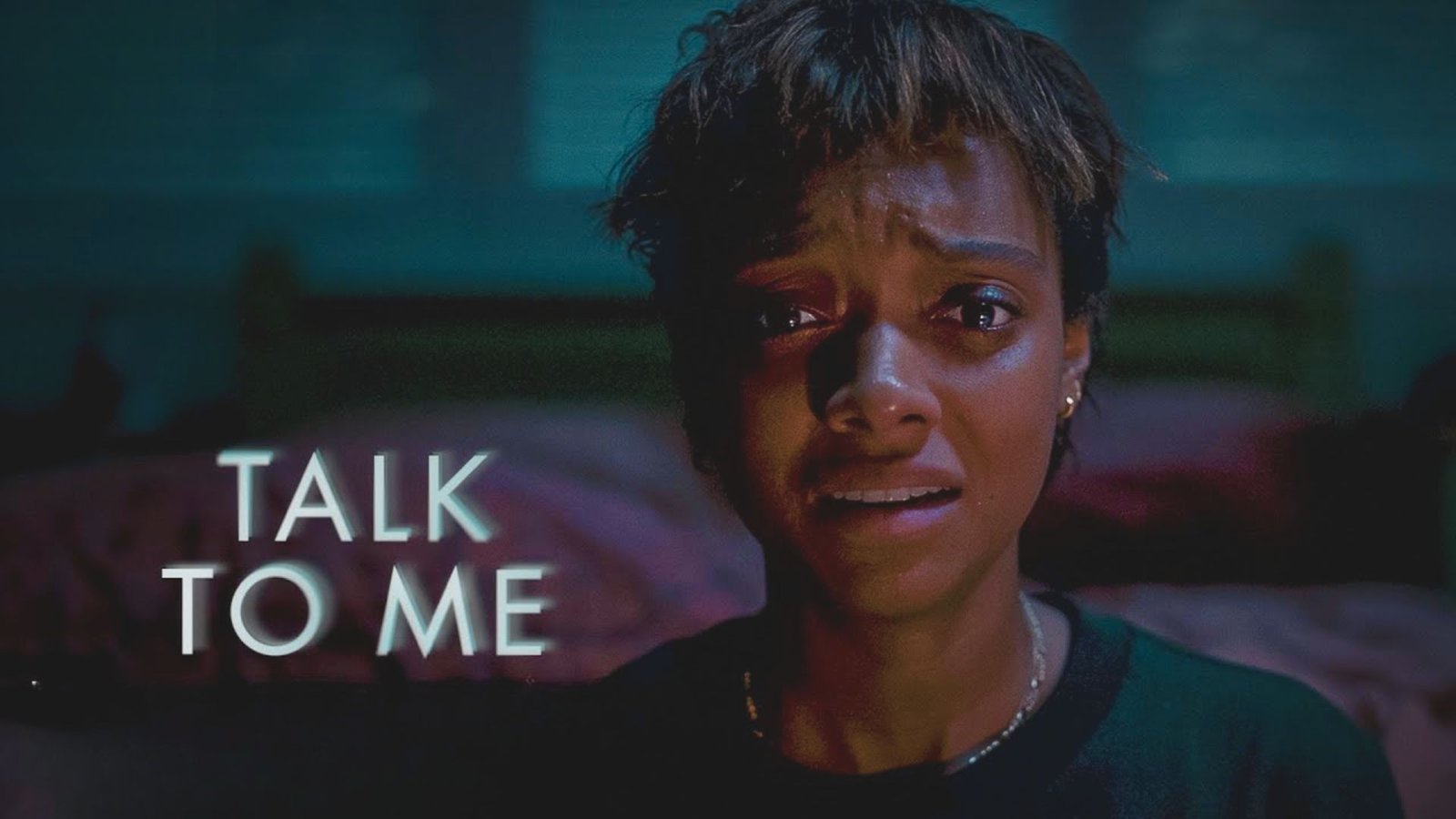
I’ll be honest. I don’t scare easily with horror movies anymore. But Talk to Me? It got under my skin.
I watched this 2023 A24 release late one night, and I spent the next hour sitting in silence, processing what I’d just seen.
This Australian horror film does something different. It’s not just about jump scares or gore.
It digs into grief, loss, and how far we’ll go to feel connected again. Critics raved about it. The audience couldn’t stop discussing it. After watching it myself, I completely understand why.
Plot Summary: A Dangerous Game with Deadly Rules

A possessed hand becomes a viral trend among teens, but breaking the rules leads to horrifying consequences.
The Premise Without Heavy Spoilers
A group of teenagers find an embalmed hand. Hold it, say “talk to me,” and spirits possess your body.
The only rule: never go past 90 seconds.
At first, it’s fun. They film themselves getting possessed and share the videos online. It becomes a party trick. A social media rush. They think the time limit keeps them safe.
But they’re wrong.
When the Game Turns Tragic
Everything changes when Riley, a younger kid, gets possessed. What happens to him shifts the entire story. The fun stops immediately.
Each character faces consequences they never expected. Curiosity turns into something they can’t undo. The film shows how fast things can spiral out of control.
After Riley’s possession, there’s no going back. Every choice matters. Every action has a price. The teenagers learn too late that some things shouldn’t be messed with.
Grief as the True Horror

The real terror in Talk to Me isn’t the spirits. It’s the pain of losing someone you love.
Mia’s Emotional Wound
Mia lost her mother two years ago. She still doesn’t have answers about how or why it happened. That kind of loss doesn’t just fade.
This grief makes her vulnerable to the hand. She’s not looking for thrills like her friends. She’s looking for her mom. She wants closure. One more conversation.
That desperation drives every dangerous choice she makes.
Grief vs. the Supernatural
The spirits mirror Mia’s inner pain. They show her what she wants to see, then twist it into something cruel.
Grief isolates her from reality. Her friends can’t reach her anymore. She can’t tell what’s real and what isn’t.
That’s why this horror feels so personal. It’s not about monsters. It’s about a girl who misses her mom so badly that she’ll destroy herself for one more moment together.
Performances That Elevate the Film

Great horror needs more than scares. It needs actors who make you believe every moment.
Sophie Wilde’s Breakout Performance
Sophie Wilde plays Mia, and she’s the reason this film works. Her portrayal of grief feels raw and real. You see the pain. You feel her desperation.
The possession scenes demand everything from her. When spirits take over her body, it’s disturbing because she makes it believable.
Wilde anchors the entire film. Without her, the story falls apart.
Strong Supporting Cast
Joe Bird plays Riley, and his performance is haunting. What happens to him is hard to watch.
Alexandra Jensen and Miranda Otto bring emotional weight as the adults trying to protect these kids. They ground the chaos with real concern.
The whole cast feels authentic. These aren’t movie teenagers. They’re actual kids. That realism makes the horror hit harder.
Direction and Screenwriting

First-time filmmakers Danny and Michael Philippou prove they know exactly what they’re doing.
The Philippou Brothers’ Confident Debut
The Philippou brothers came from YouTube before making this film. That background shows in the best way. They understand modern pacing and how tension builds.
The film moves smoothly. Nothing feels rushed. They use restraint when other directors would go overboard. Not every scare needs to be loud.
They blend internet-era energy with real filmmaking skill. The result feels fresh but controlled.
A Script That Balances Horror and Drama
The screenplay sets clear rules early. You know how the hand works. You know the time limit. Those boundaries make the suspense work.
The second and third acts get stronger as the film progresses. Most horror movies fall apart at the end. This one doesn’t.
What sets it apart is the emotional core. It’s not just about scares. It’s about grief, guilt, and consequences that feel real.
Themes Beneath the Surface

Talk to Me works because it’s about more than ghosts. It’s about how we live today.
Possession as Addiction and Social Spectacle
The teens film every possession and share the videos. They need the views. The reactions. The proof.
This mirrors viral challenges we see online. Kids doing dangerous things because everyone’s watching. Peer pressure amplified by phones and social media.
The horror feels real because the behavior is real.
Family, Belonging, and Displacement
Mia doesn’t feel at home anywhere. Her dad is distant. She treats her friend’s family as her own.
She’s searching for connection. The hand promises what she’s been missing.
But fear tears relationships apart. When things go wrong, people pull away. The film shows how trauma isolates us from those we need most.
Subtle Social and Racial Undercurrents
The film includes small moments of microaggressions and discomfort. They’re not loud or obvious. But they’re there.
These moments add layers without taking over the story. The film handles these themes better in some places than others. It’s not perfect. But it tries.
Atmosphere, Sound, and Visual Horror

Talk to Me masters the art of making you uncomfortable without showing you everything.
The possession scenes feel disturbingly real thanks to practical effects and committed performances.
Gore appears sparingly, which makes it hit harder when it does. The spirits stay mostly hidden, and that’s what makes them terrifying. What you don’t see scares you more.
Cornel Wilczek’s score builds dread without overwhelming the story. The sound design creates tension without relying on cheap jump scares.
The music reinforces emotions rather than tells you how to feel. Everything works together to keep you on edge.
Conclusion
I walked away from Talk to Me thinking about it for days. That doesn’t happen often with horror films anymore.
This movie hurts. It scares you, yes. But it also makes you feel the weight of grief and bad choices. The horror comes from loss as much as it does from spirits.
Among modern possession films, Talk to Me stands out. It respects your intelligence. It trusts you to sit with uncomfortable emotions.
If you want horror that sticks with you long after the credits roll, watch this film. You won’t regret it.
Frequently Asked Questions
Is Talk to Me actually scary?
Yes, it’s genuinely frightening. The scares come from both supernatural horror and emotional trauma. The film builds dread slowly rather than relying on cheap jump scares.
Is Talk to Me appropriate for teenagers?
The film is rated R for strong violence, disturbing content, and language. It deals with heavy themes like grief and self-harm. Parents should consider maturity level before allowing younger teens to watch.
Do I need to watch other A24 horror films first?
No, Talk to Me is a standalone film. You don’t need any prior knowledge of other movies. It works perfectly on its own.
How gory is Talk to Me?
The gore is present but used sparingly. When it appears, it’s intense and purposeful. The film relies more on psychological horror than graphic violence throughout.
Is there a post-credits scene?
No, there’s no post-credits scene. However, the ending is open to interpretation. Many viewers stay to process what they just watched rather than rushing out.