


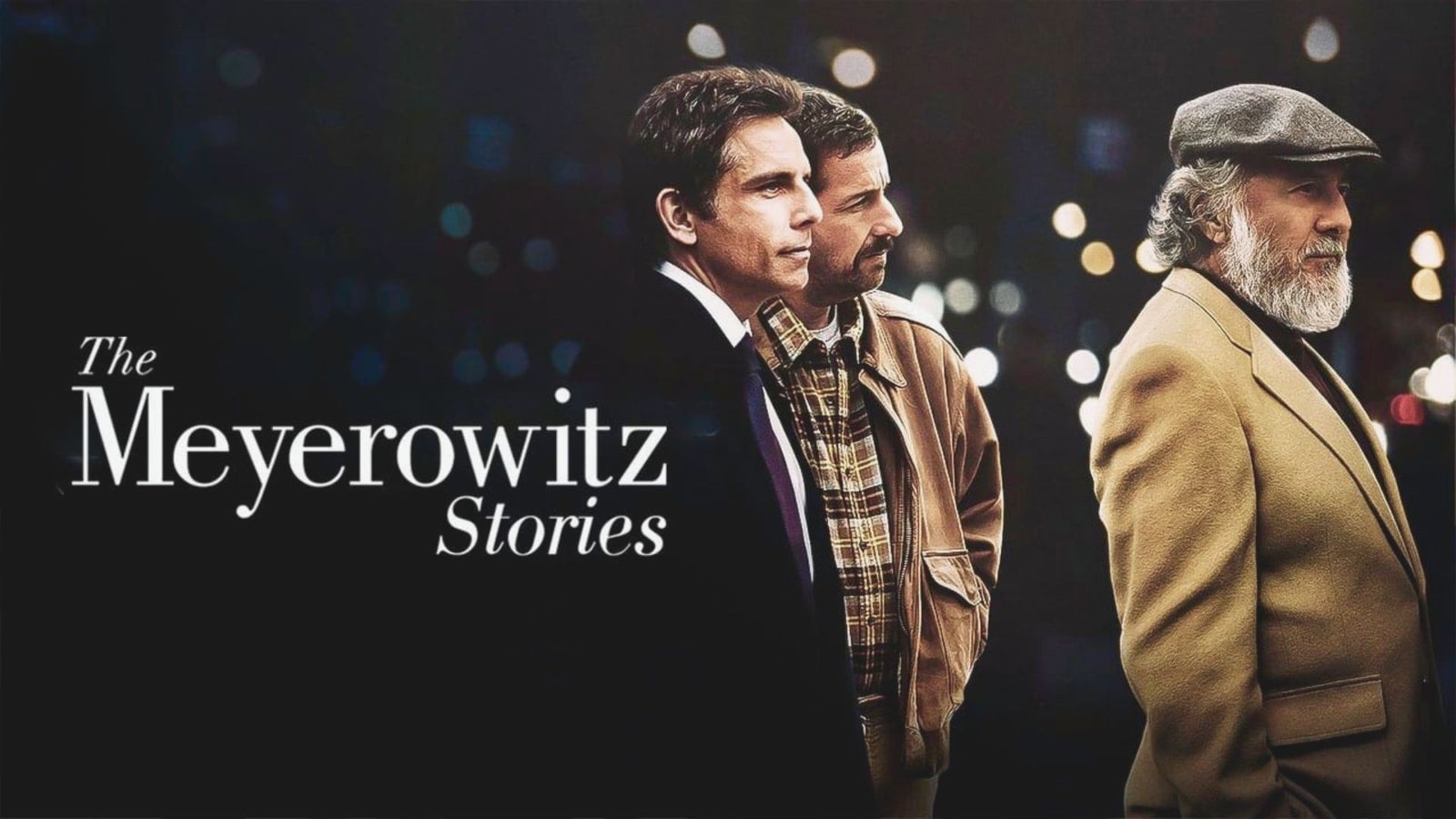
I’ll be honest with you. The first time I watched The Meyerowitz Stories, I had to pause it twice because it hit way too close to home.
Noah Baumbach dropped this film on Netflix in 2017, and it became one of those movies you can’t stop thinking about.
Critics loved it, audiences connected with it, and I found myself relating to almost every awkward family moment on screen.
Baumbach has built his career on telling stories about messy family relationships, and this one feels like he reached into real life and put it on film.
Plot Overview Without Spoilers

The Meyerowitz family gathers as their sculptor father ages, bringing decades of resentment and unspoken hurt to the surface.
A Family Defined by Legacy and Resentment
Harold Meyerowitz is an aging sculptor who never achieved fame. His three adult children grew up in the shadow of his artistic ego. Danny, Jean, and Matthew each carry different scars from their childhood.
They reunite when Harold’s health declines and his work gets a retrospective. Old rivalries resurface. Everyone still craves the validation they never received during their formative years.
A Simple Story Told in Fragments
Baumbach tells this story in chapters, not one flowing narrative. Each section focuses on a different family member and moment.
This structure works because families don’t experience life in neat timelines. People remember events differently. They drift apart and reconnect. The fragmented storytelling reflects how broken these relationships actually are.
Noah Baumbach’s Direction and Screenwriting

Baumbach blends literary techniques with New York authenticity, bringing warmth and precision to this family story.
Literary Structure and New York Sensibility
The subtitle “New and Selected” mirrors how art retrospectives work. The film unfolds in selected moments, like a short story collection rather than one continuous narrative.
Scenes start and stop abruptly. Characters appear briefly, then disappear. The pacing feels controlled and intentional.
The setting screams New York. Upper West Side apartments filled with books and art. Conversations that feel like debates. Baumbach captures this world perfectly.
A More Humane Baumbach
Baumbach’s earlier films could be harsh. This one feels warmer.
Harold is selfish. Danny is passive. Matthew stays distant. But Baumbach shows empathy for all of them. He explains their flaws without excusing bad behavior.
The humor comes from awkward moments, not mockery. You laugh because these situations feel familiar. The discomfort is real, and that makes it work.
Performances That Anchor the Film

The cast brings authenticity to these flawed characters, with Sandler delivering his best dramatic performance yet.
Adam Sandler’s Career-Defining Turn
Critics agreed: this is Sandler’s finest work. He plays Danny with quiet intensity, replacing comedy with real emotional depth.
Danny is the film’s heart. He stayed close to his father, put his life on hold, and absorbed the most damage. Sandler’s restraint is powerful. His pain sits just below the surface.
This role proved Sandler can handle serious drama.
Dustin Hoffman as the Self-Absorbed Patriarch
Harold is the source of all family dysfunction. Hoffman plays him with charm masking deep selfishness.
He’s a failed artist who treated his kids like an audience. Harold demands attention while dismissing their feelings. Hoffman adds fragility that makes the character feel real.
You see why his children still seek his approval despite the constant emotional neglect.
Ben Stiller and Elizabeth Marvel as Emotional Counterweights
Stiller plays Matthew, the successful son who still feels empty. Money and career can’t fix what his father broke. He brings quiet resentment to every scene.
Marvel plays Jean, the overlooked daughter. Harold’s neglect hit her differently. She’s been ignored so completely that she’s nearly invisible in her own family.
Both actors show how one toxic parent damages different children in different ways.
Themes Explored in The Meyerowitz Stories

The film examines family dynamics, self-worth, and how children carry their parents’ emotional baggage into adulthood.
Family Dysfunction and Sibling Rivalry
The Meyerowitz siblings compete for their father’s approval. Danny and Matthew keep score of who got more attention. Jean doesn’t even register in the competition.
This emotional accounting never ends. Adult children still measure themselves against each other and argue about childhood wounds. They all want validation from a parent who can’t provide it.
Resentment passes down through generations. Harold’s behavior becomes his children’s behavior. The cycle continues until someone breaks it.
Art, Success, and Self-Worth
Harold built his identity around being an artist, despite never achieving recognition. His children measure their worth by his impossible standards.
Matthew has professional success but feels hollow. Danny abandoned his creative dreams. Jean’s accomplishments go unnoticed. None of them found happiness chasing their father’s values.
The film questions what success really means. Is artistic ambition worth sacrificing emotional connection? Can you separate self-worth from outside approval?
Living in a parent’s shadow prevents you from becoming yourself. Harold’s children either try to match him or reject him. Neither option leads to freedom.
Final Verdict – Are The Meyerowitz Stories Worth Watching?

This film works for anyone who loves character-driven stories about complicated families. If you appreciate slow-burning dramas over plot twists, you’ll connect with it immediately.
The Meyerowitz Stories stand out among Netflix originals because it trusts its audience. No flashy tricks or manufactured drama. Just real people dealing with decades of hurt. It proved Netflix could make thoughtful, prestigious cinema.
The film stays with you after it ends. It’s modest in scale but massive in emotional truth.
Overall Rating: 4.5 out of 5
Verdict: A richly observed, actor-driven family drama that transforms resentment into quiet revelation.
Conclusion
I keep coming back to this film because it captures something most movies miss. The Meyerowitz Stories doesn’t just show family dysfunction.
It shows how we survive it, how we keep trying despite knowing better, how love and resentment can exist in the same moment.
Baumbach has a rare talent for finding humor in the worst family interactions without making fun of anyone. This film will stick with you.
You’ll see your own family in these characters, and that recognition feels both uncomfortable and oddly comforting. Some stories just feel real, and this one does.
Frequently Asked Questions
Is The Meyerowitz Stories based on a true story?
No, it’s not based on real events. However, Noah Baumbach drew from his own experiences growing up in New York’s artistic community, which gives the film its authentic feel.
Where can I watch The Meyerowitz Stories?
The film is available exclusively on Netflix. It was one of Netflix’s early prestigious original films and remains part of their streaming library.
Is this movie appropriate for kids?
The film is rated TV-MA for language and adult themes. It deals with complex family dysfunction and contains profanity, so it’s best suited for mature audiences.
How long is The Meyerowitz Stories?
The runtime is 112 minutes (1 hour and 52 minutes). The pacing feels deliberate, with the story unfolding in chapters rather than one continuous narrative.
Do I need to watch Noah Baumbach’s other films first?
No, this works perfectly as a standalone film. While fans of Baumbach’s style will recognize his approach, you don’t need any prior knowledge to appreciate the story.