

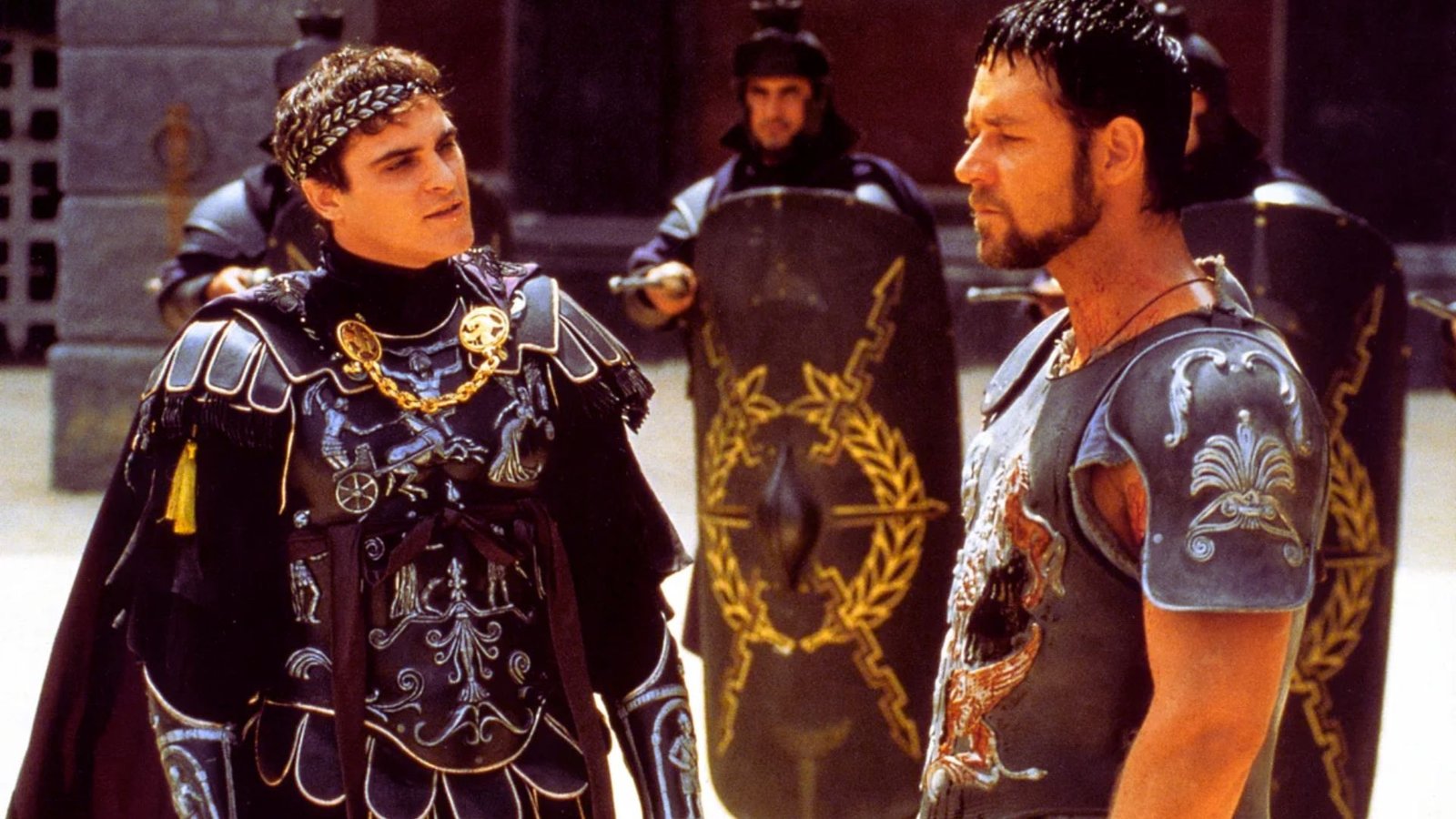
I’m sharing this Gladiator review because you want to know if this 2000 epic is worth your time. You’ll get honest answers about what works and what doesn’t.
I’ve watched this film multiple times and analyzed the critical response, so I know what I’m talking about.
This isn’t hype, it’s real insight from someone who cares about good cinema.You’ll learn about Russell Crowe’s performance, Ridley Scott’s direction, and why this movie still matters today.
I’ll cover the plot, the acting, the visuals, and the legacy it left behind. We’ll look at the action scenes, the music, and what critics said when it first came out.
By the end, you’ll know if Gladiator deserves a spot on your watchlist.
Why This Film Still Matters

Gladiator didn’t just win Best Picture, it revived an entire genre that Hollywood had abandoned for decades. Before this film, studios avoided historical epics because they cost too much and rarely succeeded. Ridley Scott proved them wrong.
The movie made over $460 million worldwide and sparked a wave of period dramas that followed. It showed that audiences still cared about stories of honor and revenge set in ancient times.
This wasn’t just entertainment, it was a reminder that old stories still speak to modern viewers when told well.
Plot and Story

The story follows Maximus through betrayal, slavery, and his fight for justice in ancient Rome. The film takes place during the height of the Roman Empire around 180 AD.
Emperor Marcus Aurelius rules with wisdom but knows his time is ending.
He wants General Maximus to succeed him instead of his own son, setting the entire tragedy in motion.Maximus serves as Rome’s greatest general, loyal, skilled, and loved by his soldiers.
Commodus is the emperor’s son who craves power above all else. Marcus Aurelius is the aging emperor who sees the corruption around him.
Maximus starts at the top as a respected general about to go home to his family. Then everything falls apart.
Commodus kills his father and orders Maximus executed. The general escapes but arrives home too late his wife and son are already dead.
Sold into slavery, Maximus becomes a gladiator. He fights in small arenas first, then works his way to Rome’s Colosseum.
His goal is simple: get close enough to Commodus to kill him. Every fight brings him closer to revenge.
The film explores themes of revenge, loyalty, honor, and family. Maximus lost everything and wants blood, but the story asks whether revenge brings peace or just more pain.
His loyalty to Marcus Aurelius never wavers, even after death. Honor guides him through every choice he could run or hide, but instead stands and fights.
Performances

Russell Crowe commands every scene. His Maximus feels like a real soldier, not a movie hero. You see the exhaustion in his eyes and hear the grief in his voice.
The actor makes you believe this man could lead armies and win hearts.
His physical presence sells the action scenes. He moves like someone who’s fought for years. But Crowe also brings depth to quiet moments.
When Maximus touches the dirt before battle, it feels like a ritual. The audience connects with him because he’s vulnerable; he cries for his family and struggles with doubt.
Joaquin Phoenix makes Commodus terrifying without being one-dimensional. This villain isn’t pure evil; he’s insecure, desperate for his father’s approval, and genuinely damaged.
You almost pity him before remembering what he’s done. Phoenix plays the emperor as a child in a man’s body, dangerous because he has power without wisdom.
The supporting cast adds depth throughout. Connie Nielsen plays Lucilla with intelligence and strength. Oliver Reed brings warmth and world-weariness as Proximo, the gladiator trainer.
Djimon Hounsou gives dignity to Juba, Maximus’s friend in the arena. Derek Jacobi and Richard Harris lend gravitas as senators and emperors.
Direction and Visuals

Ridley Scott knows how to build worlds. His Rome feels lived-in and real, not like a movie set. The director mixes practical locations with studio work seamlessly.
His visual style leans into gritty realism; battles are chaotic and brutal. Dust and blood make everything feel dangerous. Scott doesn’t romanticize war; he shows its horror.
The use of slow motion adds weight to key moments without overdoing it. The color grading shifts between warm golds in memories and cold blues in the present, telling you emotionally where we are in the story. Widescreen shots show the scope of ancient Rome.
The Colosseum looks massive and intimidating.Set design creates authenticity. The Colosseum recreation is impressive. The gladiator quarters feel cramped and dirty.
Even small details like weapons and armor look period-appropriate. Filming on location in Malta and Morocco adds texture you can’t fake on a soundstage.
Music and Sound

Hans Zimmer’s music drives the emotional core of the film. His themes are memorable without being overpowering. The main motif captures both sadness and determination.
Lisa Gerrard’s vocals add an otherworldly quality. Her voice sounds ancient and timeless. The track “Now We Are Free” has become inseparable from the film’s identity.
Battle scenes hit hard because of the sound design. Swords clash with real weight. Arrows whistle through air. The audio makes violence feel consequential, not cartoonish.
The Colosseum ambiance puts you in the crowd where you hear thousands of Romans cheering for blood.
Action Sequences

The choreography feels brutal and real. These aren’t elegant duels, they’re desperate struggles for survival. Fighters grapple and hack at each other.
Maximus doesn’t showboat; he finishes opponents quickly and moves to the next threat. You believe these men might die at any moment.
Tigers in the arena mix practical and digital work. The effect mostly works, though some shots show their age. The Colosseum required extensive CGI to complete, and while some wide shots look a bit flat by modern standards, the achievement is still impressive for 2000.
Practical effects ground the film real explosions, real fires, real stunt work give it texture that pure CGI often lacks.
Critical Reception
The film divided critics despite its commercial success. Many praised the emotional impact and grand scale, appreciating how Scott balanced spectacle with character development.
The straightforward revenge plot appealed to reviewers tired of overly complex narratives.
Roger Ebert gave it two and a half stars, finding the visuals sometimes too dark and muddy. He felt the middle section dragged as Maximus worked his way up through smaller arenas.
Some reviewers questioned the historical accuracy of Commodus as a real emperor, but the film takes liberties with his story.
The film won five Academy Awards including Best Picture and Best Actor for Crowe. It also took home Oscars for costume design, sound, and visual effects. IMDb users rated it 8.5 out of 10, placing it among the top 50 films of all time on the site.
Strengths and Weaknesses

The performances stand out as the biggest strength. Crowe and Phoenix give their roles everything. The visuals create an immersive ancient world, and Zimmer’s score adds emotional weight that dialogue alone couldn’t carry.
The film manages epic storytelling on a human scale. You care about one man’s revenge while feeling the fate of an empire hanging in the balance.
Pacing issues show up in the middle section. Some viewers find this portion slow. Historical inaccuracies bother others; the real Commodus ruled for over a decade, not a few months. Dialogue-heavy scenes occasionally feel stiff, and some political conversations drag.
Legacy and Impact

Gladiator changed Hollywood’s approach to historical films. Studios greenlit projects like Troy, Alexander, and 300 in the years that followed.
The gritty combat style influenced countless action films. Directors still study how the film balanced spectacle with character.
Fan following remains strong decades later. Quotes like “Are you not entertained?” entered popular culture.
A sequel is in development for 2024, focusing on Lucius, Commodus’s nephew. The film became the cultural touchstone for how people imagine ancient Rome.
Final Rating
I give Gladiator a strong 8.5 out of 10. The film delivers an epic tale of revenge wrapped in spectacle and genuine emotion. Russell Crowe’s performance alone makes it worth watching.
Add Scott’s direction and Zimmer’s score, and you have something special.
This works best for fans of historical dramas and action films. If you like character-driven stories with high stakes, you’ll connect with it.
The emotional payoff justifies the buildup, and it makes me think about honor, family, and sacrifice. That kind of resonance is rare in blockbusters.
Conclusion
This Gladiator review shows why the film still holds up after all these years. I’ve rewatched it more times than I can count, and it always hits differently.
The story of Maximus reminds me why I fell in love with cinema in the first place. His fight for honor and family gets me every time.
If you haven’t seen it yet, watch it this weekend. If you have, maybe it’s time for another viewing.
Drop a comment below and tell me your favorite scene or what this film means to you. I’d love to hear your thoughts.
Frequently Asked Questions
Is Gladiator based on a true story?
The film takes inspiration from real Roman history but creates a fictional story. Commodus and Marcus Aurelius were real emperors, but Maximus was invented.
Why did Gladiator win Best Picture?
The Academy recognized its combination of technical excellence, strong performances, and emotional storytelling that revived a dormant genre while succeeding both artistically and commercially.
How accurate is the Colosseum in the movie?
The recreation is generally accurate in size and basic structure, though the film shows it more complete than it was in 180 AD.
Did Russell Crowe do his own stunts?
Crowe performed many of his own stunts and fight sequences, while professional stunt coordinators handled the most dangerous work.
Will there be a Gladiator sequel?
Yes, Gladiator 2 is scheduled for release in 2024, focusing on Lucius years after the first film with Ridley Scott returning to direct.